Damp basement in Croatia: causes, fixes and what helps in winter
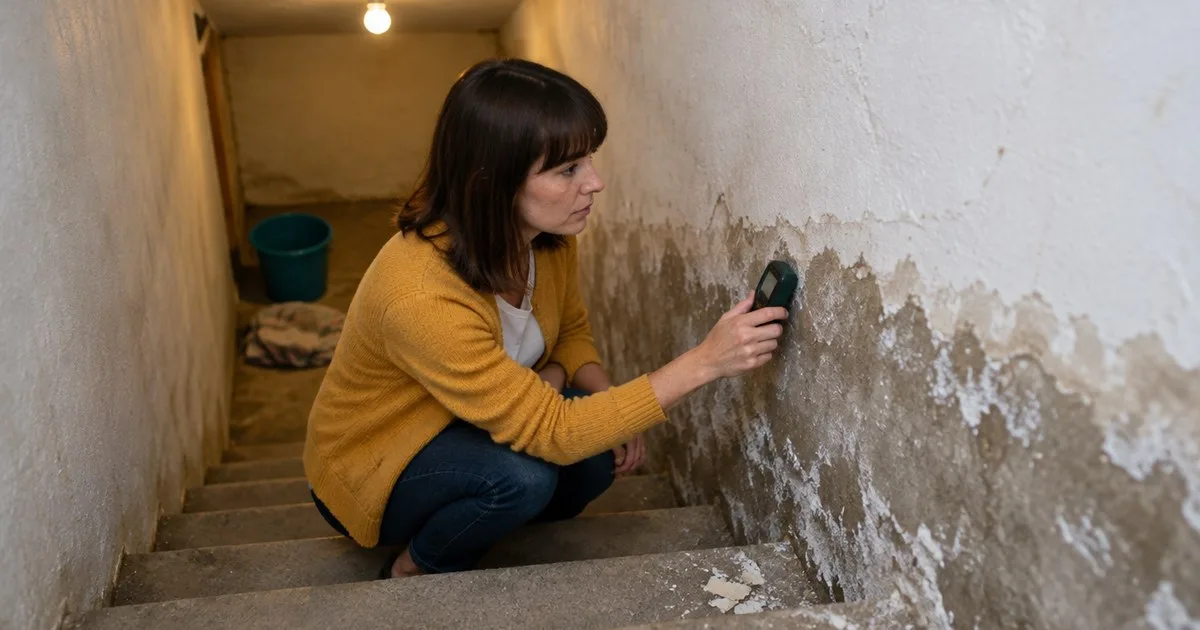
Does your basement smell damp, is plaster crumbling at the bottom of the wall and are the boxes on the floor soft and mouldy? A damp basement is one of the most common problems in older houses. The good news is that most cases come down to three causes, and each one is fixed differently.
This guide shows you how to tell where the damp comes from, what you can do without a tradesperson this winter, when a dehumidifier helps and which basement damp repair methods exist. At the end you will find questions to ask a tradesperson and a checklist for your request.
Damp in the basement: where it comes from
Before you buy a coating or a dehumidifier, find the cause. Basement damp usually comes from the ground through the walls, as water from outside, or from air that condenses on cold surfaces. Sometimes a leaking pipe is to blame. If you start with the wrong repair, the problem comes back after one or two winters.
Rising damp in the basement
Brick, stone and concrete walls are porous and soak up water from the ground. That water slowly climbs through the wall, like a sponge. This is rising damp (capillary damp).
You can recognise it by a damp band at the bottom of the wall with a fairly straight upper edge. Above it the wall is dry. White salts appear on the surface, and plaster and paint peel off. The mark can climb as high as one or two metres. It is most common in older houses that have no waterproofing or where the waterproofing has failed over time.
Water from outside and groundwater
If the stains spread over a large part of the wall, not only at the bottom, or water appears on the floor after heavy rain, the water is probably coming in from outside. The cause can be damaged external waterproofing, a high water table or rainwater collecting next to the foundations.
Gutters are often to blame too. If a gutter is blocked or the downpipe empties right next to the wall, water soaks into the ground beside the basement. Check that first. The guides how to clean gutters and gutter cost per metre will help if the gutter needs replacing.
Condensation in the basement
Basement walls are cold. When warm, humid air reaches them, it cools down and water forms on the wall, the ceiling or cold pipes. That is condensation in the basement.
You can recognise it by droplets on pipes and the ceiling, damp on the upper part of the walls and mould in the corners. It is most common in summer, when the basement is aired in warm, muggy weather. Condensation does not damage the wall the way ground water does, but it is the main reason for the damp smell and mould on stored items.
Leaking pipes
If a wet patch appears suddenly in one spot and keeps spreading whatever the weather outside, check the water supply, drains and heating. How to find a leaking pipe is explained in the guide burst pipe in the wall.
How to tell what is causing basement damp
| What you see | Likely cause | First step |
|---|---|---|
| Damp band at the bottom of the wall with a straight edge, white salts, crumbling plaster | Rising damp from the ground | Inspection by a waterproofing contractor |
| Stains over much of the wall, water on the floor after rain | Water from outside or groundwater | Check gutters and drainage by the house, then waterproofing |
| Droplets on pipes and ceiling, mould in corners, worst in summer | Condensation | Hygrometer, correct ventilation, dehumidifier |
| Wet patch in one spot that spreads quickly | Leaking pipe | Turn off the water and call a plumber |
| Wet wall only below a gutter or downpipe | Rainwater by the foundations | Clean or repair the gutter, lead water away from the house |
| Damp smell, but the walls look dry | Air humidity too high | Hygrometer and dehumidifier |
Causes often overlap. An old house can have rising damp and condensation at the same time. That is why an inspection with a wall moisture meter is a good first step before a bigger repair.
What you can do without a tradesperson this winter
These steps do not stop water coming from the ground. They lower humidity in the air and slow down mould until you deal with the cause.
- Buy a hygrometer. It is a small humidity meter. Without one you cannot tell whether airing helps. Keep basement humidity below 60%. If it stays high for a long time, mould starts easily.
- Air the basement briefly in winter. Cold winter air holds little moisture. When it enters the basement and warms up, it takes up some of the moisture in the room. Open the windows for a short time and then close them so the pipes do not get too cold. How to protect pipes is covered in the guide how to stop water pipes freezing.
- Do not air it during the day in summer. Warm air holds more moisture and leaves it on cold walls. In summer, open the windows at night or early in the morning, when it is cooler outside than in the basement.
- Keep the basement door closed. Warm, humid air from the house or stairwell should not keep flowing into a cold basement.
- Do not dry laundry in an unheated basement. Wet laundry releases a lot of moisture. If there is no other place, run a dehumidifier.
- Move things away from walls and the floor. Put wardrobes and shelves a few centimetres away from external walls so air can flow behind them. Keep cardboard boxes off the floor, on shelves or in plastic boxes.
- Check the gutters and drainage by the house. The downpipe should lead water away from the foundations, not along the basement wall.
- Remove the mould. How to clean it safely off the wall is explained in the guide damp and mould on walls.
Basement dehumidifier: when it helps
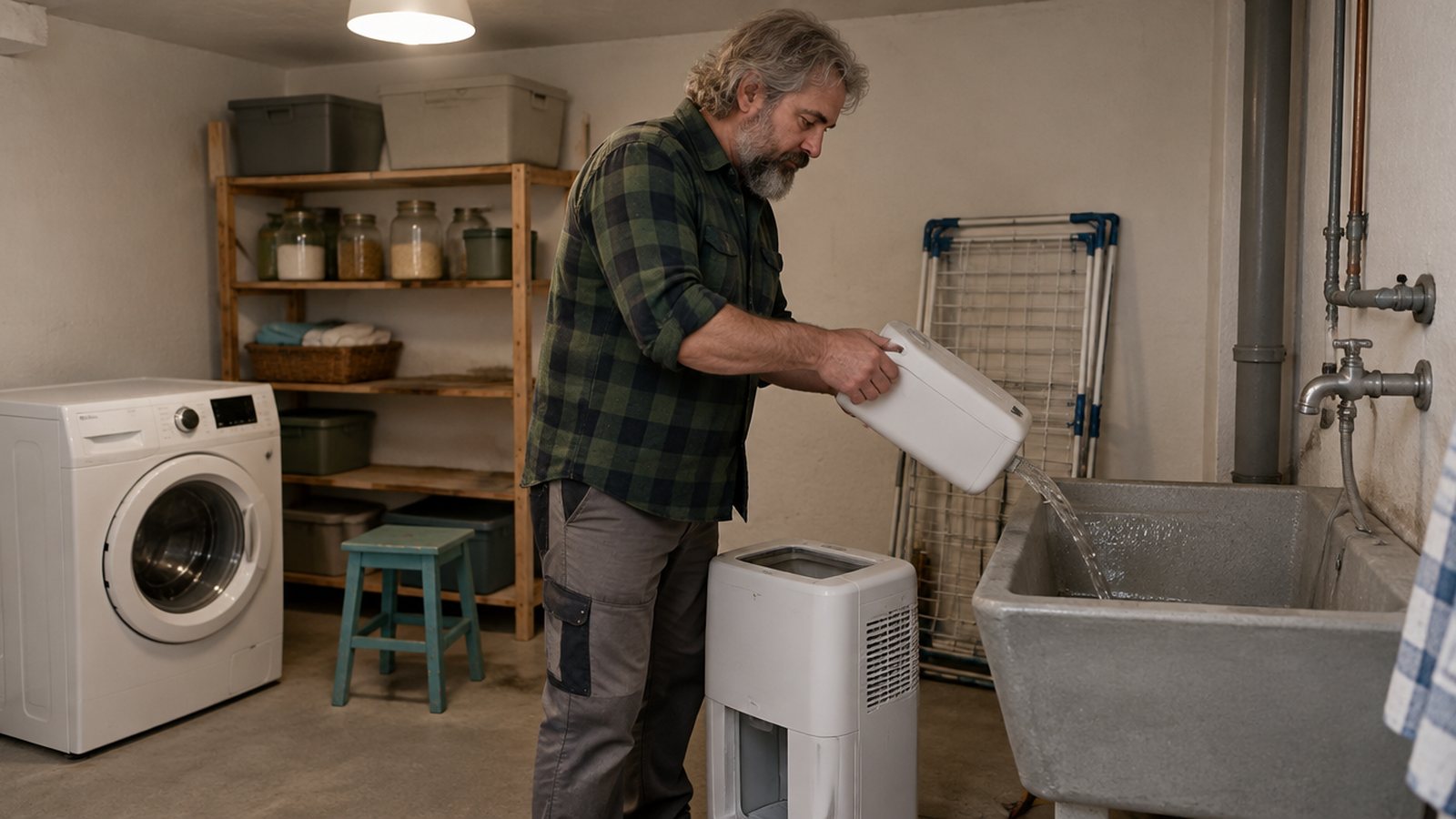
A basement dehumidifier pulls moisture out of the air into a tank or through a hose into a drain. It helps most with condensation and in basements without windows, where you have no way to air the room.
It does not help if water is coming through the wall from the ground. In that case it runs non-stop, uses electricity and fills the tank, while the wall stays wet. A dehumidifier is a fix for moisture in the air, not for water in the wall.
When buying one, look at power consumption and run it only when needed. The hygrometer tells you when. If the basement has a drain, a hose is easier than emptying the tank every day.
Basement damp repair: which methods exist
When the cause is water from the ground or from outside, you need a contractor. The method depends on the cause, the type of wall and whether the ground around the house can be dug out.
- External waterproofing and drainage. The ground next to the foundations is dug out, the wall is cleaned and waterproofed, and a drain leads water away from the house. This is the longest-lasting solution because water never reaches the wall. It needs space to dig, which is often not possible next to a neighbouring house or a road.
- Injection to stop rising damp. A row of holes is drilled at the bottom of the wall and a liquid is injected that seals the pores. This creates a horizontal barrier and the water stops climbing. It helps with rising damp, not with water coming in under pressure.
- Waterproofing the basement from inside. This is done when there is no access from outside. Special waterproofing coatings that withstand water pressure from the other side are applied to the walls and floor from inside. It is often combined with injection.
- Renovation plaster. The old, salt-filled plaster is removed and a vapour-permeable renovation plaster is applied. The wall dries out through it, and the salts stay in the plaster instead of coming to the surface.
- Internal drainage with a pump. Water is not stopped in the wall but led through channels along the wall to a sump, from where a pump sends it outside. It is used when groundwater is high.
After the repair the wall dries out gradually. How long that takes depends on the wall thickness and how wet it is. Apply paint and finishes only when the wall is dry.
Approximate prices per m² for foundation and basement waterproofing are in the guide waterproofing cost per m². What wall injection and renovation plaster cost per metre is explained in the guide rising damp injection cost. If the floor above the basement is cold, see also basement ceiling insulation cost per m². Deal with the damp first, then the insulation.
What to watch out for before the repair
- Do not skip the diagnosis. An inspection with a moisture meter shows whether it is rising damp, water from outside or condensation. The wrong method means you pay for the repair twice.
- Do not paint a damp wall. Paint or a coating over a wet wall traps the moisture inside. It looks fine for one season, then the plaster starts falling off.
- Do not cover a wet wall with drywall or EPS boards. The damp stays behind the boards, and mould grows where you cannot see it.
- Ask what the quote includes. Removing old plaster, taking away rubble, injection, waterproofing, new plaster and painting can all be separate items.
- Ask about the warranty. The quote should state how long the warranty lasts and what it covers.
- In a block of flats, agree with the other owners. A basement in an apartment building is usually a common area. The repair is ordered by the building manager or the owners' representative.
Questions to ask before you agree on the job
- How did you find the cause of the damp? Did you measure moisture in the wall?
- Which method do you suggest and why that one?
- Does the work need to be done from outside, or can it be solved from inside?
- How high does the old plaster need to be removed?
- How long will the wall take to dry and when can it be painted?
- What does the quote include and what is charged separately?
- How long is the warranty and will I get it in writing?
When to call a tradesperson and which one
| Situation | Who to call |
|---|---|
| Rising damp, salts, plaster crumbling at the bottom of the wall | Waterproofing contractor |
| Water comes in after rain, walls wet at full height | Waterproofing contractor, drainage if needed |
| Wet patch in one spot, suspected pipe | Plumber for leak repair |
| Gutter overflows or downpipe empties by the wall | Roofer or gutter specialist |
| New plaster after the repair | Bricklayer or plasterer |
| Painting once the wall is dry | Painter |
| Basement in a block of flats | Building manager or owners' representative |
How to write a good request on Gigron
Include:
- what the property is: house or building, how old it is and whether the basement is fully underground,
- where the damp is: which walls, how high, whether there are salts, mould or water on the floor,
- when it is worst: after rain, in summer or all year,
- what has already been done: gutter cleaning, a dehumidifier, a coating,
- whether there is access from outside: garden, neighbouring house, road,
- city and timing for when the tradesperson can come for an inspection.
Add close-up and wide photos of the walls and a photo of the house from outside. If you are not sure what to write, the guide how to write a request to a tradesperson will help.
Sample request (made up): "House in Sesvete from the 1970s, the basement is fully underground. On two external walls the damp reaches about one metre, there are white salts and the plaster is falling off. After heavy rain a little water appears on the floor. We have cleaned the gutters and a dehumidifier is running, but it does not help. On one side there is a garden, on the other a neighbouring house. I need an inspection and a repair proposal, next week works for me."
On Gigron, see the waterproofing category or contractors for waterproofing in Zagreb. For Zagreb there is also a separate category for foundation and basement waterproofing. If you suspect a pipe, see leak repair, and for plastering and painting masonry work and painting and decorating.
Find a tradesperson for basement damp on Gigron
On Gigron you post a request and local tradespeople reply with offers. It is free and you do not have to call ten numbers.
Download the app:
Frequently asked questions
Can I air the basement in winter?
Yes, and winter is usually a good time to do it. Cold winter air holds little moisture, so the basement gets drier after airing. Air it briefly and close the windows so the pipes do not get too cold. In summer it is the other way round: air it only at night or early in the morning.
Does a dehumidifier help if the wall is wet?
It lowers humidity in the air and the smell, but it will not stop water coming through the wall from the ground. If the wall stays wet at the bottom or water collects on the floor, you need waterproofing or injection. A dehumidifier can then only help while the repair and drying are under way.
Can a basement be repaired from inside?
Yes, when there is no access from outside for digging. In that case injection, internal waterproofing coatings and renovation plaster are combined. External waterproofing with drainage lasts longer because water never reaches the wall, but it is not always possible. A contractor will judge which method makes sense after an inspection.
In short: a damp basement is most often caused by rising damp from the ground, water from outside or condensation. Find the cause first. In winter air the basement briefly, in summer only at night, keep humidity below 60% and check the gutters. A dehumidifier helps with moisture in the air, but not with water in the wall. For basement damp repair, ask a waterproofing contractor for an inspection and do not paint the wall until it is dry.