Damp and mould on walls: causes, removal and prevention
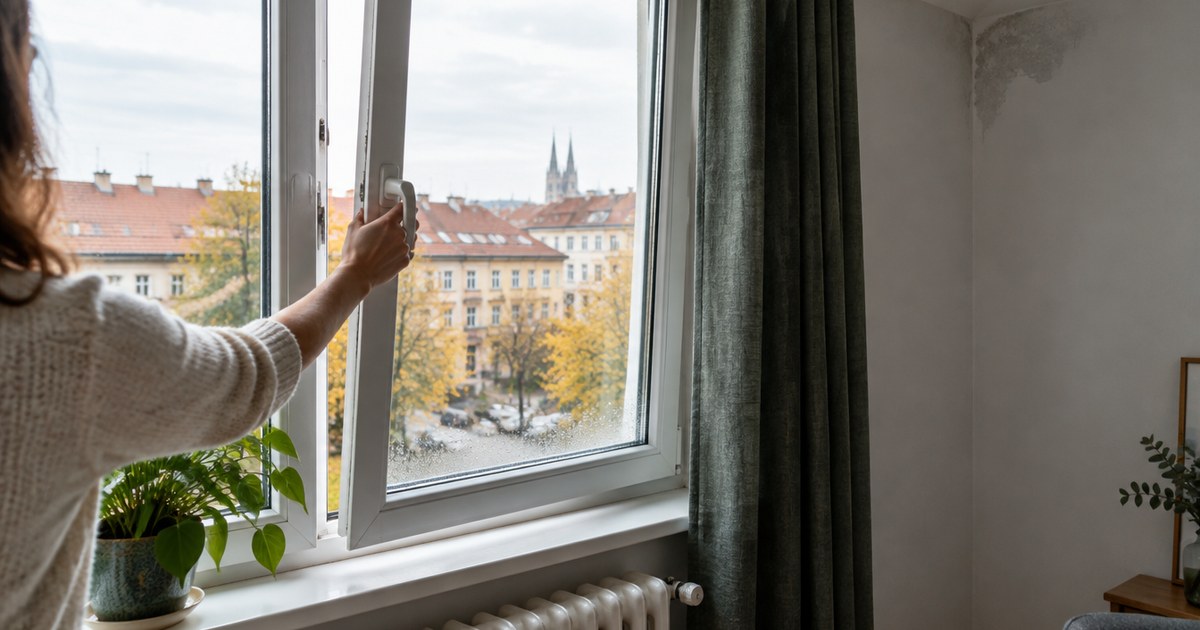
As soon as the heating comes on, grey and black spots appear in a corner of the room or behind the wardrobe. The windows are misted up in the morning, and the wall feels cold and damp. Mould on walls is one of the most common problems in Croatian flats and houses from October to March. The good news: in most cases you can find the cause and fix it.
Here you will learn where damp on walls comes from, how to quickly tell condensation from moisture inside the wall, how to remove mould safely and what to do so it does not come back. At the end there is a list of when to call a tradesperson and which one.
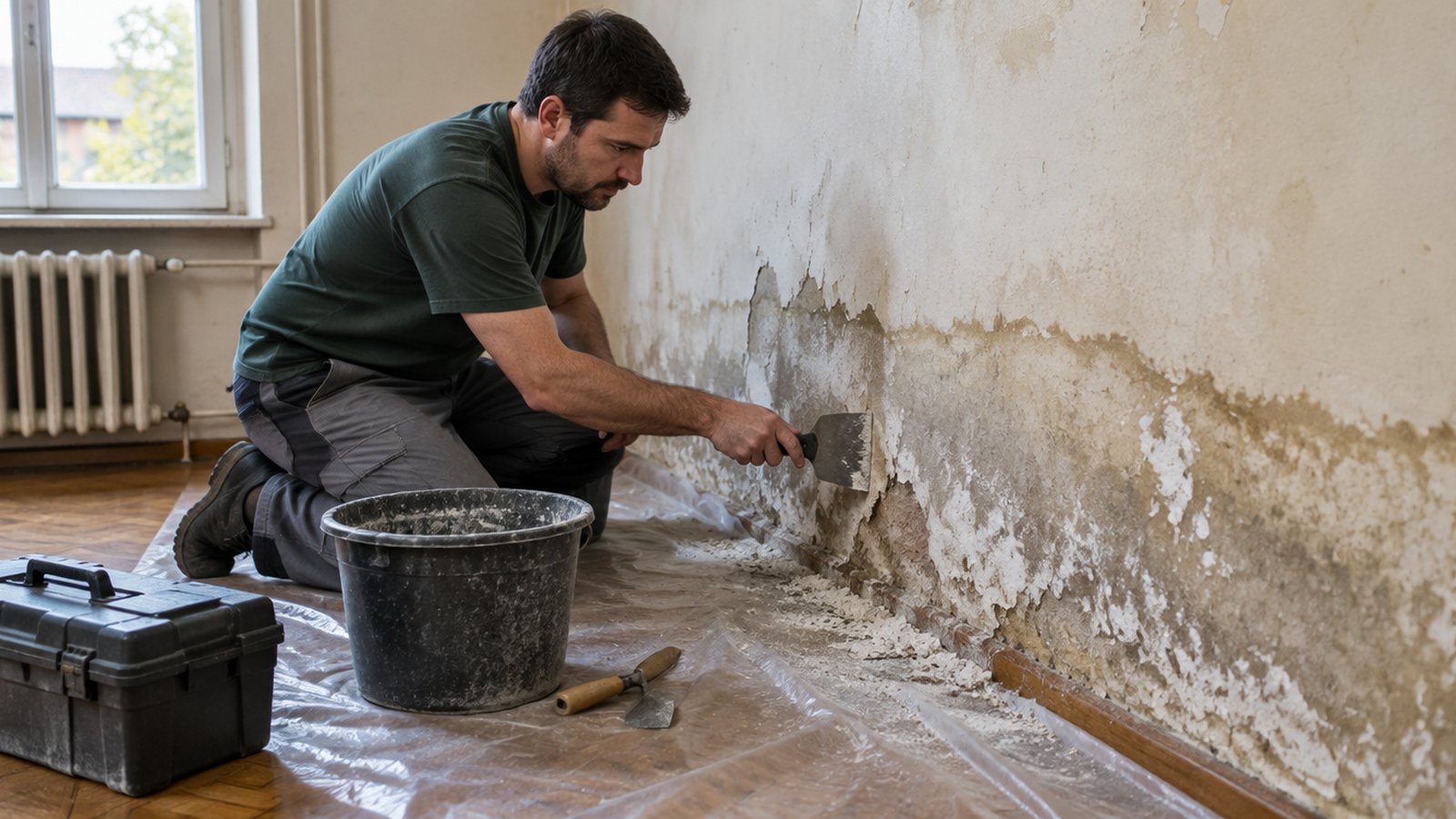
Why mould grows on walls
Mould grows when it has three things: moisture, a cold surface and a little "food" (dust, paint, wallpaper, plaster). In winter the air in your home is warm and full of water vapour from cooking, showers, drying laundry and breathing. When that air touches a cold outside wall, the vapour turns into water. The wall stays damp all the time and mould spreads quickly.
That is why mould most often appears:
- in the upper corners of outside walls,
- behind wardrobes and beds pushed against an outside wall,
- around windows and under the window sill,
- in bathrooms without a window or extractor fan,
- in bedrooms that are poorly heated.
Mould is not just an ugly stain. It can trigger allergies and breathing problems, especially in children, older people and people with asthma. So do not leave it until spring.
Where damp on walls comes from: three main causes
If you are wondering how to get rid of mould on walls, first find out where the water comes from. If you only wipe the mould off and the cause stays, the stain will be back within a few weeks.
| What you see | Likely cause | What to do |
|---|---|---|
| Black spots in upper corners, behind wardrobes, around windows; worse in winter | Condensation (too much moisture in the air, cold wall) | Air the room, heat evenly, move furniture away from the wall |
| Dark band at the bottom of the wall, white salts, crumbling plaster; mostly ground floors and basements | Rising damp from the ground | Damp-proofing and wall repair (tradesperson) |
| Stain spreads after rain, below the ceiling or around a window | Water getting in from outside (roof, gutter, facade, window) | Repair the roof, gutter or facade, or reseal |
| Wet patch next to pipes or below a bathroom, even in summer | Leaking pipe | Plumber, leak detection and repair |
Condensation: the most common cause in winter
If mould appears in the same places every winter and disappears in summer, it is almost certainly condensation. It is common in older buildings without insulation and in flats with new windows. New windows seal well, so moisture no longer escapes through gaps. That means you need to air the rooms more often than before.
Pay special attention to thermal bridges: corners, the joint between wall and ceiling, concrete beams and lintels above windows. These spots are colder than the rest of the wall, so vapour condenses there first.
Rising damp from the ground
With rising damp, water from the ground slowly climbs up through the wall, like through a sponge. You see it as a darker, damp band at the bottom of the wall, with white salts and crumbling plaster. It does not depend on heating and it does not go away in summer.
Airing and paint will not help here. You need damp-proofing (for example injection, or cutting the wall and inserting a damp-proof layer) and new renovation plaster. This is a job for a tradesperson.
Water from outside or a leaking pipe
A stain that gets worse after rain means water is getting in from outside: through the roof, a blocked gutter, a crack in the facade or a badly sealed window. If the stain is next to pipes or below a bathroom and stays wet even when it is not raining, a pipe is probably leaking. Do not wait, because the damage grows every day.
Quick test: condensation or damp in the wall?
For this test you need a piece of aluminium foil and some tape.
- Wipe and dry the part of the wall with the stain.
- Tape the foil (about 30 × 30 cm) to the wall on all sides.
- Leave it for 24 to 48 hours.
- Remove the foil and take a look.
If the droplets are on the outer side of the foil, the moisture comes from the air. That is condensation. If the side facing the wall is damp, the water is coming from the wall itself, so look for the cause in the foundations, the roof or the pipes.
It is also worth having a hygrometer (an indoor humidity meter). It is cheap, and you can see straight away whether you have a problem. Relative humidity at home should be roughly 40 to 60%. If it stays above 60% all winter, mould is only a matter of time.
How to remove mould from walls, step by step
Removing mould from a wall is something you can do yourself if the patch is small. If the mould is larger than about one square metre, comes back right after cleaning, or has got into wallpaper or plasterboard, call a professional.
- Protect yourself. Wear rubber gloves, safety glasses and a mask (FFP2). Open the window and close the door to the rest of the home.
- Do not brush it dry. Dry scraping sends spores into the air. Lightly dampen the patch first.
- Apply a mould remover. Use a spray from the shop and follow the instructions on the label, especially the contact time.
- Wipe and dry. Wipe the wall with disposable cloths or paper towels, then dry it well. Put the cloths in a bag and tie it straight away.
- Wait a few days. If the stain does not come back and the wall is dry, you can paint it.
Forums often recommend vinegar and baking soda. They can help with tiny spots on smooth surfaces, but they do not fix the cause. Important: never mix bleach with vinegar or with products that contain ammonia, because this produces toxic gases.
Does anti-mould paint help?
Anti-mould paint works well as a final coat once you have fixed the cause and cleaned the wall. If you just paint over the mould while the wall is still damp, the stain will come through the paint. With rising damp, neither ordinary nor special paint will help until the wall is repaired.
How to prevent damp at home in winter: checklist
These habits help the most against condensation:
- Air the room with a cross-draught for 5 to 10 minutes, several times a day (in the morning, after cooking, in the evening). Do not leave the window tilted open all day.
- After showering and cooking, switch on the extractor fan or open the window.
- Track humidity with a hygrometer and keep it between 40 and 60%.
- Do not dry laundry in a room without airing it. If you have no choice, run a dehumidifier.
- Move wardrobes and beds a few centimetres away from outside walls.
- Heat all rooms evenly. Do not turn the heating off completely in rooms you do not use.
- If you have air conditioning, try the dehumidifying mode (usually called "dry").
- Clean the gutters and check that water is not running down the facade.
- Keep window and door seals in good shape, but do not block any ventilation openings.
If a radiator only heats at the bottom or only at the top, read our guide radiator not heating. For gutters, the facade and heating, see also preparing your home for winter: checklist.
When to call a tradesperson, and which one
You can clean a small patch yourself if you know the cause. Call a professional when the damp keeps coming back, when the bottom of the wall is wet, when the stain grows after rain or when you suspect a leak.
| Problem | Who you need |
|---|---|
| Damp and salts at the bottom of the wall, plaster falling off | A damp-proofing specialist, then a mason |
| Stain next to pipes, water coming through to the neighbours | A plumber (leak detection and repair) |
| Stain below the top-floor ceiling, after rain | A roofer |
| Cold outside walls, mould every winter | A facade and thermal insulation contractor |
| Wall is dry and repaired, needs refreshing | A painter (scraping, skimming, painting) |
On Gigron, check the categories damp-proofing and masonry work. For leaks there are leak repair and plumbing, for the roof roofs, and for outside walls facades. Once the wall is dry, find a painter under painting and decorating and interior wall painting.
If you are in Zagreb, see damp-proofing in Zagreb and painting and decorating in Zagreb.
How to write a good request on Gigron
The clearer your request, the faster you get quotes you can compare. Include:
- where the stain is: which room, corner, bottom of the wall, around a window or below the ceiling,
- how big it is (roughly, in centimetres or square metres),
- when it appears: only in winter, after rain or all year round,
- what kind of property: flat or house, which floor, old or new building, insulated facade or not,
- what you have already tried: cleaning, anti-mould paint, a dehumidifier,
- city, neighbourhood and timing that suit you.
Add a few photos of the stain close up and of the whole wall.
Example: "In my ground-floor flat in Zagreb (Trešnjevka), damp is rising at the bottom of the living room wall up to about 60 cm. There are white salts on the wall and the paint is peeling. It happens all year round. I need an assessment of the cause and a quote for the repair. Next week works for me."
Find a tradesperson on Gigron
On Gigron you post a request and local tradespeople get back to you with quotes. It is free, and you do not have to call ten numbers.
Download the app:
Frequently asked questions
Is mould on walls dangerous?
It can be, especially for children, older people and anyone with allergies or asthma. If the patch is large, do not sleep in that room until it is fixed.
Does a dehumidifier help?
It helps with condensation, especially if you dry laundry indoors. With rising damp or a leak it does not solve the problem, it only slows it down a little.
In short: mould on walls means there is too much water somewhere. In winter it is usually condensation, so airing, even heating and less moisture in the air help. Damp at the bottom of the wall, stains after rain and leaks need a tradesperson. Find the cause first, and only then clean and paint.