How to stop water pipes freezing, and what to do if they do
The first frost usually arrives overnight. In the morning you open the tap and get a trickle, or nothing at all. If water freezes inside a pipe, the pipe can split, and you often only see the damage once the ice melts and water starts leaking into a wall or the basement. That is why protecting water pipes from freezing is a job for October and November, not January.
Below is a short checklist to work through before the frost: how to insulate pipes, drain outdoor taps and protect the water meter. You will also learn how to thaw a frozen pipe safely and what to do if a pipe bursts anyway.
Why pipes freeze and burst
Water expands as it freezes. The ice puts strong pressure on the pipe and can crack both metal and plastic pipes. The leak often only starts when the weather warms up and the ice melts.
Standing water freezes most easily. Croatian water utilities warn about exactly this: the biggest risks are pipework that is not in use, outdoor taps and pipes in unheated spaces. The public mains are rarely the problem, because they are buried deep enough and the water in them keeps moving. The problem is the plumbing in your house, your yard and your water meter pit.
One more thing worth knowing: your internal plumbing starts after the water meter. The customer, in practice the owner, looks after it at their own cost. If it freezes and bursts, the water utility does not pay for the repair.
Where water pipes freeze most often
Walk around the house and the yard and look for pipes that sit in the cold with no protection.
| Where | Why it is risky | What to do |
|---|---|---|
| Outdoor tap and garden hose | Exposed to frost, water sits in the pipe | Close the valve inside, drain the tap, remove the hose |
| Water meter pit in the yard | Cold air gets in if the pit is not closed and insulated | Close the lid, line the pit with polystyrene or XPS boards |
| Unheated basement, garage or storage room | Temperature drops below zero, especially with a broken window | Insulate the pipes, close windows and doors |
| Pipes on an uninsulated outside wall | The wall is cold and cools the pipe with it | Insulate the pipe, open cabinet doors in very cold weather |
| Holiday home or empty house | No heating and no water flow | Close the valve after the meter and drain the water |
Protecting pipes from freezing: checklist before the frost
Here is how to protect water pipes from freezing. You can do most of it yourself in an afternoon, with no special tools.
Insulating water pipes against frost
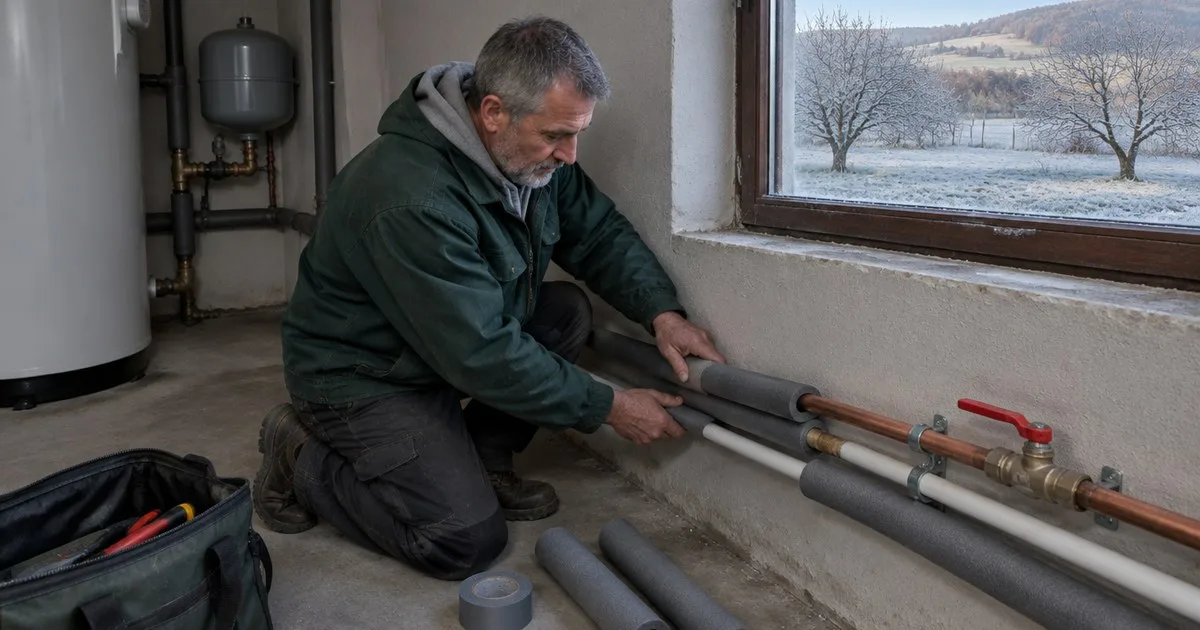
The simplest option is ready-made foam pipe sleeves with a slit along their length. You can buy them in plumbing supply shops and DIY stores.
- Measure the pipe diameter and buy sleeves of the same size.
- Push the sleeve over the pipe so the slit closes properly.
- Tape the joints and the ends so cold air cannot get in.
- Insulate hot water pipes too if they run through an unheated space.
- Wrap the bends, but leave valve handles free.
For pipes that are always in the cold, there are also heating cables made for pipes, some with a thermostat. Buy a cable designed specifically for pipes and follow the manufacturer's instructions. If you are not confident with electrics, leave this to a professional.
Do not wrap pipes in rags, cardboard or sponge. Water utilities warn that these materials soak up water and actually make freezing more likely.
Outdoor taps and hoses
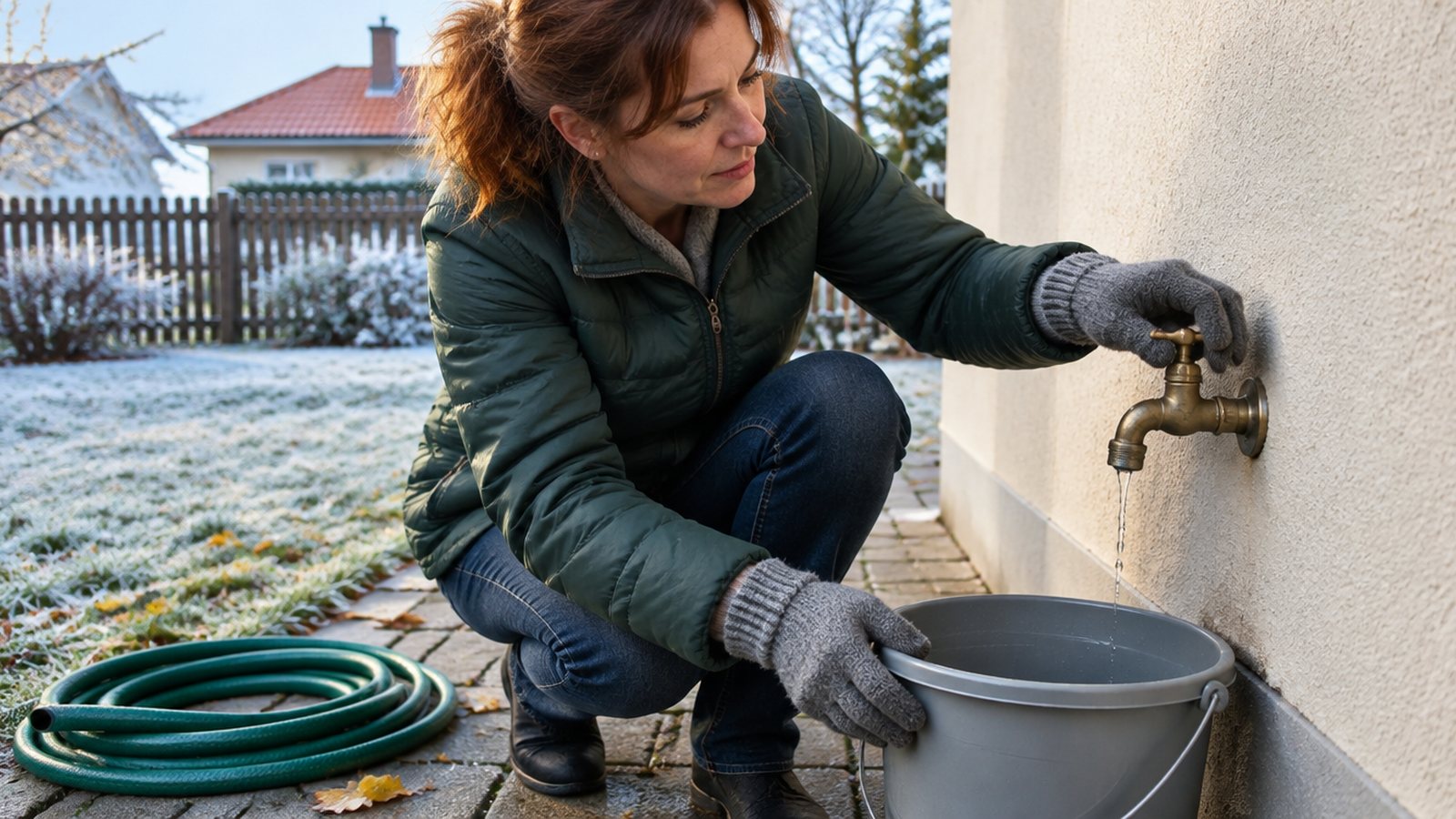
The outdoor tap is usually the first thing to go. Before the frost:
- Disconnect the hose, drain it and store it.
- Close the indoor valve that feeds the outdoor tap.
- Open the outdoor tap and let all the water run out.
- Leave the tap open. If a little water is left in the pipe, it has room to expand.
Protecting the water meter from frost
Protecting the water meter from frost is advice water utilities repeat every winter. In a house with a yard, the meter is usually in a pit.
- Check that the pit lid is closed and undamaged.
- If the pit is not insulated, line the walls and the lid with polystyrene, XPS boards or insulating felt.
- Do not wrap the meter in rags or anything else that soaks up water.
- Take care not to damage the seal on the meter, and make sure the meter can still be read.
- In an apartment building, check the basement where the meters are. Cold air comes in through a broken or open window, and the meter can freeze.
Holiday homes, garages and houses you do not heat
If you are going away for a while, or you have a holiday home, garage or storage building that is not heated in winter, water utilities advise you to:
- close the valve after the water meter,
- open the taps and let the water drain,
- drain any pipes you do not use in winter.
If a water heater or the heating system is on that part of the plumbing, ask a plumber or check the manufacturer's instructions before draining. For the rest of the house, see our winter home checklist.
When it gets really cold: what to do that night
When the forecast says hard frost, especially several days in a row:
- Let cold water trickle from a tap fed by an exposed pipe. Moving water is harder to freeze.
- Open the cabinet doors under sinks on outside walls so warm air reaches the pipes. Move cleaning products out of children's reach.
- Keep the heating at the same temperature day and night. Your bill may be a little higher, but a burst pipe costs far more.
- If you are away for a few days, do not switch the heating off. The American Red Cross advises keeping it no lower than about 13 °C (55 °F).
- Keep the garage and basement windows closed if pipes run through those spaces.
If a radiator is cold right when you need it, see our guide radiator not heating.
Frozen pipes: how to thaw a water pipe
If only a trickle comes out of the tap, or nothing at all, and the water company has not announced an outage, a pipe has probably frozen somewhere. It is most often a section on an outside wall or where the pipe enters the house.
- Find the main valve. Know where it is and how to close it. When the ice melts, a crack in the pipe can start leaking.
- Look at the pipe. If you see a crack, a bulge or water, close the main valve straight away and call a plumber.
- Open the tap. Leave it open while you work. As the ice starts to melt, water will flow and help melt the rest.
- Warm it slowly, starting from the tap end. Use a hair dryer on a lower setting, a heating pad or towels soaked in hot water. A space heater is fine too, kept away from anything that can catch fire.
- Keep warming until full water pressure returns. Do not rush. Heating too fast can damage the pipe.
- Check the other taps. If one pipe has frozen, another one may have too.
Never use a blowtorch, an open flame or a bottled-gas heater. They are a fire and fumes hazard. Also keep the hair dryer, extension leads and heater away from water.
If you cannot find the frozen section, if the pipe is inside a wall or under the floor, or if nothing changes, call a plumber.
What to do if a pipe bursts
- Close the main valve after the water meter. If you live in an apartment building, ask the building representative where the valve for your flat is before winter starts.
- Drain the system. Open the cold taps and flush the toilet.
- Watch out for electricity. If water is leaking near sockets or appliances, switch the power off at the fuse box, but only if it is safe. If the fuse box is wet, do not touch it and call an electrician.
- Switch off the water heater or boiler if you suspect part of the hot water or heating system is frozen or damaged.
- Call a plumber. A cloth or tape around the pipe only helps until the plumber arrives.
- If the burst is on the connection or the meter, contact your water utility. In Zagreb, ViO's 24-hour line is 01 6163 999.
If water has been leaking into a wall for a while, let the wall dry out properly after the repair. Otherwise stains appear quickly, as explained in our guide to damp and mould on walls.
When to call a plumber
| Problem | Who you need |
|---|---|
| Burst pipe, leak inside a wall or under the floor | Plumber (leak detection and repair) |
| No valve for the outdoor tap, or the valve does not close | Plumber |
| Pipes freeze in the same spot every winter | Plumber (insulating or rerouting pipes) |
| Frozen or burst on the connection or at the meter | Your water utility |
| Boiler or water heater shows an error after a frost | Heating engineer |
On Gigron, see the categories plumbing work and leak repair. For boilers and radiators there is heating.
If you are in Zagreb, see plumbers in Zagreb and leak repair in Zagreb. You can also find plumbers in Karlovac, Varaždin and Bjelovar.
How to write a good request on Gigron
Include:
- what happened: no water, a burst pipe, or you want protection before winter,
- where the pipe is: outdoor tap, basement, garage, meter pit, wall,
- what kind of property: flat, house or holiday home,
- what you have already done: closed the valve, warmed the pipe, insulated it,
- town, neighbourhood and timing, and whether it is urgent.
Add photos of the pipe, the valve and the spot where it leaks.
Example: "In a house in Sesvete there is no water in the bathroom after the frost. The pipe runs through an unheated garage. I can't see a leak and I know where the main valve is. I need a plumber to find the frozen section and insulate the pipes. Urgent, today or tomorrow morning."
Find a tradesperson on Gigron
On Gigron you post a request and local tradespeople get back to you with offers. It is free, and you don't have to call ten different numbers.
Download the app:
Frequently asked questions
At what temperature do pipes freeze?
Water freezes at 0 °C. Unprotected pipes in an unheated space can freeze as soon as the outside temperature drops below zero. The risk grows when it stays cold for several days and when there is wind.
Should I leave a tap dripping all night?
In very cold weather, letting cold water trickle from a tap fed by an exposed pipe helps. You use a little water, but moving water is harder to freeze.
Who pays if the water meter freezes or a pipe bursts?
Water utilities point out that protecting the meter and the plumbing after it is the customer's responsibility. Repairs to the plumbing after the meter are paid by the customer, not the utility. Who pays for replacing a frozen meter depends on your water utility's rules, so check with them.
In short: protecting water pipes from freezing is simple if you do it in time. Insulate exposed pipes, drain outdoor taps, protect the water meter and don't leave water in a house you don't heat. If a pipe freezes anyway, warm it slowly and never with a flame. If it bursts, close the main valve first and then call a plumber.