Damp walls in Croatia: rising damp, condensation or a leak?
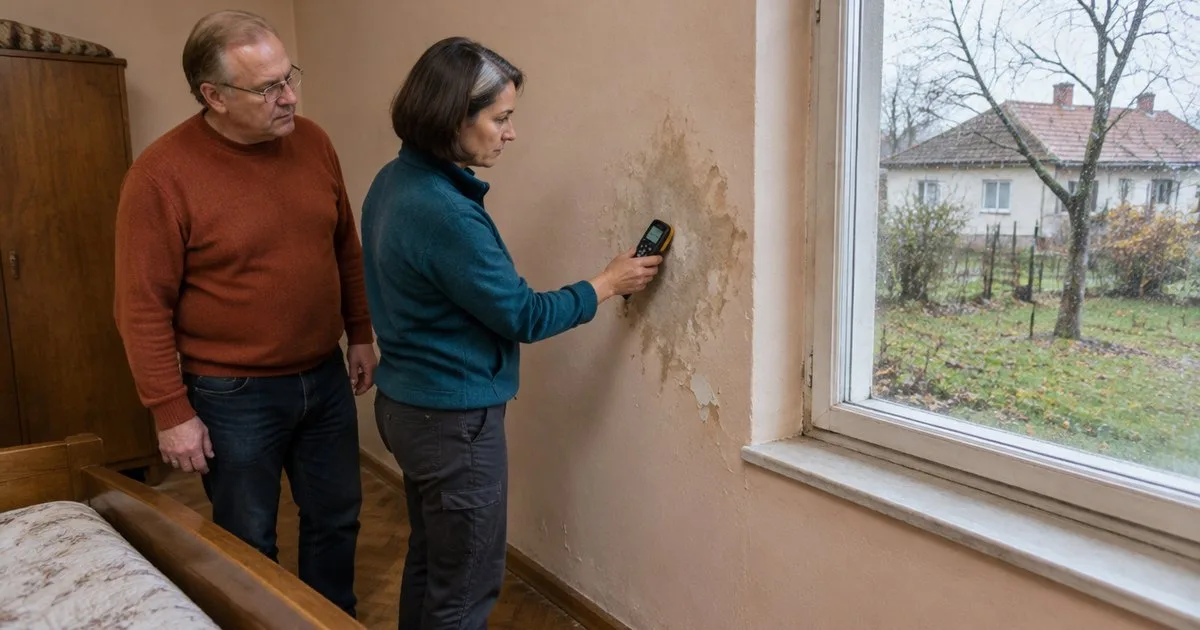
The wall is wet at the bottom, the paint is peeling and a black stain comes back in the corner every winter? Then people search for damp walls, rising damp or how to get rid of damp. The answer depends on where the water comes from. The same stain can be water from the ground, moisture from the air, rain from outside or a leaking pipe, and each cause needs a different fix.
This guide shows you how to recognise the cause by where and when the stain appears, which repair methods exist, roughly what they cost in Croatia and which tradesperson you need. For each cause we also point you to a detailed guide.
In short
- A damp band at the bottom of the wall, white salts and crumbling plaster, all year round: most often rising damp from the ground. The fix is a horizontal barrier in the wall, usually by injection, roughly €30–60 per running metre, plus renovation plaster at about €18–55/m².
- Black spots in corners, around windows and behind wardrobes, only in winter: that is condensation, moisture from the air. Ventilation, even heating and dealing with cold spots on the wall help.
- A stain that grows after rain: water is getting in from outside, through a gutter, the roof, a terrace or the facade.
- A stain next to the bathroom or kitchen that spreads even without rain: possibly a leaking pipe. Check the water meter.
- Find the cause first, then repair and paint. Paint and ordinary plaster do not hold on a wet wall.
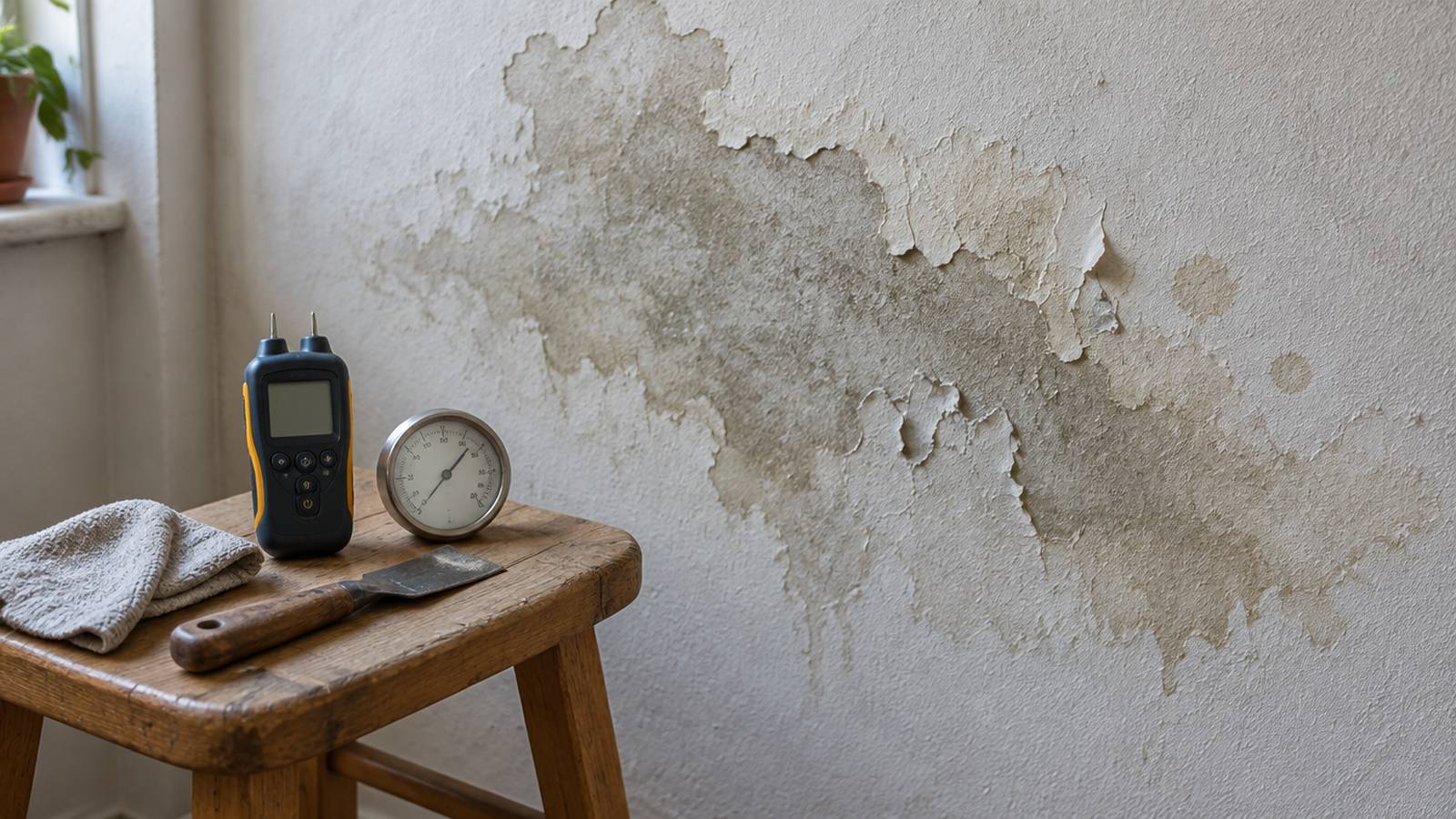
Need someone for this job? Describe it and get quotes →
Four causes of damp walls
| Cause | Where you see it | When | Typical signs |
|---|---|---|---|
| Rising damp from the ground | Bottom of walls on the ground floor or in the basement, usually up to about 1 m high | All year, worse in rainy months | Dark band, white salts (efflorescence), crumbling plaster, blistering paint |
| Condensation | Corners, around windows, behind furniture, outside walls | Mostly in winter | Droplets on glass, black mould spots, stale air |
| Water from outside | Below the top-floor ceiling, next to a gutter, under a terrace, on the facade | After rain or snow | The stain grows after rain, darker edges |
| Leaking pipe | Next to the bathroom, kitchen, along pipe runs, at the neighbour below | Constantly, regardless of weather | The stain spreads, the water meter turns even when no water is used |
Two causes often come together. An old house on the ground floor can have rising damp at the bottom of the wall and condensation in the corners in winter. So look at each stain separately.
How to find the cause in three steps
- Measure where the stain is. Note the room, the wall and how high the damp goes. A band of the same height along the floor points to water from the ground. A stain in an upper corner points to the roof, a gutter or condensation.
- Watch when it appears. Photograph the same wall once a week from the same spot. Only in winter means condensation, after rain means water from outside, and steady spreading means ground water or a leak.
- Do two simple tests. The aluminium foil test shows whether the moisture comes from the air or from the wall. The steps are in the guide damp and mould on walls. The water meter test shows whether water is leaking somewhere. It is described in the guide burst pipe in the wall.
A hygrometer, a cheap air humidity meter, also helps. Relative humidity indoors should be roughly 40–60 %. If it stays above 60 % in winter, condensation is very likely.
When the cause is not clear, a measurement is worth paying for. Measuring moisture in a wall costs roughly from €50, and with thermal imaging €180–300. Some contractors include it in their repair quote.
Rising damp in walls
Rising damp happens when the wall soaks up water from the ground, like a sponge. Older houses often have no horizontal damp-proof course between the foundation and the wall, or it has failed over time. Water rises through the brick and plaster, evaporates at the surface and leaves salts behind. These white salts are called efflorescence.
Signs of rising damp:
- a damp or dark band along the floor, roughly the same height along the whole wall,
- white powder or salt crystals on the plaster,
- plaster crumbles and paint blisters and falls off,
- the problem is there all year, not only in winter,
- it appears on the ground floor, in basements and in houses without a basement.
How rising damp is repaired
The lasting fix is to stop water from rising through the wall. The most common methods:
- Wall injection. Holes are drilled in a row near the bottom of the wall and a liquid is injected that forms a horizontal barrier. It is the most common choice for family houses and ground-floor flats. It costs roughly €30–60 per running metre, and in some price lists €80–130. Details, a worked example and questions for the contractor are in the guide rising damp injection cost.
- Renovation (dehumidifying) plaster. After the old, salt-soaked plaster is removed, a plaster is applied that lets the wall dry and holds the salts. With labour it costs roughly €18–55/m². Renovation plaster alone does not stop water from the ground; it goes together with a barrier.
- Less water around the foundation. An overflowing gutter, a downpipe that empties next to the wall and ground sloping towards the house all make damp worse. Sometimes the first and cheapest step is fixing the gutters. See how to clean gutters and gutter cost per metre.
- External waterproofing of the foundation. Used for basements and walls below ground level. It needs digging along the house, so it is a bigger and more expensive job.
Be careful with devices that promise to dry a wall without any work. If you consider one, ask for a written moisture measurement before installation and again after a few months.
How long the wall takes to dry
The barrier stops new water quickly, but the wall then dries for months. Ordinary walls often take 3–6 months, thick stone walls even longer. Apply the final paint only once the wall is dry.
Example cost
For a ground-floor living room in an older house with about 9 m of damp wall, injection and renovation plaster with a moisture measurement come to roughly €480–1,150. The breakdown by item is in the guide rising damp injection cost.
Condensation: moisture from the air
Condensation forms when warm, humid indoor air meets a cold wall or window. Water from the air settles on the surface, and mould soon starts in corners and behind furniture. It is most common in winter, in bedrooms, bathrooms and flats without an insulated facade.
What helps:
- air the rooms with a cross-draught several times a day, briefly and with windows wide open,
- heat evenly, without completely cold rooms,
- keep humidity around 40–60 % and, if you can, do not dry laundry in the room,
- move wardrobes and beds away from outside walls,
- for cold outside walls, thermal insulation helps in the long run, for example a facade.
How to remove mould in 5 steps is in the guide damp and mould on walls, and why windows sweat in the guide condensation on windows.
Water from outside and leaking pipes
Water from outside usually leaves a stain that grows after rain. The most common causes are an overflowing or blocked gutter, a damaged roof or flashing, a terrace or balcony without proper waterproofing and a damaged facade. Rough prices for terrace and flat roof repairs are in the guide waterproofing cost per m².
A leaking pipe does not depend on the weather. The stain spreads even when it does not rain, often next to the bathroom, the kitchen or at the neighbour below. Close all taps, photograph the water meter and check whether it moves. What to do straight away and how a plumber finds the fault is in the guide burst pipe in the wall.
Damp basement
A basement has all causes at once: water from the ground, water from outside after rain and condensation in summer. How to tell them apart, when a dehumidifier helps and which repair methods exist is in the guide damp basement: causes and fixes.
What not to do
- Do not paint over a wet wall. The paint blisters and falls off within months, and the stain comes back through it.
- Do not use ordinary cement plaster on a wall with rising damp. It traps the moisture in the wall, so damp and salts rise even higher.
- Do not remove efflorescence with acid. You will damage the plaster, and the salts come back as long as water gets into the wall.
- Do not expect a dehumidifier to dry the wall. It lowers humidity in the air. With ground water or a leak it only slows the problem down.
- Do not knock off the plaster before you know the cause. The tradesperson needs to see the stain as it is, otherwise you pay twice.
What repairing damp walls costs
| Item | Approximate cost |
|---|---|
| Measuring moisture in the wall | from about €50, with thermal imaging €180–300 |
| Wall injection (horizontal barrier) | about €30–60 per running metre, in some price lists €80–130 |
| Renovation plaster with labour | about €18–55/m² |
| Terrace waterproofing | roughly €11–40/m² |
| Example: ground-floor room, about 9 m of damp wall | roughly €480–1,150 |
The ranges are approximate and taken from our detailed guides, where the sources are described. A contractor can give an exact price only after seeing the wall and measuring the moisture.
When to call a tradesperson, and which one
| Problem | Who you need |
|---|---|
| Damp and salts at the bottom of the wall, plaster falling off | A damp-proofing and waterproofing specialist, then a mason |
| Stain next to pipes, leak at the neighbour | A plumber (leak detection and repair) |
| Stain below the top-floor ceiling after rain | A roofer |
| Cold outside walls, mould every winter | A facade and thermal insulation contractor |
| The wall is dry and repaired and needs renovating | A painter |
On Gigron see the categories damp and water ingress repair, foundation and basement waterproofing and masonry. For leaks there is leak repair, for the roof roofs, for outside walls facades and for the final paint painting.
How to write a good request on Gigron
The clearer the request, the faster you get quotes you can compare. Write:
- where the damp is: which room, which wall and how high,
- when it appears: all year, only in winter or after rain,
- what kind of building: house or flat, ground floor or upper floor, year of construction, whether there is a basement,
- what the wall is made of, if you know: brick, stone, concrete,
- what you have already tried: paint, a dehumidifier, cleaning the gutters,
- town and timing that suit you.
Add photos of the wall close up and from a distance, with a tape measure next to the stain.
Example (made up): "House in Osijek from the 1970s, no basement. On two inside walls on the ground floor the damp goes up to about 70 cm, there are white salts and the plaster is falling off. The problem is there all year, and we cleaned the gutters last autumn. I need a moisture measurement and a quote for the repair. Next week suits me."
Find a tradesperson on Gigron
On Gigron you post a request and local tradespeople reply with quotes. It is free and you don't have to call ten numbers.
Download the app:
Frequently asked questions
How do I get rid of damp in walls?
Find the cause first. Ground water is stopped by a horizontal barrier in the wall, usually injection, together with renovation plaster. Condensation is solved by ventilation, heating and insulating cold walls. Water from outside means fixing the gutter, roof or terrace, and a leak means fixing the pipe.
What is rising damp?
Water from the ground that rises through the wall because there is no working horizontal damp-proof course. It shows as a damp band at the bottom of the wall with white salts and crumbling plaster, all year round.
Can rising damp be fixed from the inside?
Yes, injection can be done from the inside of the wall, without digging around the house. External waterproofing of the foundation needs excavation and is mostly used for basements.
How long does a wall take to dry after the repair?
An ordinary wall usually takes 3–6 months, a thick stone wall even longer. Paint only once the wall is dry.
Does a dehumidifier help with damp walls?
It helps with condensation, especially if you dry laundry indoors. With rising damp and leaks it does not fix the cause, it only slows it down a little.
How do I dry out a damp wall?
A wall dries out for good only once you stop the water getting into it. After that, removing the salty plaster, renovation plaster, ventilation and patience help, because drying takes months.
Remember: damp walls have four possible causes, and each needs a different fix. Look at where the stain is and when it appears, do the foil and water meter tests, and only then call the right tradesperson. Paint comes last, once the wall is dry.
Need someone for this job?
Add the details, for example where and by when.
The AI assistant writes the post; you post it in the Gigron app.