Cracks in walls: which are harmless and when to call an expert

You notice a thin line above a door or in the corner of a room. You wonder whether it is just the plaster or something more serious. Thin cracks in walls, in the skim coat or paint, are usually not dangerous. Some, however, show that the wall or the building is moving. It is important to tell them apart before you fill and repaint them.
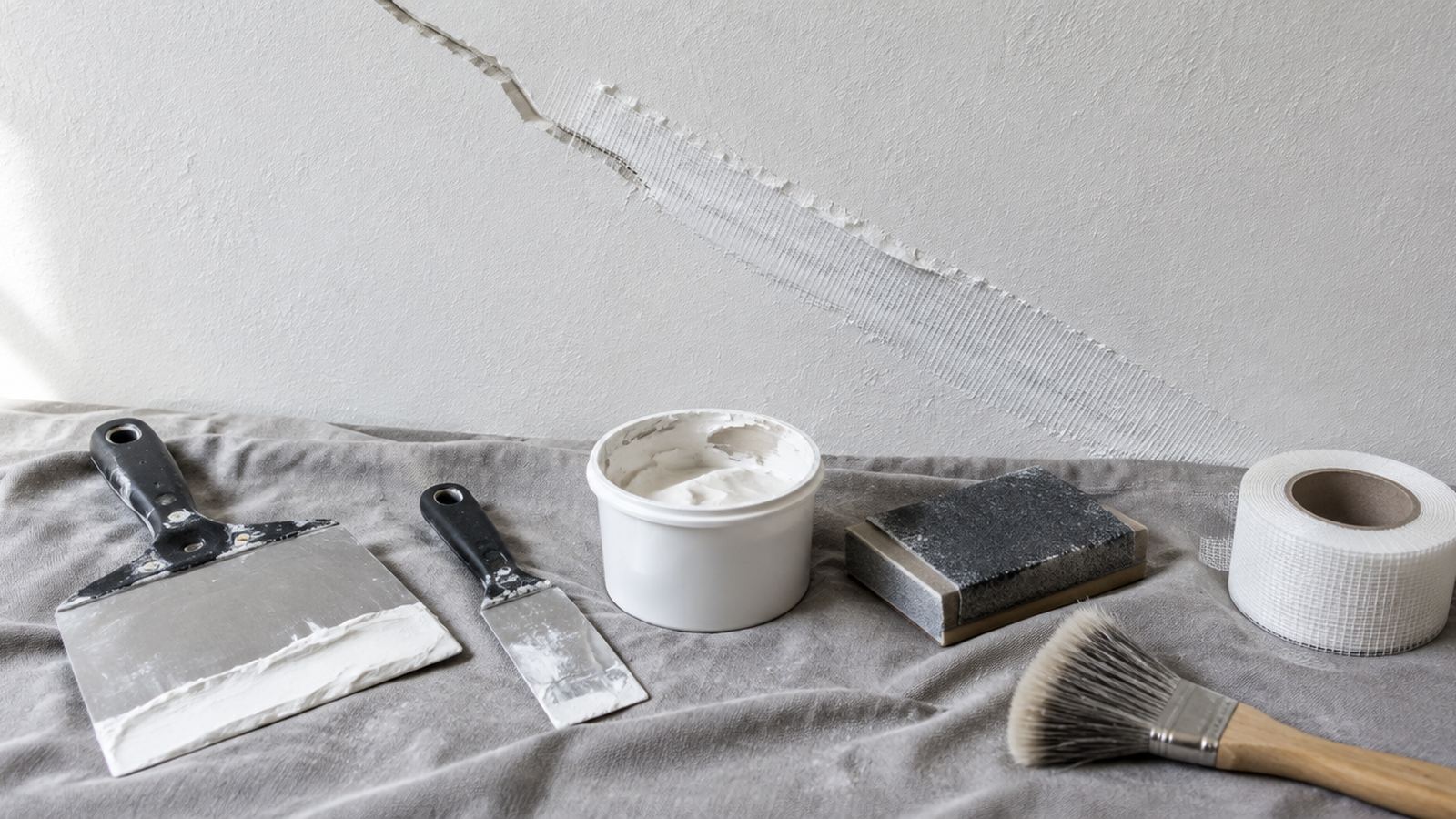
In this guide you will find how to recognise the type of crack, how to monitor it, how to repair smaller cracks and when to call a tradesperson or a structural engineer. We rely on guidance from Croatian painters and building-material shops, Croatian guidelines for facades, and British and American technical literature on cracks in walls.
This is general information, not a structural survey. Only a civil engineer, that is, a structural engineer, can reliably say on site whether a crack is dangerous.
Cracks in walls: the short answer
- Thin, hairline cracks in paint and skim coat are usually a cosmetic problem.
- Look at where the crack is, which direction it runs and how wide it is.
- If you do not know whether it is stable, monitor it for a few weeks before you close it.
- Open up a stable thin crack, clean it, fill it and reinforce it with mesh if needed.
- If the crack is growing, is wider than a few millimetres, runs diagonally from the corner of a window or door, or the doors start sticking, do not cover it up. Call an expert.
Need someone for this job? Describe it and get quotes →
Why cracks in walls appear
There are several causes. The US National Park Service lists these as the most common in its guide to brick walls:
- materials shrinking as they dry, e.g. plaster, skim coat or concrete,
- temperature and moisture, because materials expand and contract,
- joints between different materials, which behave differently,
- poor support above windows and doors, e.g. a sagging lintel,
- foundation settlement,
- frost, rusting reinforcement and salts in the wall.
A building-material shop in Osijek also adds a weak bond between layers of paint and skim coat. Thin surface cracks most often appear precisely because of shrinkage, temperature or a weak bond between layers.
Cracks caused by temperature often behave seasonally. The same American guide says such cracks widen in winter and narrow in summer.
Which cracks in walls are harmless and which are dangerous
| What it looks like | What it usually means | What to do |
|---|---|---|
| Thin web-like crack in paint or skim coat | skim coat or paint shrinking | repair before painting |
| Straight crack where the wall meets the ceiling or along a plasterboard sheet | different materials move differently | tape or flexible acrylic filler |
| Diagonal crack from the corner of a window or door | stress around the opening | monitor it and ask an expert before repairing |
| Crack wider than a few millimetres | possible movement in the wall | call a structural engineer |
| Crack that widens or gets longer | the crack is active | do not close it, call a structural engineer |
| Crack visible through a load-bearing wall | serious sign | call a structural engineer straight away |
A Zagreb building management company, in a Q&A after the earthquake, writes that hairline cracks in principle do not affect a building's stability. If they are larger than a few millimetres, experts should be called. If a crack can be seen through a load-bearing wall, that is a very serious sign. How to recognise a load-bearing wall is explained in the guide how to tell if a wall is load-bearing.
Crack width: a rough classification
The UK Building Research Establishment (BRE) uses a classification of damage by crack width. In the UK it is widely used by professionals who assess houses:
| Category | Crack width | What it usually means |
|---|---|---|
| 0 | up to 0.1 mm | negligible |
| 1 | up to 1 mm | dealt with during normal decorating |
| 2 | up to 5 mm | easily filled, doors and windows may stick slightly |
| 3 | 5 to 15 mm | needs opening up and wall repair, doors and windows stick |
| 4 | 15 to 25 mm | major repairs, sections of wall are replaced |
| 5 | more than 25 mm | serious stability problem |
BRE stresses that width is not the only criterion. The position of the crack, the number of cracks and whether they widen over time also matter. Categories 0 to 2 are considered mainly a cosmetic problem. Category 5 is a stability problem.
Vertical, horizontal and diagonal cracks
Vertical cracks in walls
A British building survey firm writes that vertical cracks are often the least worrying, but not always. They are most often found at junctions, where two parts of a building move differently, e.g. where an extension meets the old house. On long walls they can also be caused by temperature and moisture, so they open and close slightly with the seasons.
The joint between a brick wall and a concrete tie beam or column also moves with changes in temperature and moisture. The Osijek shop warns that a rigid repair without mesh or a flexible joint can quickly crack again there.
Horizontal cracks in walls
A horizontal crack is often seen where the wall meets the ceiling. Different materials meet there, so a Zagreb painting company fills it with flexible acrylic filler rather than just skim coat. It is different with a horizontal crack on an external wall just below the roof. The American guide says it can appear when the roof pushes the wall outwards. So show a horizontal crack on an external wall to an expert.
Diagonal cracks from the corners of windows and doors
The Osijek building-material shop lists diagonal cracks from the corners of windows and doors among those that should not be covered up before an expert has looked at them. The American guide also says that structural cracks most often appear above openings, e.g. when a lintel sags. In that case the crack also runs through the bricks, not just through the joints.
Cracks in walls in flats and new builds
In a flat, cracks often appear in the skim coat, on the ceiling and where the wall meets the ceiling. A Zagreb painting company says the most common cause of cracks in new skim coat is a layer that is too thick and rushing the job. They do not apply skim coat below about 10 °C, and in summer they make sure it does not dry too fast, because then it cracks more easily.
In a new build, the plaster, skim coat and concrete are still drying. Materials shrinking as they dry is one of the causes the American guide lists as well. If the cracks are thin, follow joints and do not grow, they are usually superficial. If new ones appear or they widen, tell the contractor. How the warranty on building work works is explained in the guide warranty on building work.
If you see stains, mould or flaking paint next to the crack, start with the damp. The Osijek shop warns that repairing a crack on a damp surface only postpones the next repair. See the guides damp and mould on walls and salt efflorescence on walls.
How to monitor a crack before repairing it
If you do not know whether a crack is stable, monitor it. A US government building maintenance manual describes a simple method with tape and a pencil:
- Stick a piece of tape on each side of the crack.
- Draw a short line on each piece of tape, parallel to the crack, about 5 cm apart.
- Measure the distance between the lines every week and write it down.
- Keep photos together with your notes. It is best to photograph next to a ruler, always from the same angle.
- If the distance increases, the crack is moving. Show your notes and photos to an expert.
Your notes do not replace an inspection. But they help the structural engineer and the tradesperson a lot.
How to repair cracks in walls: step by step
This applies to smaller, stable cracks on a dry interior wall. The method is based on guidance from the Osijek building-material shop and a Croatian shop for painting tools.
- Protect the room. Move the furniture and cover the floor. Sanding raises fine dust.
- Check the plaster around the crack. Tap it lightly. If it sounds hollow, remove that plaster down to a solid base.
- Open up the crack. Widen it slightly into a V shape with a filling knife. This removes weak edges and gives the filler room to go in.
- Remove the dust. With a brush or a vacuum cleaner. The surface must be clean, solid and dry.
- Apply primer if the wall is very absorbent or crumbly. More on this in the guide wall primer before painting.
- Fill the crack. Work in thin layers. Two thin layers are better than one thick one.
- Reinforce with mesh or tape if the crack is longer, at a joint between materials or has come back before. Press the mesh into fresh filler and cover it completely. It should extend onto sound wall on both sides.
- Let it dry, sand it and prime it. After sanding, remove the dust and apply primer again.
- Paint the whole wall. A locally painted patch often shows because of differences in shade and sheen.
How much skim coat you need is explained in the guide skim coat coverage per m².
Joints: wall and ceiling, plasterboard and door frame
At joints between different materials, rigid skim coat can easily crack again. The Zagreb painting company bridges the joint between brick and concrete with mesh. It fills joints between wall and ceiling and between wall and plasterboard with flexible acrylic filler.
With plasterboard, the crack is most often at the joint between sheets or around screws. The joint is not repaired with ordinary filler without tape. You need joint compound and the right tape. If a screw sticks out, it must be fixed first. More about plasterboard in the guide Knauf drywall cost per m².
Acrylic filler is good for small joints along a door frame or skirting board and can be painted. Silicone is not for surfaces you will paint, because paint mostly does not stick to it.
Cracks in facades
A facade is exposed to rain, frost, sun and bigger temperature differences. That is why cracks in a facade are not dealt with like those in a flat. Croatian guidelines for external thermal insulation systems (ETICS) list workmanship errors as the most common causes of cracks:
- polystyrene glued only at a few points,
- joints between boards that are too wide,
- mesh without enough overlap or in the wrong place in the layer,
- a base coat that is too thin,
- no extra diagonal mesh at the corners of openings,
- mixing system components from different manufacturers.
According to the same guidelines, cracks up to 0.3 mm are repaired with special coatings. For wider cracks, if the system is stable, a new finishing coat or a new base coat and finishing coat is applied. The cause should be determined by a qualified person. Rough facade prices are in the guide facade insulation cost per m².
What never to do
- Do not paint over a crack without preparation. It will come back, often after just one heating season.
- Do not close an active crack. You only hide a sign that matters to the expert.
- Do not repair a crack on a damp wall. Deal with the damp first.
- Do not apply one thick layer of filler. A thick layer dries more slowly and cracks more easily.
- Do not use silicone on a wall you are going to paint.
When to call a tradesperson or a structural engineer
Call an expert, a civil or structural engineer, if the crack:
- is widening or getting longer,
- is wider than a few millimetres,
- comes back even after repair,
- runs diagonally from the corner of a window or door,
- can be seen through a load-bearing wall,
- runs through several floors,
- appears together with doors or windows that suddenly close with difficulty, or a floor pulling away from the wall,
- appeared after an earthquake or together with visible ground settlement.
The American guide on walls stresses the order: structural problems are fixed first, cosmetic ones after. For smaller stable cracks in a flat, you call a painter. For bigger plaster and wall repairs you need a builder. For a facade you look for a facade contractor, and for damp a waterproofing specialist.
Example: a crack above a door in an older flat
This is a made-up example. Marko has a flat in a 1970s building in Osijek. In autumn he notices a thin diagonal crack from the top corner of the living room door. He sticks tape on both sides and records the distance for four weeks. The distance does not change, and the door closes normally.
Marko still sends the photos and notes to a painter. The painter opens up the crack, fills it and reinforces it with mesh. Then he skims and paints the whole wall. If the distance had been increasing, the first step would have been a structural engineer's inspection.
Your situation may be different. The cause of a crack is determined by an expert on site.
Find a tradesperson for cracks in walls
For plaster and wall repairs see masonry work, e.g. in Zagreb, Split, Rijeka or Osijek. For skim coating and painting there is painting and decorating, for plasterboard drywall, for facades facades, and for damp waterproofing. If you repaint the whole flat after the repair, prices are in the guide wall painting and skim coating cost per m².
This is a made-up example of a request you can send:
"In the living room of a flat in a 1970s building I have a diagonal crack from the top corner of the door, about 40 cm long and as thin as a hair. I have been monitoring it for four weeks and it is not widening. I need the crack repaired and the wall painted, about 12 m². Please state what is included in the price and whether VAT is included. I can send photos."
How to write a good request is explained in the guide how to write a request to a tradesperson.
Find a tradesperson on Gigron
On Gigron you post a job for free, and tradespeople near you get back to you with offers. Send photos of the crack next to a ruler and say where it is. Compare the offers and ask what is included in the price. Download the app:
Frequently asked questions
Are cracks in walls dangerous?
Thin cracks in paint and skim coat are usually a cosmetic problem. More dangerous are cracks that are growing, are wider than a few millimetres, run diagonally from the corners of openings or can be seen through a load-bearing wall. A structural engineer should look at those.
How do you repair cracks in walls?
Open the crack into a V shape, clean it and fill it in thin layers. For longer cracks and at joints, press mesh or tape into the fresh filler. Once dry, sand it, apply primer and paint the whole wall.
Why does a crack come back after skim coating?
Most often because it was not opened up and cleaned, because the layer of filler was too thick, or because it is a joint that moves. The cause can also be damp or movement in the wall. In that case skim coat does not help until the cause is fixed.
How do you know if a crack is widening?
Stick tape on both sides of the crack, draw lines and measure the distance every week. Photograph the crack next to a ruler from the same angle. If the distance increases, the crack is active.
Are cracks in new builds normal?
Thin cracks in the skim coat and at joints can appear because the materials are still drying. If they are thin and do not grow, they are usually superficial. Report new or wide cracks to the contractor and ask for an inspection.
Summary
Thin cracks in walls, in skim coat and paint, are usually not dangerous. You repair them by opening them up, cleaning them, filling them and reinforcing them with mesh if needed. Do not cover up cracks that are growing, are wider than a few millimetres, run diagonally from the corners of windows and doors or can be seen through a load-bearing wall. A structural engineer should look at them first. When you need a painter, a builder or a facade contractor, post a job on Gigron and compare offers from tradespeople near you.
Need someone for a job?
Describe what you need, where and by when.
The AI assistant writes the post; you post it in the Gigron app.