Wall primer before painting: when you need it and how to apply it
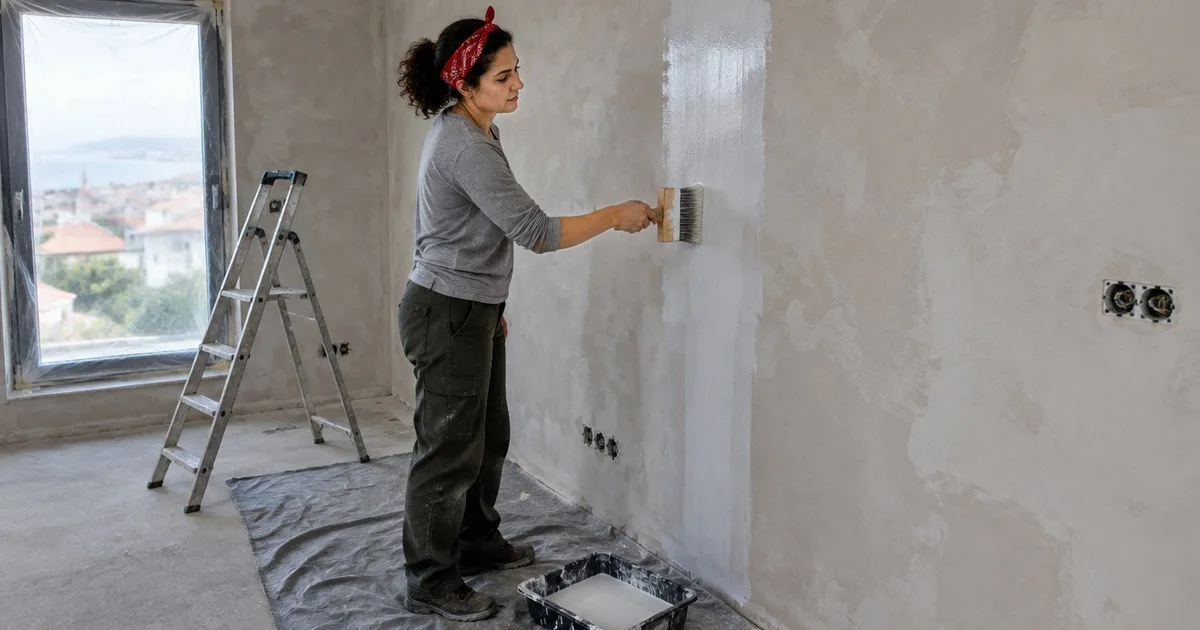
Before repainting, everyone tells you the same thing: “Prime the wall first.” But does every wall really need it? Wall primer before painting is needed on new plaster, fresh skim coat, plasterboard and old walls that are dusty or very absorbent. On a sound wall that already has a similar emulsion paint on it, you often don't need it.
In this guide you'll find when primer is needed and when it isn't, two quick wall tests, the main types of primer, how to apply it and how long it takes to dry before painting. The figures come from the technical data sheets of primers sold in Croatia.
Wall primer before painting: the short answer
| Wall | Primer needed? | Note |
|---|---|---|
| New plaster | yes | let it dry first, roughly 1 day per mm of thickness |
| Freshly skim-coated wall | yes | skim coat is very absorbent, without primer the paint ends up patchy |
| Plasterboard (drywall) | yes | evens out the absorbency of board and joints |
| Old dusty or chalky wall | yes | clean it first, then a deep-penetrating primer |
| Wall with patched areas | yes, at least on the patches | otherwise the repairs show through the paint |
| Sound wall with old emulsion paint | often not | cleaning and dusting is enough |
| Wall with mould or damp | not yet | fix the cause of the damp first |
Need someone for this job? Describe it and get quotes →
What primer is and what it does
In Croatia you'll hear impregnacija, temeljni premaz, primer and grund. In practice they mean the same thing: a thin binder you apply before paint or skim coat. According to manufacturers' data sheets, a primer:
- binds dust and fine particles that can't be fully cleaned off,
- evens out absorbency, so the wall doesn't soak up more paint in one spot than in another,
- slightly strengthens the plaster surface,
- improves adhesion of the next layer, whether that's paint, skim coat or adhesive.
Primer is not paint. It doesn't cover stains, doesn't fix cracks and doesn't solve damp. If the old paint is peeling or the wall is wet, primer won't help.
When you need primer
Primer pays off when the surface is new, very absorbent or uneven:
- New plaster and concrete. Manufacturers ask for new plaster to dry at least one day for every millimetre of thickness, and concrete for at least a month. Only then does primer go on.
- Fresh skim coat. Skim coat is very absorbent. Without primer, differences in absorbency show up as patches and uneven sheen.
- Plasterboard. The board and the filled joints don't absorb the same way. A plasterboard manufacturer states that primer always goes on before paint and wallpaper.
- Patched walls. Repairs made with filler or plaster absorb differently from the rest of the wall.
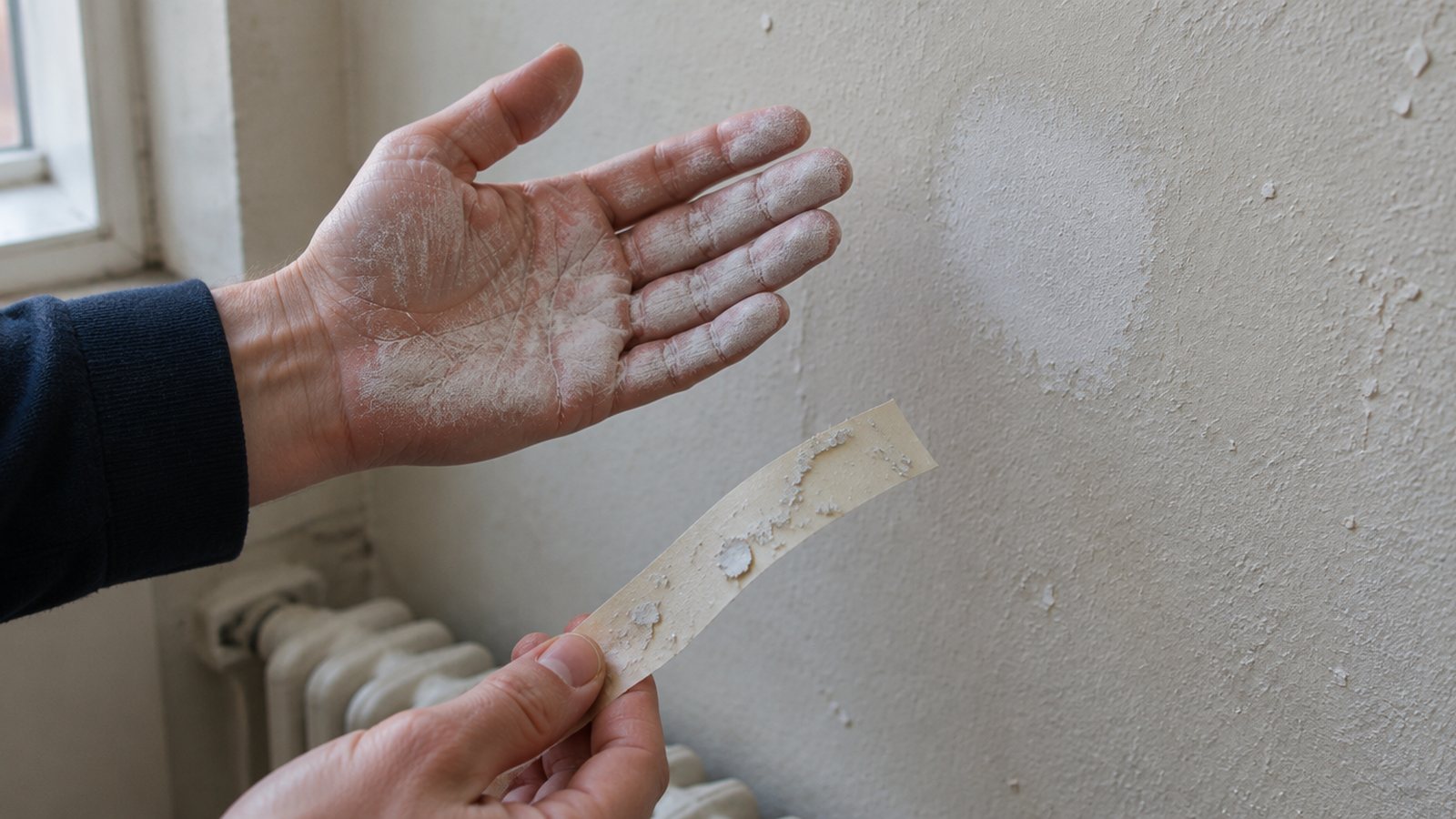
- Chalky old walls. If white powder stays on your palm, the surface is poorly bound and needs strengthening.
- Facades. Before facade paint, primer is mandatory, both for the first coat and for repainting.
When you don't need primer
If the wall already has emulsion paint, the old paint holds firmly and the wall absorbs evenly, you usually don't need primer. One manufacturer writes for its interior paint that primer isn't needed when repainting.
In that case it's enough to:
- dust the wall with a broom or vacuum cleaner,
- wipe it with a slightly damp cloth,
- let it dry and paint.
If there are repairs on the wall, prime only those. Still, check the instructions on the paint tin you buy. Some paints require their own primer.
How to check the wall: two quick tests
You don't need any tools for these two tests.
Palm test. Rub your palm over the wall in a few places. If white powder stays on it, the wall is chalky. Clean it and apply a deep-penetrating primer.
Tape test. Stick a piece of adhesive tape on the wall, press it down well and pull it off quickly. If you see flakes of old paint on the tape, that paint isn't holding. Scrape weak layers back to a sound surface, repair the wall and only then prime.
Look at stains, too. Yellow or dark stains from water, smoke or nicotine bleed through ordinary paint. There is a special stain-blocking primer for them, and ordinary primer won't stop them. Black dots are usually mould. Fix the cause first; the guide damp and mould on walls will help.
Wall primer types
| Type | For | Typical use |
|---|---|---|
| Deep-penetrating (acrylic) primer | absorbent and chalky mineral surfaces | new plaster, skim coat, plasterboard, old chalky wall |
| Bonding primer | smooth surfaces with low absorbency | smooth concrete before plaster or skim coat |
| Stain-blocking primer | water, nicotine and smoke stains | a ceiling after a leak from the flat above |
| Facade primer | exterior render and facade systems | before facade paint |
For ordinary repainting in a flat you'll most often need a deep-penetrating acrylic primer. The tin will say “temeljni premaz”, “dubinska podloga” or “impregnacija”. Choose the primer the paint manufacturer recommends, because primer and paint should be matched.
Primer before skim coating
Skim coat needs preparation too. Dry, very absorbent plaster pulls water out of the compound, so the skim coat dries too fast and bonds poorly. That's why skim coat and plasterboard manufacturers also ask for primer before skim coating.
The order then is:
- primer on the plaster or plasterboard,
- skim coat in one or two layers,
- sanding and dusting,
- primer again on the skim coat,
- paint.
How much skim coat you need per square metre is in the guide skim coat coverage per m2.
How to apply primer
- Prepare the wall. Scrape off anything peeling, fill holes, sand the repairs and dust thoroughly.
- Read the tin. Some primers are diluted with water, for example 1 : 1. Others are applied undiluted. Don't dilute “by eye”.
- Mind the conditions. Air and wall should be at least +5 °C. One manufacturer also specifies air humidity below 80 %. In winter, work in a heated, ventilated room.
- Apply one coat. Use a long-pile roller or a wide brush. Do corners and edges with a brush first.
- No puddles or runs. Spread out any excess. The primer shouldn't leave a glossy film on the wall.
- Check once dry. If the wall still absorbs strongly, one deep-primer manufacturer says another coat is needed.
- Wash tools with water right after use. Dried primer is hard to remove.
How long primer takes to dry
Drying time depends on the primer, the wall's absorbency, temperature and humidity. This is what the data sheets of three primers say:
| Primer | Touch dry | Next layer |
|---|---|---|
| Acrylic primer, diluted 1 : 1 | ~2 h | after 4–6 h |
| Primer for plasterboard and plaster | – | after 3 h at the earliest |
| Fast-drying deep-penetrating primer | ~2 h | once fully dry |
These figures apply at about +20 °C and normal humidity. In the cold or in a damp room it takes longer. One manufacturer stresses that touch dry is not enough. If you're not in a hurry, prime in the evening and paint the next day.
How much primer you need
Consumption is low. Data sheets list:
- acrylic primer diluted 1 : 1: about 90–100 g per m²,
- primer for plasterboard and plaster: about 70–100 ml per m²,
- deep-penetrating primer: 0.1–0.5 l per m², depending on how absorbent the surface is.
Example (our calculation): a 4 × 3.5 m room has about 49 m² of walls and ceiling. At 70–100 ml per square metre that's about 3.5–5 litres of primer. A 5-litre tin is usually enough. Very absorbent old plaster takes more, so test on a small area first.
How much paint you need for the same room is in the guide paint coverage per m2.
Common mistakes
- Priming over dust. Sanding dust stays under the primer, so the paint holds less well.
- Too much primer. Puddles and a glossy film don't help. Manufacturers ask for a thin, even coat with the excess spread out.
- Painting too early. Manufacturers ask for the primer to dry fully before the next layer. Touch dry isn't enough.
- Priming over peeling paint. Primer won't glue old paint back onto the wall.
- Painting over damp and mould. The stain comes back, and new paint may peel or blister. Fix the cause first, then clean and disinfect mouldy walls.
- Wrong primer for stains. Water and nicotine stains need a stain-blocking primer, not ordinary primer.
When to call a professional
You can easily prime and paint one room without a professional. A painter is worth it when:
- old paint is peeling over a larger area and needs scraping,
- the walls need skim coating before painting,
- you're painting a whole flat or high ceilings,
- you have damp stains and the cause needs finding,
- you're doing a facade.
You'll find painters in the category painting and decorating, and for bigger cities: Zagreb, Split, Rijeka and Osijek. There's also interior painting, and for exterior work facades. For what painters charge per square metre, see the guide wall painting and skim coating cost per m2.
In your request, say what kind of wall it is (new plaster, skim coat, plasterboard or old paint), the m² of walls and ceiling, whether there are stains or peeling, and who buys the materials. More tips are in the guide how to write a request to a tradesperson.
Find a painter on Gigron
On Gigron you post a job for free and tradespeople get back to you with offers. Ask whether primer is included in the quote and how many coats of paint they plan. Download the app:
FAQ
Is primer mandatory before painting walls?
Not always. Primer is needed on new plaster, skim coat, plasterboard, patched and chalky walls. On a sound wall that already has emulsion paint, cleaning and dusting is often enough.
How long does wall primer take to dry?
Most primers are touch dry in about 2 hours. For the next layer allow 2 to 6 hours at about +20 °C, depending on the primer. In cold and damp conditions it takes longer.
Is “impregnacija” the same as primer?
Yes, in everyday Croatian it's the same thing. The tin may say temeljni premaz, impregnacija, dubinska podloga, primer or grund. Check which surface it's made for.
Does plasterboard need primer?
Yes. Plasterboard and filled joints absorb differently, so without primer the joints can show through the paint. A plasterboard manufacturer requires primer before paint, wallpaper and tiles.
Summary
Wall primer before painting is needed on new plaster, skim coat, plasterboard and walls that are dusty or very absorbent. On a sound wall with old emulsion paint it's often unnecessary. Do the palm and tape tests, apply one thin coat without puddles and let it dry fully, usually 2 to 6 hours. Deal with damp, mould and peeling paint before priming.
Need someone for a job?
Describe what you need, where and by when.
The AI assistant writes the post; you post it in the Gigron app.