Warranty on building work in Croatia: handover and defects
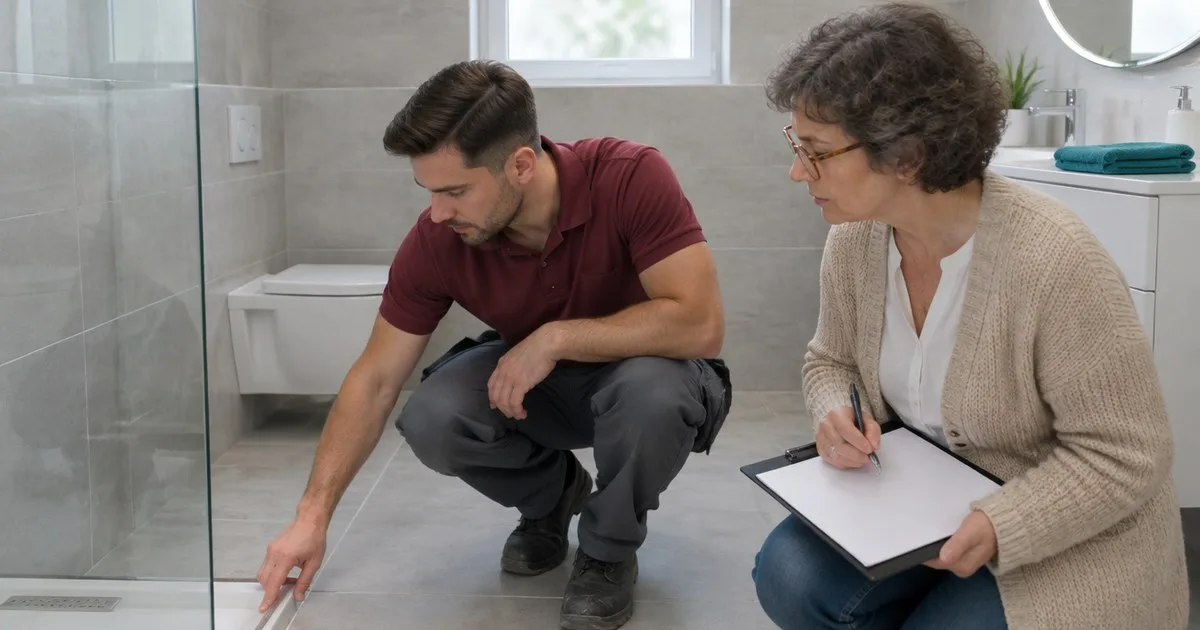
The tradesperson has finished, packed the tools and is waiting to be paid. Everything looks fine, but a month later the grout starts cracking and the pipe under the sink drips. What now? When you look for a warranty on building work, it is not just about one piece of paper. It is about what you check at handover, what you write down and how long the contractor is liable for defects.
In this guide you'll learn how to do the handover of finished work step by step, what to put in the handover record, which deadlines Croatia's Civil Obligations Act (Zakon o obveznim odnosima, ZOO) sets and how to report a defect. At the end there are questions to ask before the job starts and a checklist for a good request.

Warranty on building work: three different things
When people say "warranty" or "guarantee", they usually mean one of three things. It helps to know which is which, because each has its own rules.
- The contractor's legal liability for defects. It applies even if nobody signs anything. Under the Civil Obligations Act, the contractor must do the job as agreed and according to the rules of the trade. For their own materials they are liable like a seller.
- A guarantee the contractor gives. Some contractors write in the quote that they guarantee the work for a set period. That applies as written in the quote or contract. It does not replace legal liability; it comes on top of it.
- The manufacturer's guarantee for an installed appliance or material. For a water heater, air conditioner, windows or a tap you get a guarantee card. The terms are in the guarantee statement. Some manufacturers require regular servicing as a condition of the guarantee, so keep the invoice, the card and service records.
So always ask in the quote what the guarantee covers: the work, the materials or both, and how long it lasts.
Need someone for this job? Describe it and get quotes →
Handover of finished work: step by step
Handover is the moment you inspect the work and accept it. The law says you should inspect the work as soon as is reasonably possible and report any defects you find to the contractor without delay. If the contractor invites you to inspect the work and you don't come without a good reason, the work is considered accepted.
The most important rule: once you have inspected and accepted the work, the contractor is no longer liable for defects that could have been seen in a normal inspection. The exception is a defect the contractor knew about but didn't show you. So take the inspection seriously.
- Book the handover in daylight. You see more in daylight than in the evening under a bulb.
- Bring the quote or contract. Check item by item that everything was done, in the agreed material and colour.
- Test everything that can be tested. Open every tap, run the water, try every socket and switch, open and close windows and doors.
- Look at surfaces under raking light. A phone torch held flat against the wall shows bumps and roller marks.
- Take photos of everything. Photograph what is fine and what is not. Photos carry a date.
- Write down defects and deadlines. For each defect, note where it is, what it is and by when it will be fixed.
- Collect the paperwork. Invoice, guarantee cards for appliances, care instructions and, if there are any, photos of pipes and cables before the wall was closed.
The law also says you don't have to pay before you have inspected and approved the work, unless you agreed otherwise. If you pay in instalments, agree in the quote upfront when the last instalment is due.
What to check: a checklist by type of job
| Job | What to check at handover |
|---|---|
| Painting and skim coating | Flatness under raking light, stains, roller marks, edges at the ceiling, door frames and sockets |
| Tiling | Straight, even grout lines, tiles that don't sound hollow when tapped lightly, fall towards the drain, silicone in the corners |
| Plumbing | No drips at joints or under the sink, water drains away, valves shut off |
| Electrical work | All sockets, switches and lights work, breakers in the fuse box are labelled |
| Windows and doors | Open and close without catching, seals sit tight, hardware is tightened |
| Waterproofing and floors | Photos of the layers before they were covered, no cracks or damp stains |
For approximate costs of individual jobs, see the guides wall painting and skim coating cost per m² and tiling cost per m².
The handover record: what to write down
For a smaller job in a flat you don't need a special form. A short handover record on one sheet or in an email, signed or confirmed by both sides, is enough. As a model you can use the list from Croatia's special construction usages (posebne uzance o građenju). These are rules mostly used in construction deals between companies.
Write down:
- who and where: names of the contractor and the client, address, description of the job and quote number,
- date the work was finished and date of handover,
- what was done according to the quote and what was not done,
- defects: each one separately, with location and description, for example "scratch on the parquet in the living room, about 5 × 2 cm",
- a deadline for the repair for each defect,
- documents handed over: invoice, guarantee cards, instructions,
- signatures of both sides and one copy for each.
The description has to be specific. "Badly done floor" says nothing. In practice, small repairs are often given 7 to 14 days, and repairs that need materials ordered about 30 days. Once the contractor has fixed things, check only what was in the record and sign a final record.
If the contractor refuses to come to the handover, write the record without them, add photos and send it to them in writing.
Example handover record (made up)
"Handover of work, flat in Varaždin, bathroom renovation according to quote no. 14. Work finished on 3 Nov, handover on 5 Nov. Defects: 1) grout next to the shower tray cracked over about 20 cm, repair by 12 Nov; 2) one wall tile above the washbasin has a chipped edge, replacement by 19 Nov. Handed over: invoice and guarantee card for the water heater. All other work accepted without remarks. Signatures."
Legal deadlines for defects in building work
These are the deadlines from the Civil Obligations Act. Ordinary work in a flat or house is usually a contract for work (ugovor o djelu). A construction contract (ugovor o građenju) must be in writing and covers a building or construction work on an existing building.
| Situation | Deadline | ZOO article |
|---|---|---|
| Visible defects | Report them at inspection, without delay | Art. 604 |
| Hidden defects | Report them no later than one month after discovery | Art. 605 |
| Final limit for hidden defects | 2 years from acceptance of the work | Art. 605 |
| After you have reported a defect | Your rights last 2 years from the notice | Art. 606 |
| Construction contract: essential requirements for a building (for example stability) | Defects that appear within 10 years of handover | Art. 633 |
| Construction contract: notice and loss of rights | Report within 6 months of finding the defect; the right ends one year after the notice | Art. 634 |
The ten-year liability covers defects affecting the essential requirements for a building, such as stability. It cannot be excluded or limited by contract. It is not ten years for every tile or coat of paint.
The table is a general overview, not legal advice. If there is a dispute or a larger amount at stake, check with a lawyer or a consumer protection association which contract you have and which deadline applies.
How to report a defect after the work
- Get in touch as soon as you notice the defect. For a hidden defect you have at most one month from discovery.
- Report it in writing. An email or message is fine; for a larger amount, send a registered letter. A phone call is hard to prove later.
- Describe exactly what and where. Add photos and the date the defect appeared.
- Ask for a repair and set a reasonable deadline. For a minor defect, the law says you have to let the contractor fix it.
- If they don't fix it in time, you can have another tradesperson fix the defect at their expense, ask for a lower price or terminate the contract. For an insignificant defect, termination is not possible. You are also entitled to damages.
- If the work is unusable or was done against an explicit agreement, you can terminate the contract without first asking for a repair.
If the repair would be excessively expensive, the law allows the contractor to refuse it. You then choose between a lower price and termination, plus damages.
Questions worth asking before the job starts
- Do you guarantee your work, and for how long?
- Does the guarantee also cover materials you buy?
- Will you write a quote with all items listed?
- How do we pay: deposit, instalments, the rest after handover?
- Will you photograph pipes, cables and waterproofing before they are covered?
- What repair deadline do you offer if a defect shows up?
- Will I get an invoice and guarantee cards for installed appliances?
How to write a good request on Gigron
Include:
- what needs doing and how big the space is,
- where: city and neighbourhood,
- when the work should start and by when it should finish,
- materials: whether you have them or the tradesperson buys them,
- that you want a written quote with a guarantee on the work,
- photos of the space before the work.
Photos taken before the work also help at handover. If you're not sure what to write, see the guide how to write a request to a tradesperson.
Example request (made up): "I need a 5 m² bathroom renovated in Varaždin: removing old tiles, new tiles, a shower tray and a washbasin. I choose the materials, the tradesperson installs them. Work should start in mid-November. Please send a written quote with a timeline and a guarantee on the work. Photos attached."
On Gigron, see the categories renovations, flat renovation or contractors for renovations in Zagreb. For individual jobs there are tiling, masonry work, painting and decorating and plumbing.
Find a tradesperson on Gigron and agree the guarantee upfront
On Gigron you post a request and local tradespeople reply with offers. It's free, and you don't have to call ten numbers. Compare not just the price, but also the timeline and the guarantee on the work.
Download the app:
Frequently asked questions
How long is the warranty on building work if nothing was agreed?
Legal liability applies even without a written guarantee. Under a contract for work, you have to report a hidden defect within one month of discovering it. Two years after accepting the work, you can no longer rely on defects. Under a construction contract, defects affecting the essential requirements for a building are covered for ten years from handover.
What if the handover record was signed without remarks and a defect shows up later?
If the defect could not be seen in a normal inspection, it is a hidden defect and you can report it. Report it in writing as soon as possible, no later than one month after you discover it. For defects that were visible at inspection but not written down, the contractor is generally no longer liable, unless they knew about them and didn't show you.
Can I hold back part of the payment until the defects are fixed?
The law says you don't have to pay before you have inspected and approved the work, unless you agreed otherwise. The safest option is to agree in the quote upfront that the last instalment is paid after handover and after the recorded defects are fixed.
In short: a warranty on building work means the contractor's legal liability, any guarantee the contractor gives in the quote and the manufacturer's guarantee for appliances. At the handover of finished work, inspect everything in daylight, take photos and write each defect with a deadline into the handover record. Report a hidden defect in writing within one month of discovery. Two years after accepting the work, you can no longer rely on defects.
Need someone for a job?
Describe what you need, where and by when.
The AI assistant writes the post; you post it in the Gigron app.