Attic floor insulation cost per m² in Croatia 2026: wool, XPS, labour
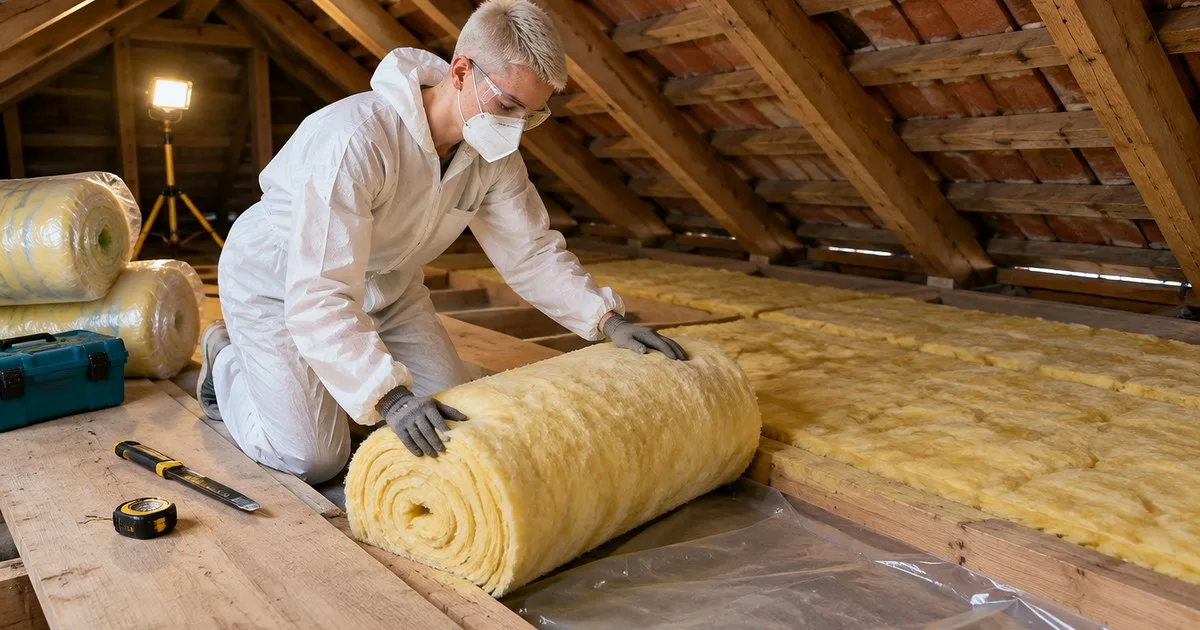
Are the rooms under your attic cold in winter while the heating runs flat out? A lot of that heat may be escaping through the ceiling into an unheated attic. Search for attic insulation cost in Croatia and you will see prices from around ten to thirty euros per m². The gap is big because some quotes cover labour only, some include materials, and some also add a walkable floor over the insulation.
This guide gives you approximate 2026 prices for insulating the floor of an unused attic in Croatia: labour, mineral wool, XPS boards, vapour barrier and a walkway. There is also a worked example for an 80 m² attic and a list of questions to ask before you agree on the job.
Attic floor insulation cost per m²: approximate ranges
The figures below are approximate ranges from public contractor price lists, tradesperson request portals and shops in Croatia (2025–2026). They are not a Gigron offer or a fixed price. They depend on the city, insulation thickness, access to the attic and what the quote includes. Some price lists include VAT (PDV) and some do not, so always check.
| Item | Approx. (€/m²) |
|---|---|
| Attic floor insulation with wool or XPS, labour + materials (non-walkable) | ~15–25 |
| Attic floor insulation, walkable or non-walkable, without final boarding | ~18–28 |
| Labour only: laying ceiling insulation (excl. VAT) | ~10 |
| Labour only: fitting a vapour barrier (excl. VAT) | ~4 |
| Glass mineral wool 10 cm (material) | ~5–6 |
| Glass mineral wool in two layers, ~30 cm total (material) | ~16 |
| Vapour barrier membrane (material) | ~1.3–2 |
| 18 mm OSB board for a walkway or floor (material) | ~9–10 |
For comparison, one tradesperson request portal showed an estimate of €1,350–2,250 for insulating a 75 m² attic floor with XPS boards, roughly €18–30 per m². Another portal lists €15–20/m² for 30 cm of glass or stone wool with a vapour barrier.
If a quote is well below these numbers, check the thickness. The wool alone for 30 cm costs about €16/m² at retail, so a full-thickness package at €15/m² is not realistic without a good discount on materials.
Unused attic or a habitable loft
Before asking for quotes, decide what the attic is for. That decides where the insulation goes.
Insulating an unused attic is the simplest and cheapest option. The insulation is laid on the attic floor, which is the ceiling of the rooms below. The roof space stays cold and ventilated. You heat a smaller volume, and the area to insulate is smaller than a sloping roof.
A habitable loft is a different job. The insulation goes between and under the rafters, with a vapour barrier and plasterboard lining. According to one contractor, insulation between rafters alone is roughly €25–35/m², without the final lining. If you plan a room in the loft, see the lining prices in Knauf drywall cost per m².
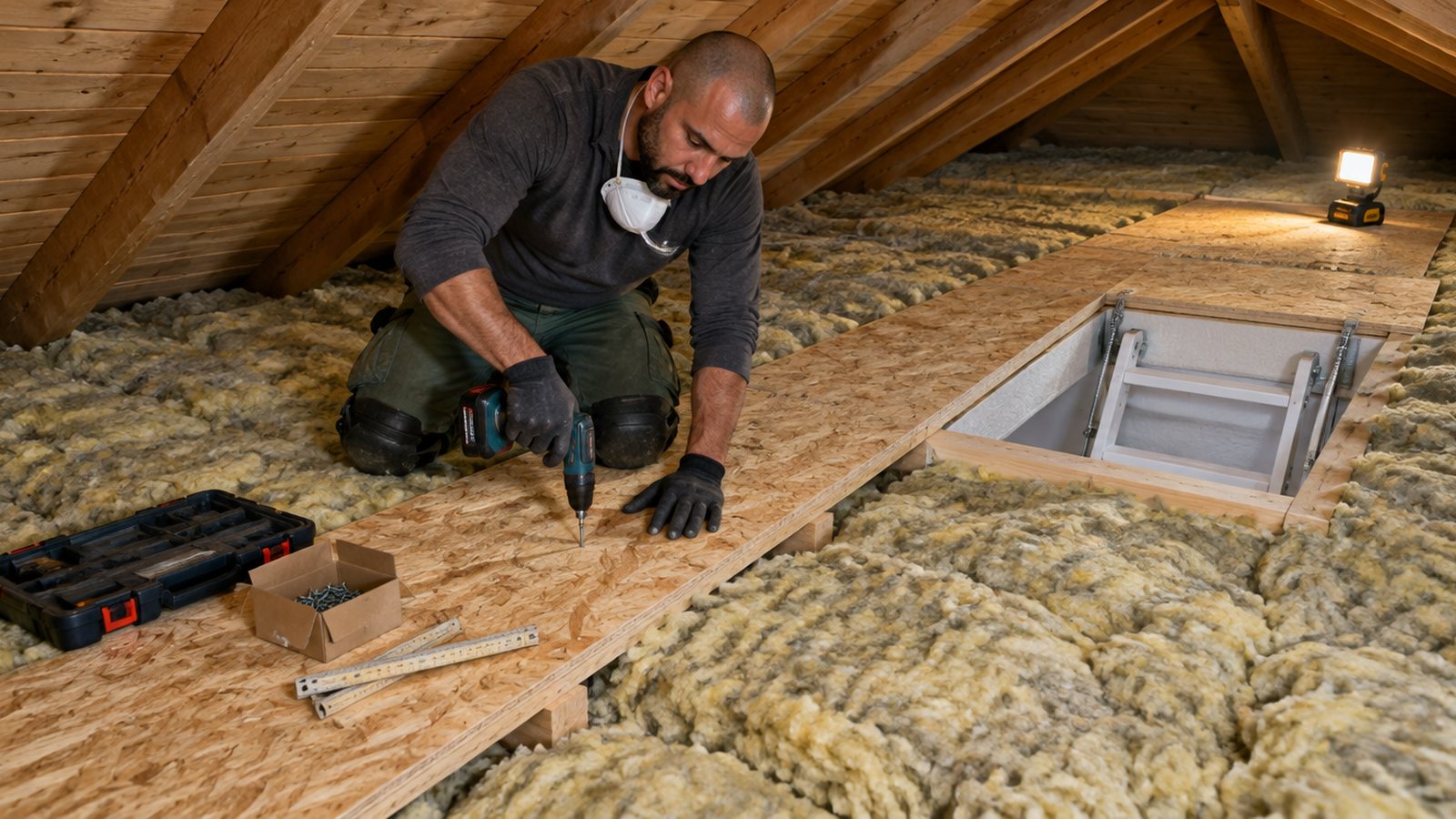
If you only use the attic for storage, insulate the floor and add a walkway or a boarded floor. That way you never stand on the wool.
Which thickness and which material
Insulation manufacturers today usually recommend 25–30 cm for a ceiling below an unheated attic. Above 30 cm, each extra centimetre saves less and less.
The most common materials for an attic floor are:
- Glass mineral wool in rolls. The most common and cheapest choice. It is flexible, so it fills the gaps between joists well. You must not walk on it or load it.
- Stone wool in slabs. Denser and more expensive. A 10 cm slab costs about €10/m² in shops.
- XPS boards. Harder and able to take load, so they go where people need to walk. More expensive than wool.
Lay wool in two crossed layers. The second layer covers the joints of the first, so there are no gaps for heat to escape. For example, you can build 30 cm from two 15 cm layers.
Vapour barrier: do you need one and where does it go
A vapour barrier is a membrane that stops water vapour from the home getting into the insulation. It goes on the warm side, under the insulation, directly on the ceiling.
- Timber ceiling (joists and boards): a vapour barrier is a must. Without it, moisture from the home gets into the wool and the timber.
- Concrete slab: according to one manufacturer, it is often not needed. Ask your tradesperson what applies to your ceiling.
Tape the joints of the membrane with an overlap. A hole around a pipe or cable is where vapour still gets through.
If stains or mould already show on the ceiling under the attic, fix the cause first. See damp and mould on walls.
Walkable attic: a walkway or an OSB floor
Wool loses its performance when it is compressed. So you must not walk on it or stack boxes on it.
If you go into the attic to check the roof or use it for storage, a walkway or floor of OSB boards on timber battens is built above the insulation. The battens hold the boards above the wool, so it keeps its full thickness. 18 mm OSB costs about €9–10/m² in shops; agree the labour for the walkway separately.
The other option is hard XPS boards under the top layer. They cost more, but you can walk on them.
What to watch out for
- Do not block the ventilation openings at the eaves and the ridge. The attic above the insulation must stay ventilated.
- Insulate the attic hatch too. An uninsulated hatch or folding loft ladder easily becomes the biggest heat loss.
- Mind the penetrations: cables, pipes and vent ducts. The insulation and membrane must fit tightly around them.
- Around the chimney, keep the required distance for combustible materials such as OSB boards and timber battens.
- Check the roof first. If the roof leaks or the timber is damp, the insulation will not last. Repair the roof before insulating.
- Protect yourself. Mineral wool itches and creates dust. Wear gloves, long sleeves, safety glasses and a mask.
Worked example: insulating an 80 m² attic
This is a made-up example, for orientation only. Say you have a single-storey house with an unheated 80 m² attic. The ceiling is timber, the attic is not used, and you need a 10 m² walkway to the hatch and the roof.
| Item | Calculation | Approx. (€) |
|---|---|---|
| Attic floor insulation, full package (two layers of wool + vapour barrier + labour) | 80 m² × €15–25 | ~1,200–2,000 |
| OSB boards for the walkway (material) | 10 m² × €9–10 | ~90–100 |
| Labour and battens for the walkway | per quote | — |
| Total (excluding walkway labour) | ~1,290–2,100 |
For the full 30 cm of wool, expect the upper end of the range. If you need everything walkable, count on €18–28/m², plus the final boarding.
If you do it all yourself, the wool alone for 30 cm over 80 m² costs about €1,300 at retail prices. The vapour barrier membrane adds around a hundred euros.
Questions to ask before you agree on the job
- Is the price per m² labour only or with materials?
- Is VAT included?
- What is the total insulation thickness and in how many layers?
- Which wool or board, and what is its lambda value?
- Is a vapour barrier included and how are the joints taped?
- Is a walkway or OSB floor included?
- Who insulates the attic hatch?
- Who takes away the waste and packaging?
- How long is the warranty on the work?
Compare at least two or three quotes with the same items. The lowest price per m² often means a thinner layer or something left out.
When to call a tradesperson through Gigron
You can lay wool on the attic floor without a tradesperson if the attic is easy to reach and the ceiling is concrete. With a timber ceiling, a vapour barrier, a walkable floor or awkward access, it is better to call a pro. Mistakes only show once moisture gets into the insulation.
On Gigron, see the categories drywall (suhogradnja) and other drywall projects. In Zagreb, see drywall in Zagreb. There are also pages for Rijeka, Pula, Osijek and Varaždin. If the roof needs a check or repair before insulating, see roofs (krovovi).
If you are also thinking about insulating the walls, see facade insulation cost per m². If the ground floor above a basement or garage is cold in winter, see basement ceiling insulation cost per m². For other jobs before winter, there is the preparing your home for winter checklist.
How to write a good request on Gigron
The clearer the request, the faster you get quotes you can compare. Include:
- attic area in m²,
- ceiling type: concrete slab or timber joists,
- whether the attic is used and whether you need a walkway or floor,
- access: ceiling hatch, ladder, stairs,
- preferred thickness and material, if you already know,
- roof condition: any leaks or signs of damp,
- city and timing that suit you.
Add photos of the attic and the access hatch. More tips in how to write a request to a tradesperson.
Example request (made up): "I need the attic floor insulated, about 60 m², in a house. The ceiling is timber and the attic is not used. I want 30 cm of wool in two layers, a vapour barrier and an OSB walkway to the hatch. Access is through a hatch in the hallway with a folding ladder. Please quote with VAT, labour and materials separately. Sisak, ideally by mid-November."
Find a tradesperson for attic insulation on Gigron
On Gigron you post a request and local tradespeople reply with quotes. It is free, and you don't have to call ten numbers. Give the m², the ceiling type and your city to get clear answers faster.
Download the app:
Frequently asked questions
Can you insulate an attic in winter?
Yes. The work happens inside the attic, so rain and snow are not a problem. What matters is that the roof is dry and does not leak. A cold attic just makes the work less pleasant, and you usually notice the difference in the house the same winter.
Can I insulate the attic floor without a tradesperson?
On a concrete ceiling with easy access, yes. Lay the wool in two crossed layers, with no gaps and without standing on it. With a timber ceiling, the vapour barrier must be taped well, so leave that to a pro. Protective gear is a must.
Which is better for an attic: wool or polystyrene?
For an attic nobody walks on, mineral wool is the usual choice. It is cheaper, non-combustible and fills the space between joists well. Use hard boards such as XPS where you need to walk or store things.
In short: attic floor insulation cost in Croatia in 2026 is roughly €15–25 per m² for a full package on an unused attic, and labour alone is about €10 per m² excluding VAT. A walkable floor, a thicker layer and an OSB walkway raise the total. So ask for a quote per m² and in total, with the thickness and every item listed.