Water heater safety valve dripping: when it is normal and what to do
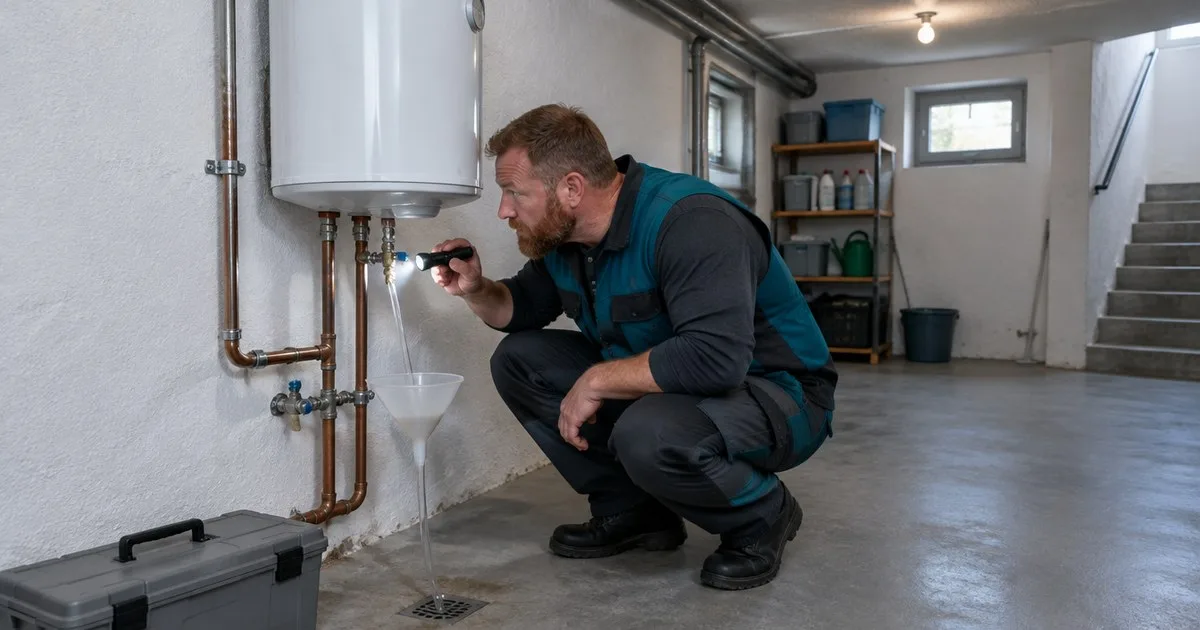
Your water heater is heating and water is dripping underneath it? If your water heater safety valve is dripping, it is usually completely normal. The valve releases extra water while the water inside heats up. It only becomes a problem when the valve leaks all the time, runs in a stream or lets nothing out even when you open it.
This guide is about the electric water heater (in Croatia usually called a “bojler”) in the bathroom, kitchen or basement. If you have a wall-mounted gas combi boiler and it is leaking water, see the guide gas combi boiler leaking water. Read when dripping is normal, why a safety valve keeps leaking even when the heater is not heating, how to test it and how to reduce the dripping. At the end you will find rough prices for parts and tips on when to call a plumber.
Water heater safety valve dripping: why it happens
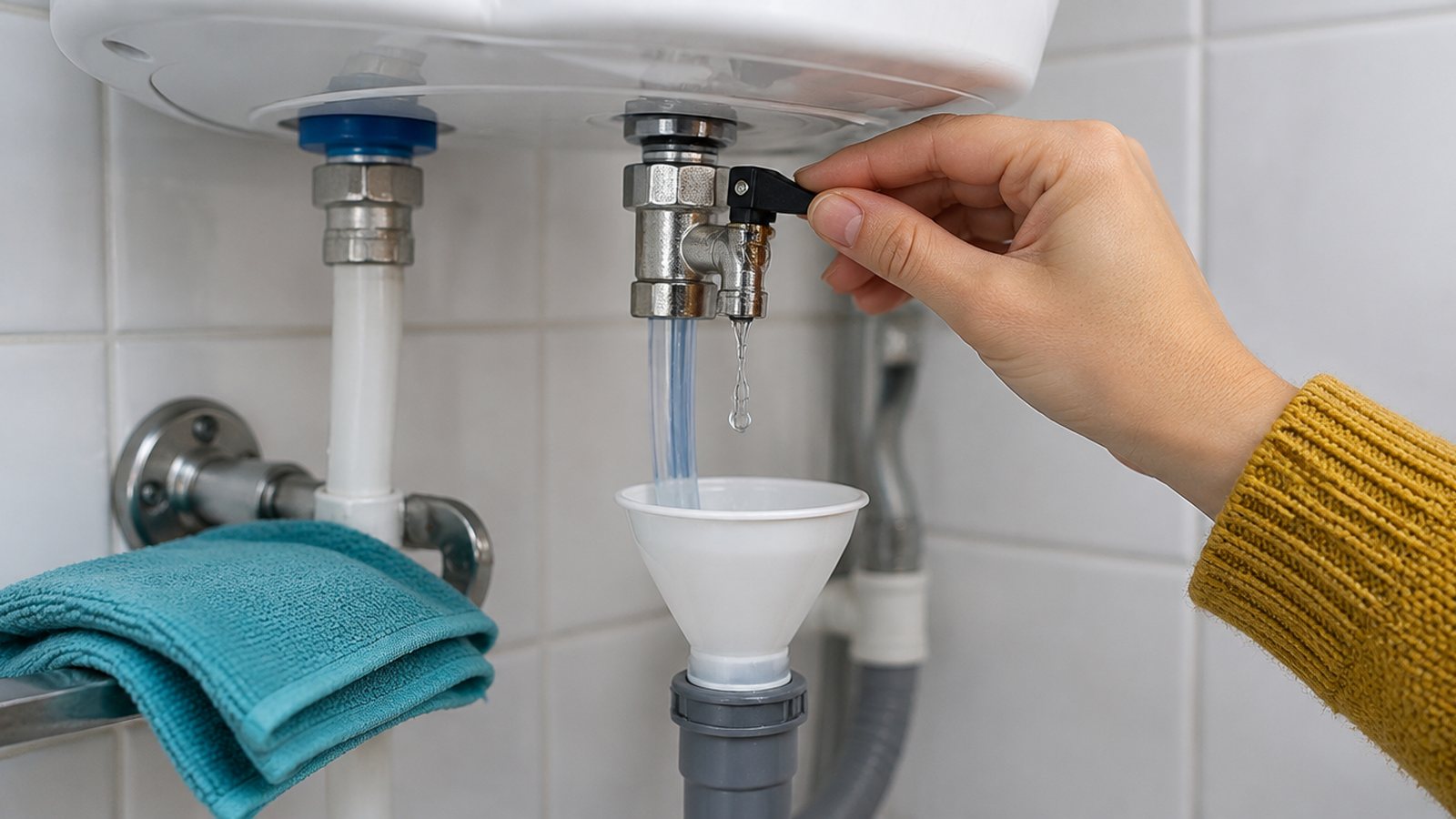
Water expands when it heats up. A water heater is a closed tank under pressure, and the safety valve on the cold-water inlet does not let water flow back into the mains. So the extra water has only one way out: through the valve outlet.
Manufacturers say this in their manuals too. Gorenje's manual for electric water heaters says that pressure in the tank rises during heating up to the limit set on the valve. Because water cannot flow back into the mains, water may drip from the valve. The outlet must stay open to the air, and that is by design.
How much water is that? We made a rough calculation for an 80-litre heater warming cold water from 10 °C. We took water density from a public engineering table. The calculation is ours and is only a guide.
| 80 l heater, water from 10 °C | How much the water expands | Note |
|---|---|---|
| Heats to about 55 °C (eco) | about 1.1 l | this much water can come out of the valve per full heating cycle |
| Heats to 75 °C (maximum) | about 2 l | almost twice as much as on eco |
So a litre or two of water per full heat-up is not a fault. It is physics. If some hot water is used while the heater is heating, even less drips out.
Need someone for this job? Describe it and get quotes →
When dripping is normal and when it is not
The easiest thing is to watch the valve while the heater is heating and while it is not. The table helps you decide what to do next.
| What you see | What it usually means | What to do |
|---|---|---|
| Drips only while the heater is heating, then stops | the valve is working normally | nothing, just lead the water to a drain |
| Leaks all the time, even when the heater is not heating | mains pressure too high or the valve no longer seals | measure the pressure, call a plumber |
| Runs in a stream, the valve is hot, hisses or lets out steam | possible overheating | switch the heater off at the fuse box at once and call a service technician |
| Never drips, not even when you move the lever | the valve may be blocked by limescale | do not wait, call a plumber |
| Drips from the thread or a joint, not from the outlet | the joint does not seal | the joint needs tightening or a new seal |
| Water comes from the bottom of the heater or under the plastic cover | flange seal or the tank | switch the heater off, close the water supply, call a service technician |
The last two rows are not a safety valve problem. More on them below, in the part about a water heater leaking from the bottom.
Safety valve leaking all the time: the most common causes
If water leaks even when the heater is not heating, something is wrong. Most often it is one of these three causes.
Mains water pressure too high
The rating plate on the heater shows its nominal pressure. Gorenje's manual mentions heaters rated at 6, 9 or 10 bar and says the safety valve must not let pressure in the tank rise more than 1 bar above the nominal value. If mains pressure is higher than the heater's nominal pressure, the manufacturer requires a pressure reducing valve on the supply.
What pressure is normal? A water-saving brochure on the Croatian portal enu.hr says that pressure in household installations averages about 3.5 bar. It recommends a pressure regulator when pressure goes above 6 bar. Too much pressure can damage washing machines and water heaters.
How do you check it? A plumber puts a pressure gauge on a tap or a fitting and measures the pressure while the heater is not heating. If your taps spray hard and the washing machine or cistern often needs repairs, that can also be a sign of high pressure. If only a tap drips, see leaking tap in Croatia.
Limescale or dirt in the valve
Limescale and small particles from the water can get stuck in the valve seat. The valve then does not close fully and leaks constantly. That is why Gorenje's manual says the valve should be checked regularly, limescale removed and the valve checked for blockage. Sometimes it helps to open and close the valve a few times so the water flushes out the dirt. If that does not help, the valve is replaced.
Worn-out valve
The valve is a cheap part and wears out over the years. If the pressure is fine and the valve still leaks, the simplest fix is for a plumber to replace it with a new valve of the same nominal pressure.
How to test a water heater safety valve
The test takes a minute and you can do it without a tradesperson. Gorenje describes this procedure in its manual. Another water heater manufacturer recommends testing every 15 days in its manual.
- Read the instructions for your valve. Some valves have a lever, others a cap that you turn.
- Check where the water goes. There should be a pipe or a funnel to a drain under the outlet. If not, put a container there.
- Move the lever or turn the cap to the test position.
- Water must come out of the outlet. That means the valve works.
- Return the lever or cap to its starting position. The water should stop.
- If nothing comes out, the valve may be blocked. If water keeps running after you return the lever, the valve does not seal. In both cases call a plumber.
Water from the valve can be hot. Keep your hands away from the outlet.
What you should never do with a safety valve
Dripping can be annoying, so people look for quick fixes. Some of them are dangerous.
- Do not plug the valve outlet or close it with tape or a cap. Gorenje says the outlet must stay open to the air.
- Do not fit a shut-off valve between the heater and the safety valve. The manufacturer warns that this removes the heater's protection against excess pressure.
- Do not tighten the spring or fit a “stronger” valve than the pressure shown on the heater's rating plate. The valve must match the heater.
- Do not run the valve's drain pipe where it can freeze. The outlet must point downwards, in a place where water cannot freeze.
- Do not open the heater or touch the heating element or thermostat. Gorenje's manual says faults inside the heater must be repaired by an authorised service technician.
Why does this matter so much? Gorenje says that if the thermostat fails, water in the tank can reach up to 130 °C. At that point the safety valve is the last line of protection.
How to reduce safety valve dripping
You do not have to stop normal dripping. But you can reduce it or lead it neatly into a drain.
Turn the temperature down to eco
Gorenje recommends the “eco” thermostat setting, where water is about 55 °C. This means less limescale and lower heat losses. By our calculation in the table above, an 80-litre heater on eco lets out about a litre less water per full heat-up than on maximum.
Lead the water into a drain
The simplest solution is a funnel under the outlet and a pipe to a drain or trap. Gorenje's manual provides for this. Place the funnel so you can see whether the valve is dripping. That way you always know it works.
Expansion vessel for a water heater
If the water cannot be led to a drain, Gorenje says dripping can be avoided with a 3-litre expansion vessel on the heater's inlet pipe. The vessel takes up the extra water while the water heats and returns it when it cools.
There are special vessels for drinking water, usually white or blue. Red ones are for central heating and are not for a water heater. A heating company from Novi Sad says the vessel's pre-charge should be about 0.2 bar lower than the mains pressure. That is why a plumber fits the vessel after measuring the pressure.
Pressure reducing valve
If mains pressure is too high, neither a vessel nor a new valve will help for long. You then need a pressure reducing valve after the water meter. It protects the whole installation, not just the heater. The enu.hr brochure gives setting the pressure to 3.5 bar as an example.
Water heater leaking from the bottom or around the cover
If water does not come from the valve outlet but from the bottom of the heater, the cause is elsewhere. It may be the heating flange seal under the plastic cover, a pipe joint or, on older heaters, a corroded tank.
What to do right away:
- switch the heater off at the fuse box, because water and electricity meet there,
- close the cold-water supply to the heater,
- wipe the water and put a container underneath to see how fast it leaks,
- do not remove the cover and do not touch the heating element.
A service technician replaces the flange seal, often together with descaling. How much that costs is in the guide water heater descaling cost. If the tank itself leaks, a repair usually does not pay off and a new heater is needed.
If you see a wet patch on the wall behind or below the heater while the heater itself is dry, the problem may be a pipe in the wall. See the guide burst pipe in the wall.
How much the parts cost
This is not a price guide, but it is good to know the parts are cheap. Prices below are from Croatian online shops, checked on 4 Nov 2026, including VAT and without labour.
| Part | Rough price | Note |
|---|---|---|
| Safety valve for an electric water heater ½″ | about €9–12 | two online shops |
| Expansion vessel for drinking water 5–8 l | about €26–28 | two online shops |
| Water pressure reducing valve ½″ | about €30–46 | the dearer model has a gauge |
On top of that comes the plumber's labour and call-out. Ask for the labour price in the quote, because it depends on the city and on how the installation is done.
When to call a plumber
Call a tradesperson if:
- the valve leaks even when the heater is not heating,
- no water comes out of the valve when you move the lever,
- water runs in a stream, the valve hisses or lets out steam,
- water leaks from the bottom of the heater, around the cover or from joints,
- there is no funnel or pipe to a drain under the valve,
- mains pressure is above 6 bar or above the pressure on the heater's rating plate.
You can find plumbers in the category plumbing work, and in Zagreb on the page plumbers in Zagreb. For water heater service and replacement see water heaters, water heaters in Zagreb and water heaters in Rijeka. If water is already leaking into your home, see leak repair.
How to write a request on Gigron
The more details you give, the more accurate the quotes. Include:
- make, model and size of the heater and the pressure on the rating plate,
- how old the heater is and when it was last serviced,
- when the valve drips: only while heating or all the time,
- where it leaks: from the valve outlet, a joint or the bottom of the heater,
- whether there is a funnel and a pipe to a drain,
- city and preferred timing.
Add a photo of the valve and the heater's rating plate. More tips are in the guide how to write a request to a tradesperson. How the warranty on completed work applies is explained in the guide warranty on building work.
Example request (made up): “My 80 l water heater drips from the safety valve all day, even when it is not heating. It is about 6 years old. There is no funnel under the valve, the water drips into a bucket. Please check the pressure and quote for a new valve and, if needed, a pressure reducing valve. Osijek, this week.”
Find a plumber on Gigron
On Gigron you post a request and local tradespeople reply with quotes. It is free and you do not have to call ten numbers. Describe what you see and add a photo to get clear answers faster.
Download the app:
Frequently asked questions
How much water can come out of the safety valve?
Roughly up to a litre or two per full heat-up of an 80-litre heater. That is our calculation of water expansion, not a manufacturer figure. If much more comes out, or water leaks even when the heater is not heating, something is wrong.
Why does the water heater drip at night?
If the heater heats at night, for example on the cheaper night electricity tariff, the valve will drip exactly then. That is normal. If it drips all night and all day, even when the heater is not heating, have the mains pressure measured.
Why does a new safety valve drip too?
Because the valve was not the cause. If mains pressure is too high, a new valve will drip as well. A pressure reducing valve helps then, not a stronger valve.
Can I plug the safety valve so it stops dripping?
No. Manufacturers require the valve outlet to stay open. A plugged valve cannot release pressure and the heater loses its protection.
In short: when your water heater safety valve is dripping only while heating, that is normal and shows the valve works. If the safety valve keeps leaking all the time, the usual causes are high mains pressure, limescale or a worn valve. If water leaks from the bottom of the heater, switch it off and call a service technician. Never plug the valve.
Need someone for this job?
Add the details, for example where and by when.
The AI assistant writes the post; you post it in the Gigron app.