Leaking tap in Croatia: causes, fix and when to call
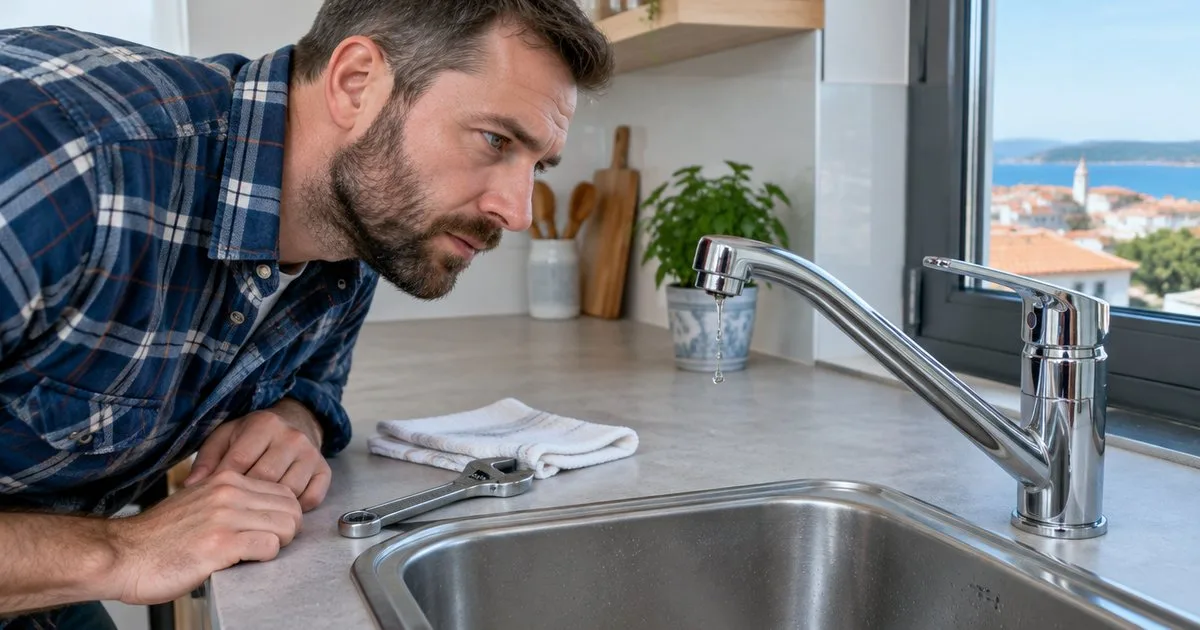
Is your tap dripping all night and you can hear every drop? A leaking tap is almost always caused by a worn washer, cartridge or limescale. You can fix most of these yourself, usually in about half an hour to an hour. Here are the steps in order and a clear line for when it is smarter to call a plumber.
This guide covers ordinary kitchen and bathroom taps in flats and houses. The advice follows tap manufacturers' instructions (Grohe, Hansgrohe, Kludi), Croatian shop price lists and trades portals, checked on 6 November 2026. It is not a Gigron quote or a guarantee the repair will work on your tap.
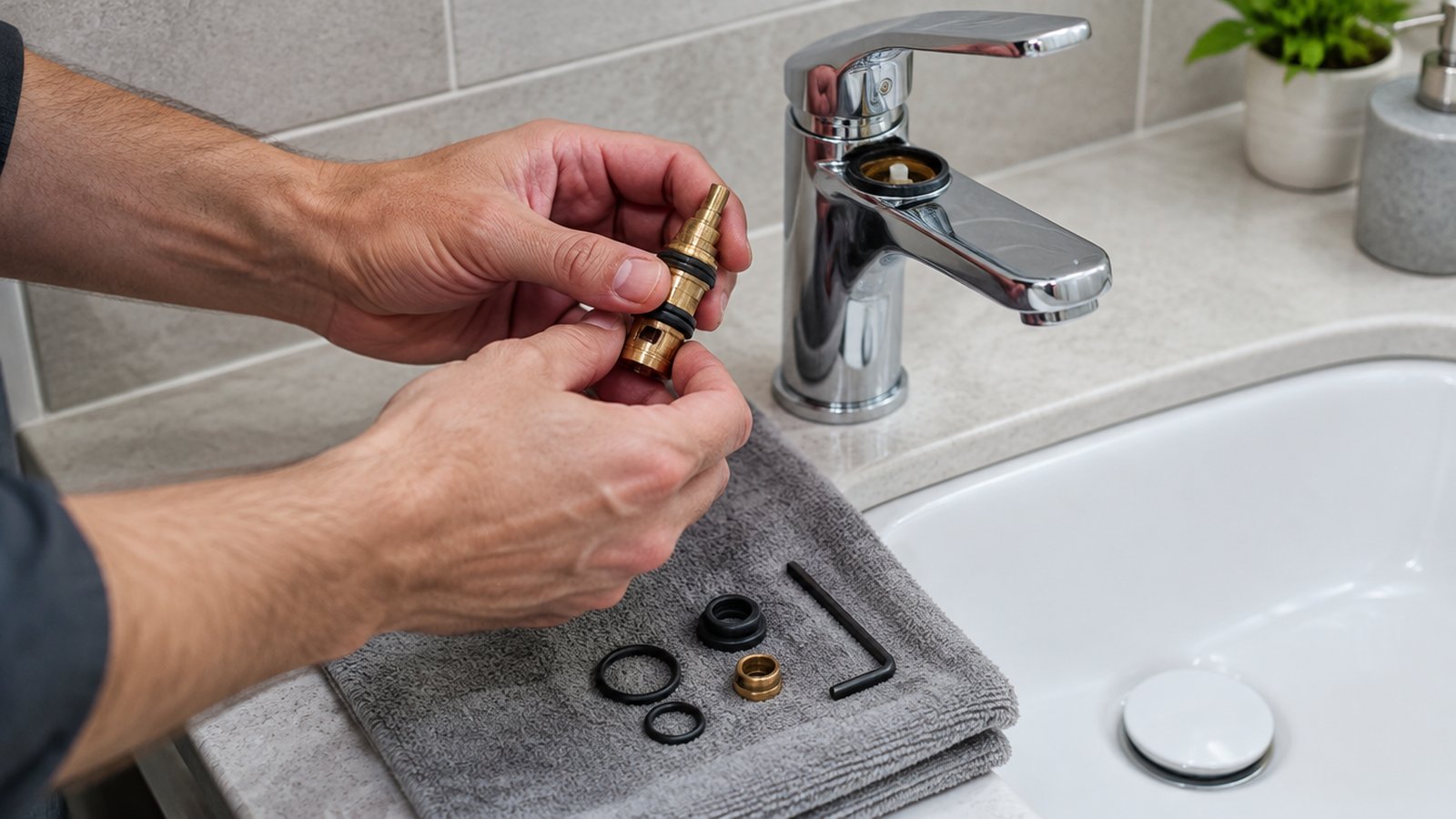
Leaking tap: the most common causes
First work out exactly where it leaks. That decides what you replace.
| What you see | Most likely cause | What makes sense |
|---|---|---|
| Tap drips from the spout when closed | worn cartridge (single lever) or valve washer (two handles) | replace the cartridge or washer |
| Drips through the spout mesh | limescale in the aerator | unscrew the aerator, soak in vinegar, rinse |
| Water seeps around the handle or at the base of a swivel spout | worn O-rings | replace the O-ring, add a little silicone tap grease |
| Drips under the tap, in the cabinet | loose connection or cracked flexible hose | tighten the nuts, replace the hose |
| Water comes from the wall or under tiles | pipe inside the wall | shut the main valve and call a plumber |
One drip a second looks harmless. USGS measurements put a typical tap drip at about 0.25 ml. Example: one drip per second is about 22 litres a day, or about 8,000 litres a year. The sooner you fix it, the less limescale and damage to the sink.
Need someone for this job? Describe it and get quotes →
What parts and a plumber cost
Rough prices checked on 6 November 2026:
- A generic 35 or 40 mm cartridge in Croatian web shops is about €6–10 (e.g. VB Tehna: 35 mm type A €6.73, 40 mm type A €7.16).
- A branded cartridge can cost more. Example: a Kludi 35 mm cartridge on Sanitino.hr is about €18 incl. VAT.
- Repairing a dripping tap (cartridge or washer) on local tradesperson portals is roughly €30–60.
- Replacing the whole tap on those portals is roughly €60–100 for labour; Zagreb services often charge €60–120 + VAT.
These figures are a guide. Ask for a quote with call-out and VAT.
What you need before you start
- a screwdriver and a hex key (often supplied with the tap),
- an adjustable wrench and a cloth so you do not scratch the chrome,
- a new cartridge or washer set of the same type (easiest is to take the old one to the shop),
- silicone tap grease and a small bowl for screws,
- a towel in the sink so nothing falls down the drain.
Step by step: tap leaks from the spout
On a single-lever tap the fault is almost always the cartridge. On a two-handle tap it is usually the washer or valve seal. Trades portals say the same: the fix is a new washer or cartridge.
- Turn the water off. Find the isolation valves under the sink and close them. If there are none or they do not work, close the main valve of the flat. Open the tap to release the remaining pressure.
- Plug the drain with a cloth or plug so a screw cannot fall in.
- Remove the handle. Pop off the hot and cold cap, undo the screw and pull the handle off.
- Unscrew the cartridge nut with an adjustable wrench. Pull the cartridge straight up.
- Inspect it. A cracked, cloudy or brittle cartridge needs replacing. On a two-handle tap replace the washer and the spindle tip.
- Clean the seat of limescale with a soft cloth or an old brush.
- Fit the new cartridge in the same position, lightly grease the O-rings with silicone grease and tighten the nut without too much force.
- Reassemble the tap, open the isolation valves slowly and check for a few minutes that it no longer drips.
Do not tighten with full force. Brass and chrome are soft, and an over-tightened thread cracks later.
Limescale and the aerator
If the tap does not drip but sprays or the jet is uneven, the aerator is the usual problem. Unscrew it by hand or with a cloth, rinse it under the flow and soak it in diluted vinegar for about half an hour. In hard-water areas this is the cheapest repair.
Leaking under or around the handle
If water leaks at the handle joint or at the base of a swivel spout, start with the O-ring. Remove the spout, pull out the old rings and fit new ones of the same size. Coat them with silicone grease for fittings. Grohe and other makers recommend silicone grease on seals. Do not use mineral or petroleum oils (for example motor oil or WD-40), as they can attack the rubber.
If it drips in the cabinet under the sink, check the nuts on the flexible hoses and isolation valves. Tighten them by hand, then a little with a wrench. If a hose is cracked or bulging, replace it straight away. A burst flexible hose can flood a flat faster than a dripping tap. Full guide: tap leaking at connection.
When to call a plumber
Skip DIY and call a professional if:
- the isolation valves under the tap do not close or leak,
- the tap still leaks after a new cartridge,
- you suspect a pipe inside the wall or wet tiles (see burst pipe in the wall),
- the tap is old, corroded or no spare parts exist,
- you rent and the contract says only a qualified tradesperson may do repairs,
- you do not know where to shut the water off.
For such jobs see plumbing services, and in Zagreb plumber Zagreb. For a damaged pipe you need pipe repair.
If the drain is slow as well, see clogged drain in Croatia. If the water heater is dripping rather than the tap, read water heater safety valve dripping. If the toilet cistern is leaking, see leaking toilet cistern in Croatia. For winter, how to stop water pipes freezing is useful too.
Replace the whole tap or repair it?
Repair pays off if the tap is still in good shape and only the cartridge, aerator or O-ring is leaking. Replacement is better when the body is cracked, the chrome is peeling or you cannot get parts. A new mixer is a simple swap if the connections are standard, but a plumber will also check the isolation valves, which is easy to forget. For labour, tap and valve prices, see tap replacement cost in Croatia.
What to write to the plumber
A clear message saves time. Include:
- city and floor,
- which tap leaks (kitchen, bathroom, shower) and where exactly,
- whether the isolation valves are closed and working,
- the tap brand if you know it, or send a photo,
- whether you want a price including call-out and VAT.
More tips: what to write in a request to a tradesperson. For a guarantee on finished work: warranty on building work in Croatia.
On Gigron you post a free request, compare quotes and agree a date. Get the app:
FAQ
Why does my tap leak when it is closed?
Most often the cartridge on a single-lever tap is worn, or the washer on a two-handle tap. Less often limescale on the seat or a damaged O-ring is to blame.
Can I replace the cartridge myself?
Usually yes. Turn the water off, remove the handle, pull the old cartridge and buy the same one. In Croatian shops the common sizes are 35 or 40 mm (VB Tehna, Diplon, Bauhaus Camargue with a 35 mm cartridge). Brands can use other sizes: Grohe has 35 mm and 46 mm cartridges; Hansgrohe and Kludi often use 35 mm. The easiest way is to take the old one to the shop or match the number on the cartridge. Full step-by-step guide: how to replace a tap cartridge.
How much water does a dripping tap waste?
It depends on how fast it drips. USGS puts a typical tap drip at about 0.25 ml. Example (our calculation from that figure): one drip per second ≈ 22 litres a day ≈ 8,000 litres a year. A slower drip wastes less, but it still adds up.
Is a leaking tap an emergency?
A drip alone is not, but fix it within days. It is urgent if water comes from the wall, under tiles or from a flexible hose. Then shut the water off at once and call a plumber.
Summary
When a tap leaks, first turn the water off, then take out the cartridge or washer and replace it. The aerator solves limescale, and O-rings solve leaks around the handle. If the valves underneath do not close, water comes from the wall or the repair does not help, call a plumber through Gigron and compare quotes with VAT and call-out included.
Need someone for a job?
Describe what you need, where and by when.
The AI assistant writes the post; you post it in the Gigron app.