Radiator replacement cost in Croatia 2026: labour, radiator, valves
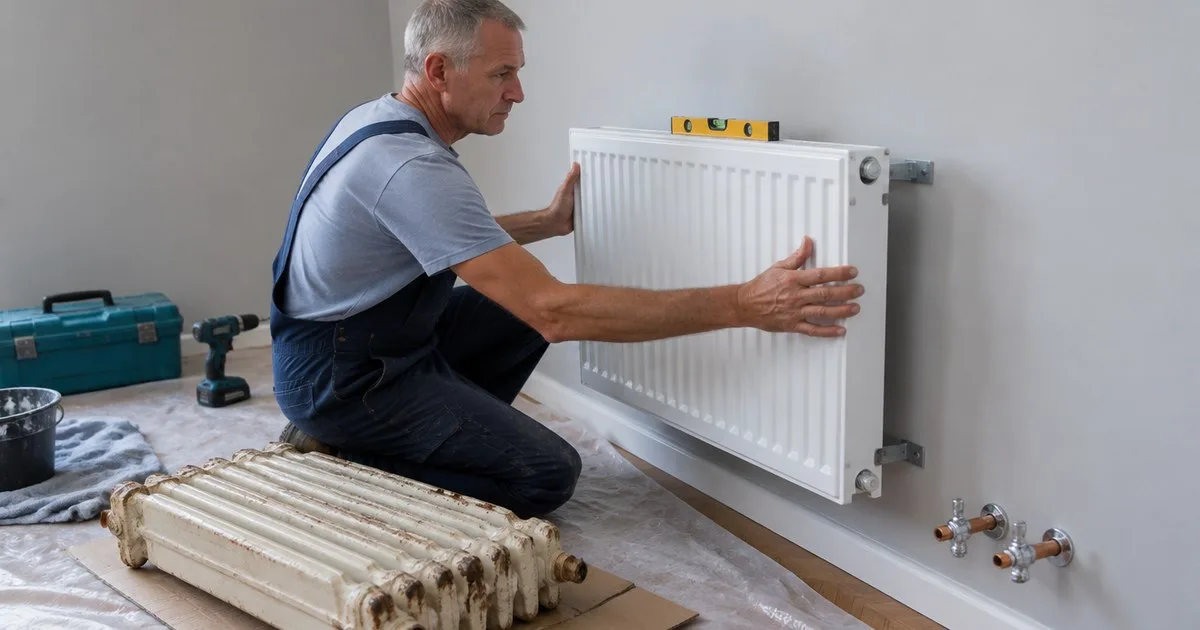
Is your old radiator leaking, heating poorly, or no longer helped even by flushing? Then you are probably wondering what a replacement costs. Search for radiator replacement cost and you will see figures from about fifty euros to well over a thousand. The gap is big because some people pay for labour only, some also buy a new radiator, and some replace every radiator in the flat.
This guide gives you approximate 2026 prices in Croatia: labour per radiator, the price of a new panel radiator, thermostatic valves and extra items. You will also find tips for flats on district heating and a worked example for a flat with four radiators.
Radiator replacement cost: approximate ranges
The figures below are approximate ranges from public price lists of contractors, shops and cost calculators in Croatia (2026). They are not a Gigron quote or a fixed price. They depend on the city, the number of radiators, the condition of the pipes and what the quote includes. Some price lists include VAT and some do not, so always check.
| Item | Approx. (€) |
|---|---|
| Labour: removing the old radiator and fitting a new one on the same connections | ~50–200 per radiator |
| New panel radiator (type 22, 60 × 100 cm) from a shop | ~70–130 |
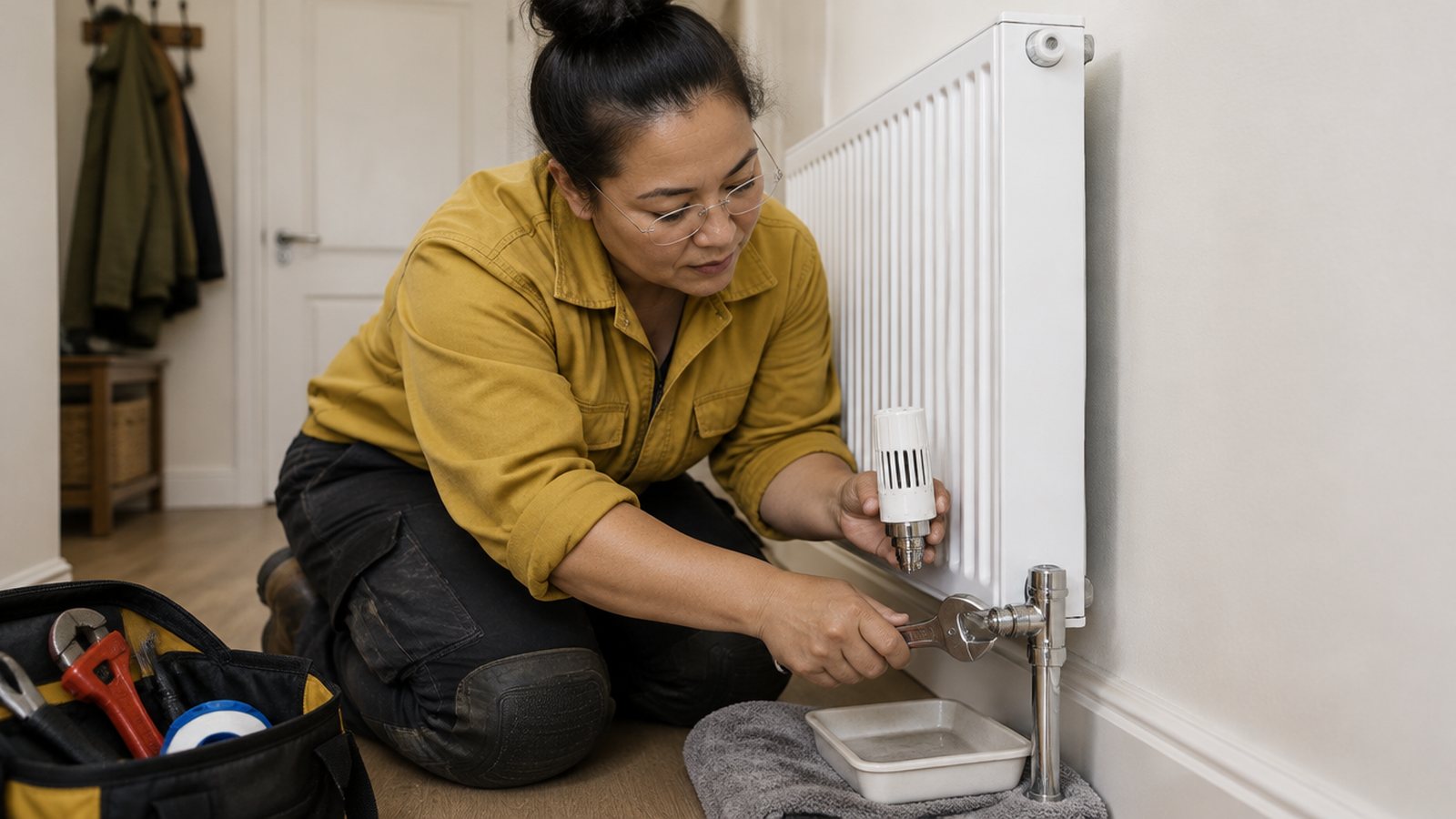
| Thermostatic set (valve, head and lockshield) | ~19–25 |
| Replacing a thermostatic valve (labour only) | ~15–25 each |
| Fitting a bathroom (ladder) radiator (labour only) | ~120 |
| Pipe freezing, when the system must not be drained | ~40–66 per point |
The labour range is wide. The lower figure means the new radiator has the same connection spacing as the old one, so the tradesperson simply takes the old one down and hangs the new one. The higher figure means new brackets, pipe adjustments, new valves, refilling and bleeding the system. Some contractors include valves and fittings in the price per radiator, others charge for them separately.
For reference, on one Croatian job-request portal the approximate 2026 prices for Zagreb were: replacing one radiator including a new one €270–450, replacing four radiators in a flat €630–1,050, and just removing an old radiator and fitting a new one (customer's own materials) €135–225.
When is it worth replacing a radiator?
Not every cold radiator needs replacing. If it is cold at the top, there is usually air in it. If it is hot at the top and cold at the bottom, the cause is usually sludge. You can often fix both without a replacement. Our guide radiator not heating shows you how to check.
Replacement makes sense when:
- the radiator leaks at the joints or through the panel and repairs do not hold,
- rust has eaten through the panel or the radiator is visibly damaged,
- it still does not heat evenly after flushing,
- you are changing the layout or renovating the room,
- you want a different size, for example because the old one is too weak for the room.
According to one Croatian portal, a radiator lasts 20 to 30 years on average, depending on maintenance and how well it was installed. If all your radiators date from when the building was built, consider replacing them all at once rather than one by one. One visit, one draining of the system and one quote usually cost less than four separate jobs.
Which radiator to choose
Most flats today get steel panel radiators. The type number (11, 21, 22, 33) tells you how many panels and convector fins it has. The higher the number, the more heat it gives at the same size. A type 22 panel radiator, 60 cm high and 100 cm wide, cost roughly €70–130 in Croatian shops in October 2026.
Agree on two things with the tradesperson before you buy:
- Output (W). The new radiator should give at least as much heat as the old one. If you pick a weaker one, the room will be colder.
- Connection spacing. If it matches the old one, the job is quicker. If not, the pipes need adjusting, which is extra work.
Replacing a bathroom radiator is a different job. Ladder-style towel radiators have different sizes and connections. Small models start at around sixty euros, while large ones cost several hundred. Fitting alone is about €120 excluding VAT, according to one price list.
Replacing radiators in a flat on district heating
If your flat is connected to district heating or a shared boiler room, you cannot just close the valves and start. Replacing a radiator in a building usually means draining part of the system, which is arranged with the building's co-owners' representative and the building manager. That is why this work is usually done outside the heating season, in spring and summer.
Radiators with heat cost allocators. If your radiator has a heat cost allocator, do not remove it yourself. The companies that maintain allocators ask you to contact them. Their technician moves the allocator to the new radiator and programs it for the new radiator. You pay for this service according to that company's price list. Ask your building manager which company reads the allocators in your building.
Replacing a radiator during the heating season
It is possible in winter, but often more complicated and more expensive. With a gas boiler in the flat, the tradesperson switches off the boiler, waits for the water to cool and drains as much as needed. If there are isolation valves under the radiator, closing just those is often enough.
When there are no isolation valves and the system must not be drained, the tradesperson can freeze the pipe. A special device creates an ice plug inside the pipe, so the work can be done without draining the whole system. According to one price list this costs roughly €40–66 per point, excluding VAT. In a building on district heating, agree any winter replacement with the building manager first.
What else pushes the price up
- Different connection spacing. Pipe adjustments, new fittings, sometimes chasing the wall.
- New valves. If the valves are old, replace them with the radiator while the system is open anyway. A set costs about €19–25, and labour about €15–25 per valve.
- Flushing the system. If the other radiators are full of sludge, the new one will soon get dirty too. One price list gives a starting price for chemical flushing of €70 per radiator excluding VAT.
- Capping the connections. If you are removing a radiator without fitting a new one, the connections must be sealed permanently.
- Bathrooms and tight spaces. Working around tiles and fixtures takes longer.
- Heat cost allocator. Moving and reprogramming it is paid to the company that maintains it.
- Taking away old radiators. Old cast-iron radiators are heavy, so ask who removes them.
- Upper floor without a lift and urgent jobs. Emergency call-outs or weekend work are often charged more.
Example: replacing four radiators in a flat
This is a made-up example, for orientation only. Say you have a 60 m² flat with a gas boiler and you are replacing four old radiators with new panel radiators. The connection spacing is the same, and you add a new thermostatic set to each radiator.
| Item | Calculation | Approx. (€) |
|---|---|---|
| New panel radiators | 4 × €70–130 | ~280–520 |
| Thermostatic sets | 4 × €19–25 | ~80–100 |
| Labour: removal, fitting, refilling and bleeding | 4 × €50–200 | ~200–800 |
| Total | ~560–1,420 |
Flushing the system, new pipes and taking away the old radiators are not included. In a building on district heating, also add the cost of moving the allocators according to the price list of the company that maintains them.
Questions worth asking before you agree on the job
- Is the price per radiator for labour only, or including the radiator and valves?
- Is VAT included?
- Are a new thermostatic valve, lockshield and brackets included?
- Does the connection spacing match, or do the pipes need adjusting?
- How powerful is the new radiator compared with the old one?
- Does the system need draining, or will the work be done with isolation valves or pipe freezing?
- Are refilling, bleeding and a leak check included?
- Who takes away the old radiators?
- How long is the guarantee on the work?
Compare at least two or three quotes with the same items. The lowest price per radiator often means something on this list is not included.
When to call a tradesperson through Gigron
Swapping a radiator looks like a half-hour job, but mistakes only show once the heating comes on. A badly sealed joint leaks, and a radiator that was not bled properly only heats halfway. If you have a gas boiler, leave its servicing and settings to an authorised service technician.
On Gigron, see the categories heating and plumbing. If you are in Zagreb, see heating in Zagreb and radiator repair in Zagreb. There are also heating in Rijeka, heating in Pula, heating in Karlovac, heating in Varaždin and heating in Osijek.
If your boiler also needs a service, see prices in our guide gas boiler service cost.
How to write a good request on Gigron
The clearer your request, the faster you get quotes you can compare. Include:
- how many radiators you are replacing and in which rooms,
- the type of heating: gas boiler in the flat, district heating, or a wood or pellet boiler,
- the old radiators: cast iron, aluminium or panel, and their size,
- whether you already have the new radiators or the tradesperson should get them,
- whether there are heat cost allocators on the radiators,
- what is wrong: leaking, not heating, rust,
- city, floor and timing that suits you.
Add a photo of the radiator and the connections under it. For more tips, see our guide how to write a request to a tradesperson.
Example request (made up): "I need two old aluminium radiators replaced in my flat, in the living room and the bedroom. Heating is from a gas boiler in the flat. Please supply the radiators with new thermostatic valves. A joint on the left radiator is leaking. Please quote including VAT, with labour and materials listed separately. Karlovac, 3rd floor, no lift. Next week suits me."
Find a tradesperson for radiator replacement on Gigron
On Gigron you post a job and local tradespeople reply with quotes. It is free and you do not have to call ten numbers.
Download the app:
Frequently asked questions
How long does a radiator replacement take?
It depends on whether the system has to be drained. If the new radiator goes on the same connections and there are isolation valves under it, the job is shorter. It takes longer when the system has to be drained and refilled, the pipes adjusted or a pipe frozen. Once the tradesperson sees photos of the connections, they can tell you how long it will take.
Can I replace a radiator myself?
You can take off and put on a thermostatic head yourself. For the radiator itself, the water has to be shut off or drained, the joints sealed, and the system refilled and bled. A mistake means water on the floor, so it is better left to a tradesperson. In a building on district heating you have to arrange the work with the building manager anyway.
Is it worth replacing all radiators at once?
Often, yes. The tradesperson comes once, the system is drained and refilled once, and the new radiators and valves all respond the same way. If the other radiators heat well and have no sludge, you can replace just the one that leaks.
In short: in 2026, radiator replacement in Croatia costs roughly €50–200 in labour per radiator, and a new panel radiator is about €70–130. On top of that come thermostatic valves, possibly flushing, and moving the heat cost allocator in a building. So ask for a quote per radiator and in total, item by item.