Adjusting PVC windows for winter: winter mode, seals and hardware
It has turned cold, the heating is on, and you still feel cold air by the window. Online advice says: grab a hex key and switch the window to "winter mode". Adjusting windows for winter can really help, but only if you know what you are turning and why. An over-tightened fitting and crushed seals end up costing more than a little draught.
In this guide you will learn whether PVC windows really have a winter mode, how to check the seals, how to adjust the eccentric cams safely, how to lubricate the hardware and how much a window technician charges in Croatia. At the end there is a checklist for your request and an example.
Adjusting windows for winter: what you are actually adjusting
Most PVC and aluminium tilt-and-turn windows have hardware with three kinds of adjustment:
- sash height: on the bottom hinge, when the sash has dropped and rubs on the frame,
- side position: on the hinges, when the sash does not sit straight in the frame,
- sash pressure on the seal: on the eccentric cams along the edge of the sash.
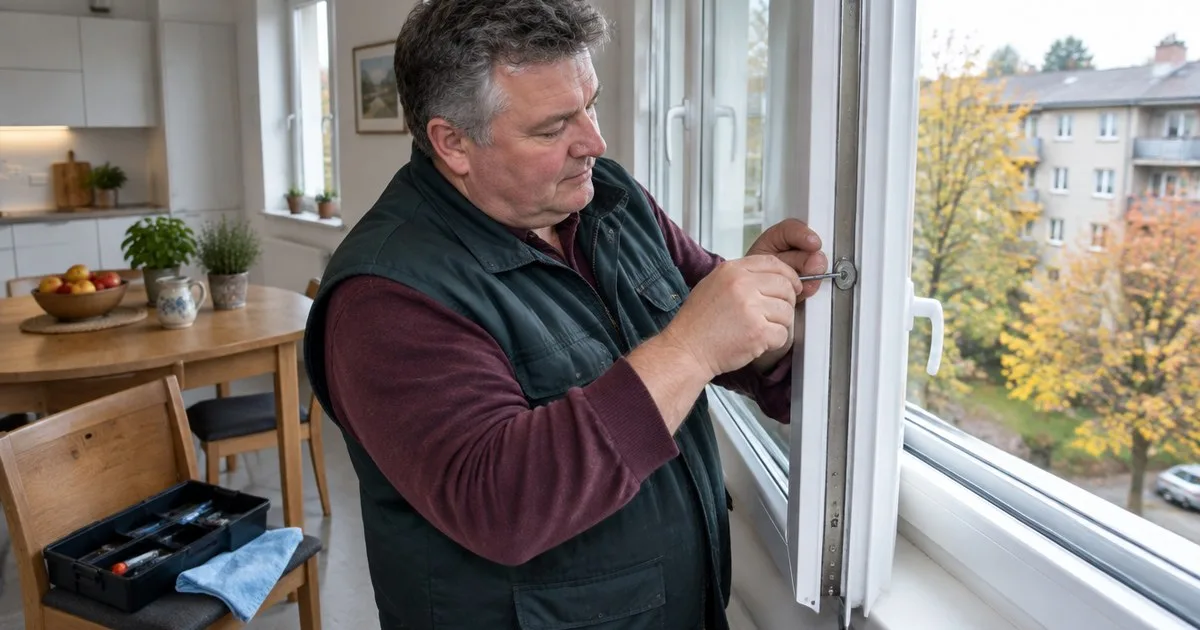
Eccentric cams are small metal rollers on the side edge of the sash. When you close the window, they slide into metal keepers on the frame and press the sash against the seal. They are usually turned with a 4 mm hex key, on some hardware with a different bit. The roller sits slightly off-centre, so turning it changes how tightly the sash closes. The difference is small: on some hardware only about a millimetre each way.
PVC window summer/winter setting: does winter mode exist?
The usual advice goes like this: turn the mark on the cam towards the room for more pressure ("winter mode"), towards the outside for less ("summer mode"), with the middle position as the factory setting. Many websites repeat this every autumn.
Croatian window makers, installers and service technicians say otherwise. A window leaves the factory in the middle position, where the seal sits well and the hardware is not under strain. The cam is meant for fine adjustment when the window really starts to leak air, not for turning twice a year. If you tighten it fully every autumn, the seal gradually flattens for good and the hardware wears and starts to stick.
So the rule is simple: leave a window alone if it does not leak. If you feel a draught in one spot, check the seal first, then turn the cam next to that spot by no more than a quarter turn.
How to check for draughts and worn seals
A windy day is best, because draughts are easy to feel.
- Paper test. Put a sheet of paper between the sash and the frame, close the window and pull. If the paper slides out without resistance, the sash is not sealing there. Repeat around the whole perimeter, especially near the hinges and on the opposite side.
- Look at the seal. Run a finger along the rubber with the sash open. If it is hard, cracked, crumbling or keeps a dent, it is time to replace it.
- Look at the mark on the seal. A shiny, pressed area means the sash presses there. Untouched rubber in one section means there is no pressure there.
- Check the handle. If you have to force it or it sticks, the hardware needs adjusting or lubricating. Forcing it puts extra strain on the hardware.
- Look at the sash. If it rubs on the bottom of the frame, it has dropped and needs to be raised at the hinge.
If you see fog between the panes that you cannot wipe off, the seal and hardware are not the problem. The glazing unit needs replacing; read more in our guide to condensation on windows.
How to adjust the eccentric cams step by step
If the seal is fine and the problem is pressure:
- Open the sash and find all the cams on its edge. A small window has two or three, a balcony door more, at the top and bottom too.
- Look at the mark on each roller and note or photograph the starting position.
- Turn the cam next to the draughty spot by no more than a quarter turn towards more pressure.
- Close the window and repeat the paper test.
- If the handle is then hard to turn, turn the cam back one step.
Leave sash height and side position to a professional, especially on large sashes and balcony doors. If the sash keeps dropping, the cause may be glass that has settled over time. The glazing unit then has to be re-packed with setting blocks, which is a job for a technician.
Lubricating PVC window hardware
This is the job that is really worth doing every autumn. Hardware manufacturers recommend lubricating window hardware at least once a year.
- Use oil or grease free of acid and resin. Sewing machine oil or silicone spray works well.
- Lubricate all moving parts and locking points: cams, keepers on the frame, hinges and the tilt mechanism.
- After lubricating, open and close the window a few times to spread the oil. Wipe off any excess.
- Check that the screws on the hardware are tight. Loose or damaged screws should be replaced by a technician.
- Clean the hardware with a soft cloth and a mild cleaner. Do not use abrasive or acidic products, and never paint the hardware.
Wash rubber seals with mild soapy water, dry them and apply silicone spray. That keeps the rubber flexible for longer.
Replacing seals on PVC windows
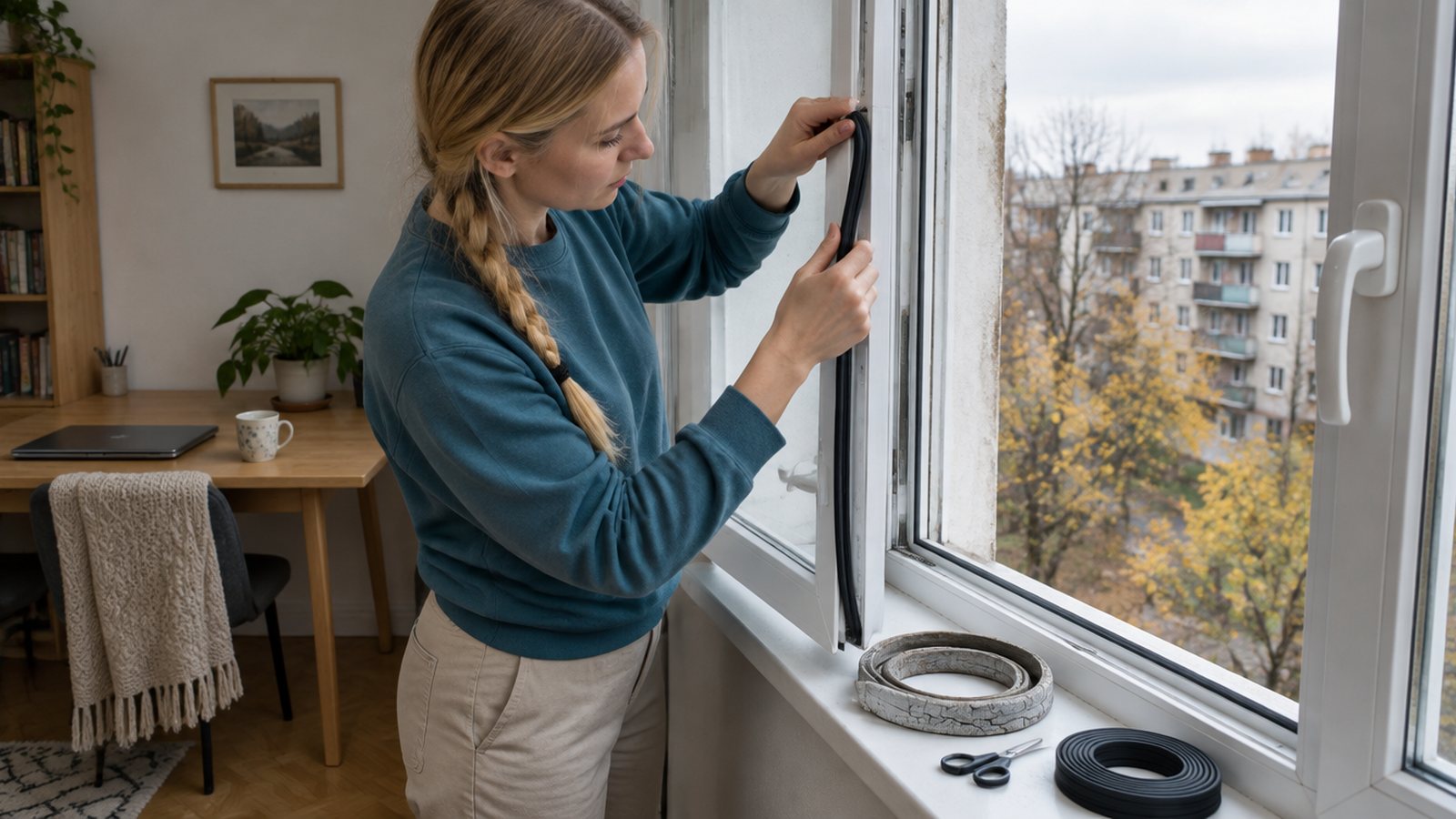
Seals are usually replaced every 5 to 10 years, depending on the material and how exposed the window is to sun and wind. You can replace the seals on PVC windows yourself if you are patient:
- Cut off a piece of the old seal and take it to the shop. Profiles look alike but differ in the part that goes into the groove.
- Pull the old seal out by hand or with a plastic wedge, not a screwdriver. A scratch in the groove will leak air later.
- Clean the groove of dust and residue, degrease it and let it dry.
- Press the new seal in from the top corner downwards and do not stretch it. Stretched rubber shrinks and leaves gaps at the corners.
- Cut the corners at 45 degrees so the ends meet well. Replace the seal around the whole perimeter, not just where it is draughty.
- Work on a warmer day. Cold rubber is stiff and harder to fit into the groove.
On wooden windows seals are often glued, and aluminium windows have thinner, specific profiles. If you do not know which profile you need, call a professional.
When to do it yourself and when to call a technician
| Problem | What to do |
|---|---|
| Slight draught in one spot, the seal is soft | Turn the nearby cam, a quarter turn at most |
| The seal is hard, cracked or flattened | Replace the seal around the whole perimeter |
| The handle sticks or is hard to turn | Lubricate, then adjust the hardware |
| The sash rubs on the bottom of the frame | Technician: raise the sash and re-pack the glass |
| Still draughty after a new seal | Technician: check hardware, hinges and frame |
| Fog between the panes | Technician: replace the glazing unit |
If the windows are old, single-glazed or the frame is warped, neither a new seal nor adjustment will help much. Then it is worth thinking about replacing the windows.
How much window servicing and adjustment costs in Croatia
Approximate prices from public price lists and example requests in Croatia in 2026:
| Service | Approximate price |
|---|---|
| Hardware adjustment | about €20–30 per sash, about €45 with some contractors |
| Seal replacement | about €15–30 per linear metre |
| Handle replacement (labour) | about €20–25, handle from about €10 |
| Re-packing the glazing unit with setting blocks | about €30–70 per window |
Some contractors have a minimum call-out charge, so it pays to have all the windows in the flat done at once. One public request to adjust four PVC windows in Zagreb received an estimate of €90 to €150.
Example (illustrative): your flat has four windows and one balcony door, six sashes in total. Adjusting the hardware at €20–30 per sash comes to about €120–180. If the balcony door needs a new seal and the perimeter is about 6 m, add about €90–180. You get the final price only after an inspection.
New seals and adjusted hardware will not heat your flat, but they cut draughts. If it is still cold by the window, check the heating too. Our guide radiator not heating will help, and you will find other autumn jobs in our winter home checklist.
How to write a good request on Gigron
Include:
- how many windows and doors, and how many sashes each has,
- what type: PVC, aluminium or wood, and roughly how old,
- what is happening: a draught in one spot, the handle sticks, the sash rubs, the seal is cracked,
- what you have tried: paper test, lubrication, the cam,
- city, neighbourhood, floor and a time that suits you.
Add close-up photos of the sash edge, the seal and the hardware. If you are not sure what to write, see our guide how to write a request to a tradesperson.
Example request (illustrative): "In my flat in Osijek I have five PVC windows, about 12 years old, and one balcony door. There is a draught by the balcony door and the handle is hard to turn. On two windows the seal is hard and cracked. I need the hardware adjusted and a quote for new seals. This week, in the afternoon, works for me."
On Gigron, see the windows category. You can find window professionals in Zagreb, Split, Osijek and Šibenik. If the draught comes through your front door, see doors and our guide entrance door cost. How to seal a door and stop the draught under it is explained in our guide draught-proofing doors.
Find a professional on Gigron
On Gigron you post a request and local professionals reply with offers. It is free and you do not have to call ten numbers.
Download the app:
Frequently asked questions
Should I switch the window back to summer mode in spring?
If you tightened the cams only for winter, return them to their starting position. That is why it helps to photograph the position before turning. A window that seals well in the middle position does not need touching in autumn or spring.
Can I damage the window by tightening the cams myself?
Yes, if you overtighten them. The sash becomes hard to close, the handle sticks and the seal flattens for good. Turn a little at a time and check how it closes after each step.
How long does window adjustment take?
Adjusting the hardware on one window usually takes about 15 to 30 minutes. For a whole flat, multiply that by the number of windows and add time for the seals if they are being replaced.
In short: adjusting windows for winter does not mean tightening every cam all the way. Do the paper test first and check the seals. Lubricate the hardware at least once a year, replace worn seals, and turn a cam only a little and only where it is draughty. If the sash rubs or it is still draughty after a new seal, call a window professional.