RCD keeps tripping: causes and how to find the fault step by step
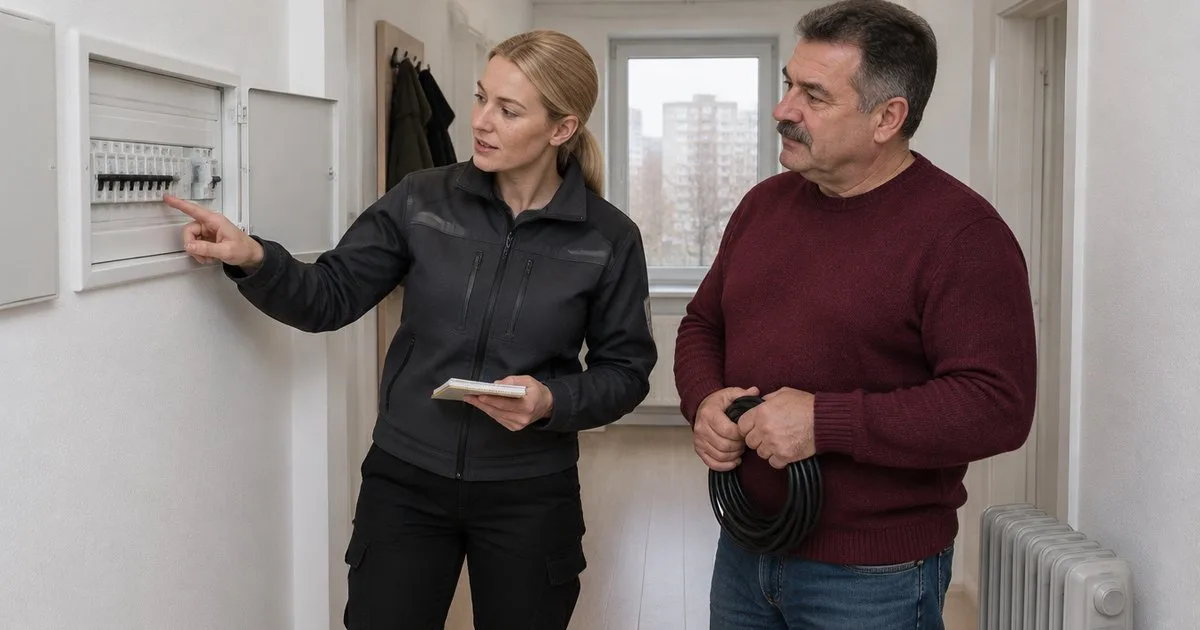
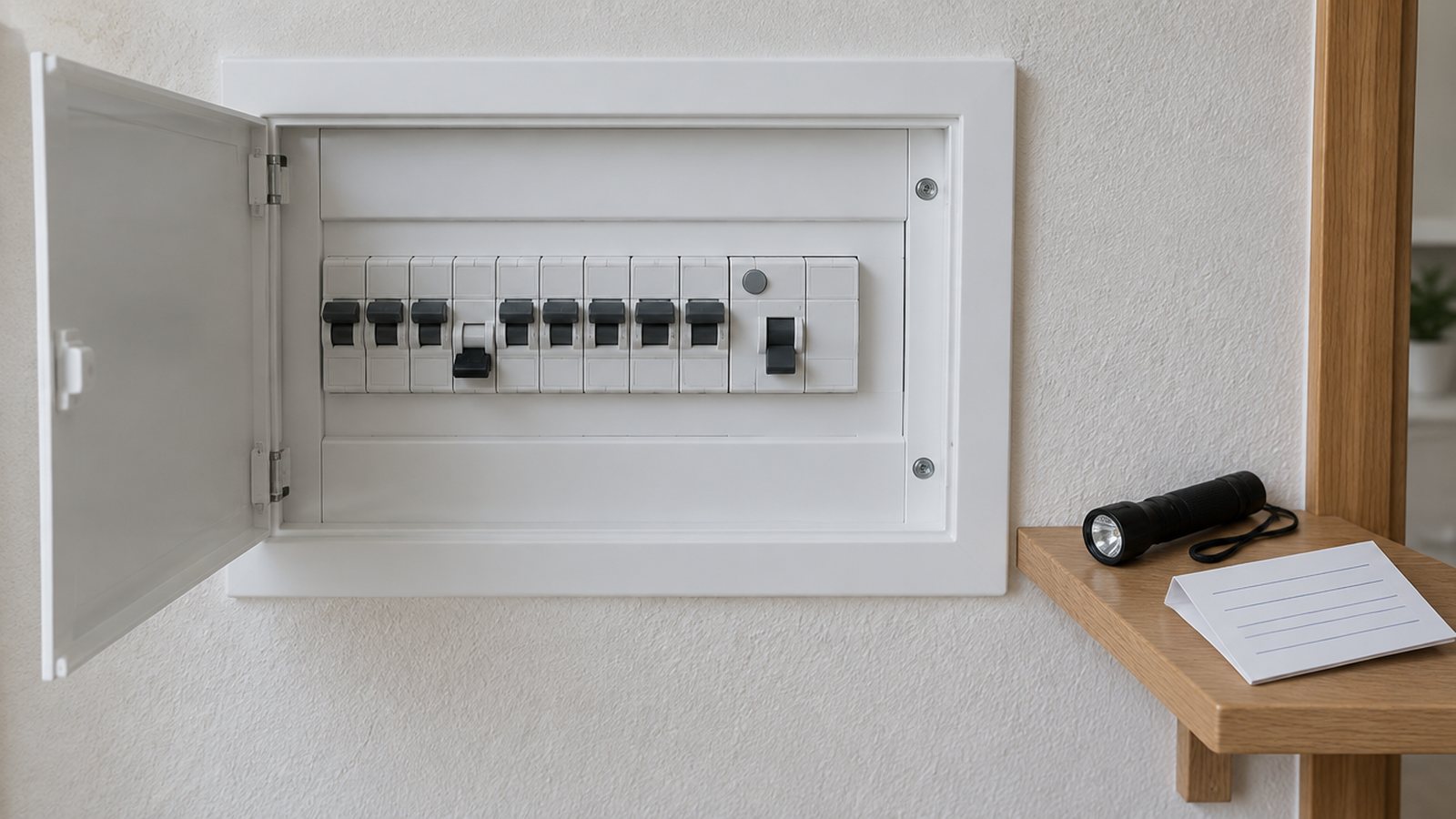
You switch on a heater and the whole flat goes dark. Or the power goes off in the middle of the night for no clear reason. In the consumer unit, the wider switch with a T button is down. When an RCD keeps tripping, electricity is "leaking" to earth somewhere in the wiring or in an appliance. In Croatia this switch is usually called a FID. Often the switch itself is not faulty. It is a sign that it is doing its job. You can usually narrow down the cause yourself without opening anything. All you need is a little patience and the right order.
This guide covers the difference between an RCD and a circuit breaker, the most common causes, a step-by-step check and a clear line: what you can do yourself and when to call an electrician. It is based on advice from HEP ODS (the Croatian distribution system operator), a catalogue from one maker of protective devices and guides by Croatian electricians.
Important: do not open the consumer unit, sockets or junction boxes. Everything here is done only with the switches in the unit and the plugs in the sockets. Repairs to the wiring are a job for a qualified electrician.
RCD keeps tripping: the short answer
- Unplug the bigger appliances.
- In the consumer unit, switch off all circuit breakers and switch the RCD back on.
- If the RCD trips again straight away with every breaker off, call an electrician.
- If it holds, switch the breakers on one at a time, a few seconds apart.
- When the RCD trips, note which breaker it was. Leave that circuit off and switch the others back on.
- On the suspect circuit, plug in appliances one at a time. The one that trips the RCD is most likely the culprit.
If you smell burning, see black marks on a socket or a cable feels hot, stop and do not test any further.
Need someone for this job? Describe it and get quotes →
RCD or circuit breaker: what actually tripped
There are two kinds of protection in the unit, and they do different jobs.
| Circuit breaker (MCB) | RCD (FID, residual current device) | |
|---|---|---|
| What it looks like | narrow switch, side by side in a row | wider switch with a T button |
| What it protects | wires and appliances | people from electric shock |
| What it reacts to | overload and short circuit | current leaking to earth |
| Typical rating | e.g. 10 A or 16 A, letter B or C | e.g. 30 mA |
| Most common cause | too many powerful appliances on one circuit, or a short circuit | a faulty appliance or moisture |
An RCD constantly compares the current going out to appliances with the current coming back. If part of it gets "lost", through moisture, damaged insulation or a person, the RCD cuts the power. For protecting people, a 30 mA RCD is used.
If only one narrow breaker is down and the RCD is up, the problem is in that circuit and not a leak. More on that below, in the section on breakers.
Most common causes when an RCD keeps tripping
A faulty appliance
If the RCD trips only when you switch on one particular appliance, the problem is very likely in that appliance or its cable. One Croatian electrical contractor lists these as common culprits:
- washing machines and dishwashers (heating element, pump, moisture in the base),
- water heaters (heating element and limescale),
- ovens and hobs (heating elements, fan, electronics),
- fridges (compressor, defrosting, moisture around the wiring).
With water heaters and washing machines, the fault often shows only once the element heats up. That is why the RCD sometimes trips a few minutes into a cycle rather than straight away.
Moisture in a socket, box or joint
Condensation in a basement, a leak under the sink or steam from cooking can be enough. That is why an RCD can trip "at random", for example after a shower or on rainy days. Electricians name these as common spots:
- outdoor sockets with no cover or a cracked one,
- garden and facade lights with poor seals,
- junction boxes on the facade or in the basement,
- pumps for a well, tank or pool,
- cable joints buried in the ground.
If the RCD trips mostly when it rains, the culprit is almost always an outdoor or basement circuit. How to deal with a damp basement is covered in the guide damp basement causes and fixes.
A damaged cable or a loose contact
A cable squashed behind a wardrobe, cracked insulation or an overheated extension lead can leak current. This kind of fault is sneaky. The appliance works, but the RCD trips when you move the cable or when the appliance warms up.
A wiring fault or a problem in the unit
A wrongly connected neutral, a poor joint in a junction box or an old switch can also be the cause. You cannot see this from the outside, and it cannot be fixed without measuring. That is a job for an electrician.
RCD trips intermittently: why only sometimes
Intermittent tripping is the most annoying because there is no clear pattern. It is usually explained by one of these:
- Moisture. It trips after a shower, cooking, rain or the humid south wind.
- An appliance warming up. It trips when the water heater or washing machine heats water.
- A moved cable. It trips when you move something or vacuum behind furniture.
- Several small leaks adding up. According to one maker's catalogue, an RCD trips at 50 to 100 % of its rated residual current. So a 30 mA RCD can trip at around 15 mA. If several appliances on the same RCD each leak a little, together they can be enough.
So keep a log of when it trips. Write down the date, time, weather and which appliance was running. It saves the electrician a lot of time.
How to find the cause step by step
You only use switches and plugs for this. You need no tools.
1. Check whether the power is off only at your place
See whether your neighbours have power and whether the street lights are on. HEP ODS advises checking first whether the power is also off in the neighbourhood. If a wider area is without power, the fault is in the grid. Then you call the on-duty service of your local distribution area, not an electrician.
2. Unplug appliances
Unplug the bigger appliances: heaters, washing machines, dryers, extension leads. Switching an appliance off on its own switch is not enough. Appliances that are wired in permanently, like a water heater or an oven, you will switch off with their breaker in the next step.
3. Switch off all breakers and switch the RCD on
If the RCD trips again straight away with every breaker off, the problem is in the unit itself or in the supply. This is where everything you are allowed to do yourself ends. Call an electrician.
4. Switch the breakers on one at a time
If the RCD holds, switch the breakers on in turn, a few seconds apart. When the RCD trips, you know which circuit is suspect. Leave that breaker off and switch the others back on.
5. Plug in appliances one at a time
On the suspect circuit, plug in appliances one by one and wait a little after each. With a water heater or washing machine, wait until it starts heating. If you put everything back at once, you lose the trail.
6. Leave the culprit off
Once you find the appliance, leave it unplugged and call a repair service for it. If the RCD still trips without that appliance, the problem is in the wiring of that circuit.
Example (made up): the RCD trips every morning around 6. You switch off all breakers and turn them on one by one. The RCD trips only when you switch on the water heater's breaker and the heater starts heating. The heating element is probably the culprit. You leave the heater off and call a technician.
When a circuit breaker keeps tripping
If a narrow circuit breaker is down and the RCD is up, look at when it trips:
- Straight away when you switch an appliance on usually means a short circuit in the appliance or the wire, sometimes with a bang or a spark.
- After a while usually means an overload. Too many powerful appliances are running on the same circuit.
A common winter example is an extension lead with a heater, a washing machine and another powerful appliance plugged in. Spread powerful appliances across different circuits and do not run them all at once. HEP ODS warns to watch the number and power of appliances on an extension lead.
Never fit a bigger breaker to stop it tripping. A breaker is chosen to match the wire size, not the appliances. A bigger breaker on the same wire means the wire can overheat before the breaker reacts. If you have old screw-in fuses, replace a blown fuse only with a new one of the same type. Never "repair" old fuses.
What not to do
- Do not bypass the RCD or remove it "until the electrician comes". Leave only the suspect breaker off and keep the RCD working.
- Do not keep resetting a breaker or RCD that trips again straight away. Repeated tripping heats the contacts in the unit.
- Do not use a wire or a coin in place of a fuse.
- Do not open the unit, sockets or boxes. That is an electrician's job.
- Do not use the appliance that tripped the RCD until a technician has looked at it.
- Do not touch switches or plugs with wet hands. If water has got into the unit, do not touch it and call an electrician.
Test the RCD with the T button
An RCD has a T button for testing. Press it while the power is on and the switch must trip immediately. Then switch it back on. One maker's catalogue of protective switches recommends testing once a month.
If the RCD does not trip on test, the switch is probably faulty and does not protect you. Stop testing and call an electrician. The test button only checks that the switch works. It does not measure earthing or the condition of the protective conductor. An electrician measures that with an instrument.
When to call an electrician straight away
Do not wait until tomorrow if:
- the RCD trips even with all breakers off,
- you smell burning or see signs of melting on a socket or box,
- a socket or cable is warm,
- someone feels a "tingle" when touching an appliance casing, a tap or a metal fence,
- water has got into the consumer unit,
- the RCD does not react to the T button,
- you cannot find the cause and the tripping keeps happening.
In these cases leave that circuit, or the whole flat, without power and call an electrician. HEP ODS advises contacting a qualified professional when a fuse, limiter or residual current switch has tripped.
An electrician can measure the insulation, check the circuits and the joints in boxes and in the unit, and find out whether the fault is in the wiring, the switch or an appliance. Give them your notes: which circuit, which appliance and when it trips. If the wiring is old and needs replacing, prices are in the guide electrical wiring cost per m².
What an electrician's visit costs
Roughly, according to one Croatian services portal (figures for 2025–2026):
| Item | Rough price |
|---|---|
| Electrician's labour | €30–55 per hour |
| Call-out | €40–50 |
| Emergency call-out | an extra €50–95 |
| Connecting one RCD (labour only) | €24–32 |
| RCD 30 mA, two-pole (part) | around €30–35 |
These are not final quotes. The price depends on the location, the time and what the electrician finds. Ask in advance what the call-out costs and whether VAT is included.
Water heater, air conditioner and washing machine: when they are the ones tripping it
- Water heater trips the RCD, usually after it starts heating: often the heating element is to blame, sometimes with a lot of limescale. How much it uses and how to descale it is covered in the guides how much electricity a water heater uses and water heater descaling cost. If the heater is old, compare with the prices in water heater replacement cost.
- Washing machine trips the breaker or RCD while heating water: most often the heating element or moisture in the base. Call a washing machine repair service.
- Air conditioner trips the breaker or RCD: note whether it happens at start-up or after a while and call a technician. What a service includes is in the guide air conditioner service cost.
Find an electrician
You can find electricians in the electrical installations category, e.g. in Zagreb, Split, Rijeka or Osijek. For repairs see electrical repairs, and for bigger changes electrical installation alterations. If the water heater is the culprit, there is electric water heater repair.
Here is a made-up example of a request you could send:
"The RCD in my flat in Zagreb trips 2–3 times a week, mostly in the morning. When I switch off all breakers and turn them on one by one, it trips on the bathroom breaker. The bathroom has an 80-litre water heater and a washing machine. The consumer unit has not been opened. Please quote the call-out and hourly rate, including VAT."
How to write a good request is covered in the guide how to write a request to a tradesperson. For other jobs before winter, see preparing your home for winter.
Find a tradesperson with Gigron
On Gigron you post a job for free and tradespeople get back to you with offers. Describe what trips and when, and ask what is included in the price: call-out, labour, parts and VAT. Download the app:
FAQ
Why does the RCD trip when everything is switched off?
If the RCD trips even with all breakers off, the problem is in the unit or the supply. If it trips only when you switch on a particular breaker and nothing is plugged in on that circuit, the fault is probably in the wiring of that circuit or in a permanently wired appliance. Either way, call an electrician.
Can I switch off or bypass the RCD for a while?
No. The RCD is your protection against electric shock. Leave only the breaker of the suspect circuit off and keep the RCD working.
Why does the RCD trip when it rains?
Usually because moisture gets into an outdoor socket, a light, a box on the facade or a cable joint in the ground. Find the circuit with the breaker method and leave it off until the electrician comes.
What does it mean if the RCD does not trip on test?
If you press the T button and the RCD does not trip, the switch is probably faulty and does not protect you. Call an electrician to check and replace it.
Can I replace an RCD myself?
No. Replacing an RCD means working inside the consumer unit. HEP ODS advises leaving repairs to the wiring to a qualified professional.
Summary
When an RCD keeps tripping, current is leaking to earth somewhere. Most often one appliance or moisture is to blame. Unplug appliances, switch off the breakers, switch the RCD on and turn the breakers back on one at a time. That leads you to the suspect circuit and then to the appliance. If the RCD trips with everything off, something smells of burning or the RCD does not react to the T button, call an electrician. Never bypass the RCD or fit a bigger breaker.
Need someone for a job?
Describe what you need, where and by when.
The AI assistant writes the post; you post it in the Gigron app.