How much electricity does a water heater use in Croatia?
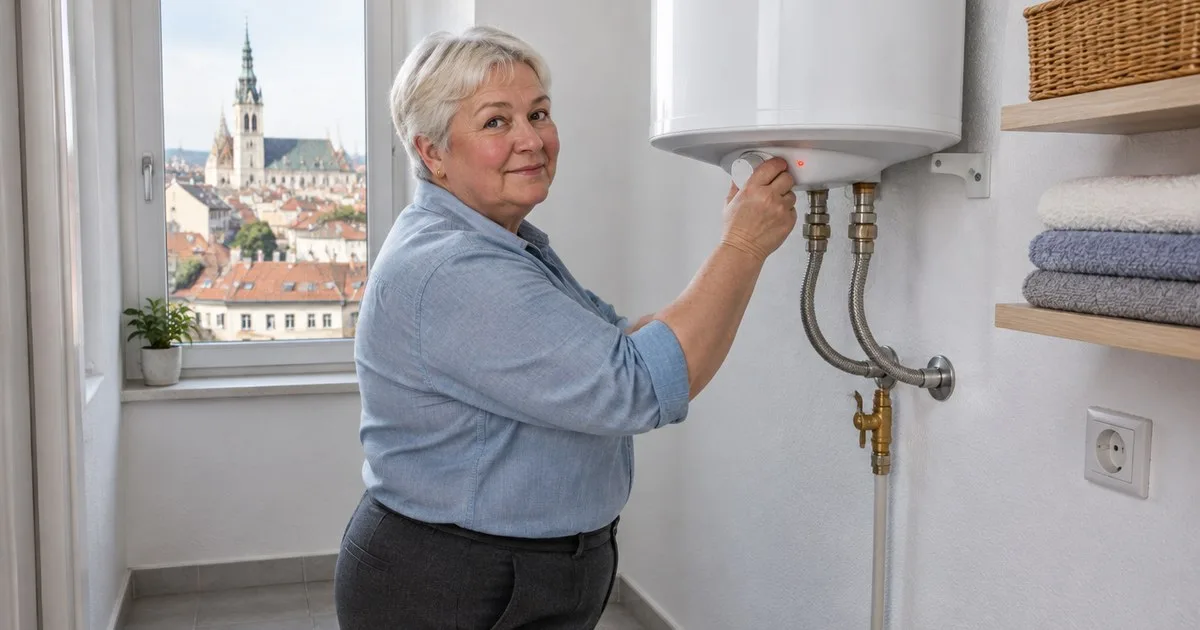
Your electricity bill has arrived and you wonder how much of it goes on the water heater. How much electricity a water heater uses depends mostly on how much hot water you use, what temperature the heater is set to and whether it heats on the cheaper night tariff. One full heat-up of an 80-litre electric water heater uses about 4.2 kWh. On top of that, the heater loses about 1 kWh a day just keeping the water hot. For a family of three, our example comes to about 150 kWh a month, or roughly €15–26, depending on the tariff.
In this guide you get a simple calculation you can do for your own flat, Croatian prices per kWh by tariff, two examples and tips to use less electricity without cold showers.
Water heater electricity use: the short answer
The figures below are rough guides. We calculated water heater consumption ourselves from the physics of heating water and the technical data of water heaters sold in Croatia. Prices per kWh come from HEP's household tariffs in November 2026. They are not Gigron's estimate of your bill.
| What | Roughly | Source |
|---|---|---|
| One full heat-up, 80 l (15 to 60 °C) | ~4.2 kWh | our calculation |
| One full heat-up, 50 l (15 to 60 °C) | ~2.6 kWh | our calculation |
| Standby heat loss of an 80 l heater | 0.94–1.35 kWh a day | technical data of two models, at 65 °C |
| Annual consumption on the energy label (50 and 80 l) | ~1,170–1,420 kWh | technical data of several models |
| Price per kWh, single-rate tariff | ~€0.18 | our sum of official tariff items, incl. VAT |
| Price per kWh, low (night) tariff | ~€0.10 | our sum of official tariff items, incl. VAT |
| Family of three, example | ~150 kWh a month, ~€15–26 | our calculation, example |
In short: an 80-litre heater on the single-rate tariff costs about €0.74 per full heat-up. If it heats at night on the low tariff, the same heat-up costs about €0.42.
Need someone for this job? Describe it and get quotes →
How to work out your water heater's consumption
Heating one litre of water by one degree takes about 1.163 Wh. That is physics and applies to every water heater. So the sum is simple:
kWh = litres × temperature rise × 1.163 ÷ 1,000
Example: an 80-litre heater warms mains water from 15 °C to 60 °C. The rise is 45 °C.
80 × 45 × 1.163 ÷ 1,000 = 4.19 kWh
That matches the technical data. One 80 l heater with a 2,000 W element lists a heat-up time of 1 hour 59 minutes from 15 to 60 °C. A 2 kW element running for two hours uses about 4 kWh.
For a 50 l heater the same sum gives about 2.6 kWh. A smaller tank heats up faster, but it does not use less per litre of hot water.
Power on the rating plate: the quick way
The rating plate shows the element's power, usually around 2,000 W. A 2,000 W element uses 2 kWh in one hour of running. If you know how many hours a day the heating light is on, you know the consumption.
Losses while the heater just sits there
A water heater uses electricity even when nobody runs hot water. The water slowly cools through the insulation and the element tops it up now and then. Manufacturers list this as heat loss in kWh per 24 hours.
For two 80 l heaters sold in Croatia the losses at 65 °C are 0.94 kWh and 1.35 kWh a day. By our calculation that is about 28–41 kWh a month, or about €5–7 on the single-rate tariff. Better insulation really makes a difference here.
What the energy label says
The energy label and spec sheet show annual electricity consumption. It is measured for a standard usage pattern (load profile M). For several 50 and 80 litre models we checked, it is about 1,170–1,420 kWh a year.
Interestingly, 50 and 80 litre heaters show similar annual consumption on the label. The reason is simple: they are tested with the same amount of hot water. That tells you something important. Consumption depends mostly on how much hot water you use, less on the tank size. The label is for comparing models; your real bill depends on your habits.
Electricity price for a water heater by tariff
Your bill is not just energy. You also pay network charges (transmission and distribution) and the renewables levy, plus 13% VAT on everything. We added up the variable part per kWh from the official household tariff items (universal service, November 2026). We left out fixed monthly fees because they do not depend on the water heater.
| Tariff model | Energy, incl. VAT | Total per kWh, incl. VAT (our sum) |
|---|---|---|
| Blue (single-rate) | €0.1032 | ~€0.177 |
| White, high tariff (day) | €0.1098 | ~€0.199 |
| White, low tariff (night) | €0.0539 | ~€0.101 |
In winter the low tariff runs from 9 pm to 7 am, in summer from 10 pm to 8 am. The two-rate (White) model needs a multi-rate meter.
Important this winter: under a government decree for 1 October 2026 to 31 March 2027, a household that uses more than 3,000 kWh in those six months pays for energy above that limit at tariff items increased by 35%. A heater using 150 kWh a month uses about 900 kWh in six months. That is a big share of the limit, so saving hot water pays off especially this winter.
Monthly water heater consumption: two examples
The examples are made up and the calculation is ours. We only counted showers and standby losses. Hot water for dishes and handwashing adds more.
Assumptions: mains water at 15 °C, showers at about 38 °C, and a modern shower head running about 8 litres a minute.
Example 1: family of three, 80 l heater
| Item | Calculation | kWh |
|---|---|---|
| Showers, 3 people × 6 minutes × 8 l | 144 l × 23 °C × 1.163 ÷ 1,000 | ~3.9 a day |
| Standby losses | average from technical data | ~1.1 a day |
| Total | ~5 kWh × 30 days | ~150 a month |
On the single-rate tariff that is about €26 a month. If the heater only heats on the low tariff, about €15. If it heats during the day on the high tariff, about €30.
Example 2: one person, 50 l heater
| Item | Calculation | kWh |
|---|---|---|
| Shower, 1 person × 6 minutes × 8 l | 48 l × 23 °C × 1.163 ÷ 1,000 | ~1.3 a day |
| Standby losses | assumption for a smaller heater | ~1 a day |
| Total | ~2.3 kWh × 30 days | ~70 a month |
That is about €12 a month on the single-rate tariff, or about €7 on the low tariff. For one person, standby losses are almost half of the consumption.
An old shower head changes a lot
Older shower heads can run up to 19 litres a minute, newer ones about 8. Six minutes with an old head means about 114 litres of warm water. That is about 3 kWh, not 1.3 kWh. Per shower the difference is about €0.30 on the single-rate tariff. For a family it adds up fast.
What temperature should a water heater be set to?
For a household, 55–60 °C is enough. Croatian energy-saving advice recommends the same. HEP advises not to heat water in the tank above 60 °C.
Why not lower? Legionella bacteria grow best in water at about 25 to 45 °C. An epidemiologist at the Croatian Institute of Public Health advises heating the water in the tank above 60 °C at least once a week. According to the same epidemiologist, at 60 °C legionella dies within about two minutes.
Why not higher? One water heater manufacturer's manual recommends the "eco" thermostat setting, at about 55 °C. Less scale forms and heat losses are lower. Very hot water can also scald, especially children and older people.
In practice: keep the heater at 55–60 °C. If you keep it on eco at about 55 °C, let it heat the water above 60 °C once a week.
How to check the real temperature
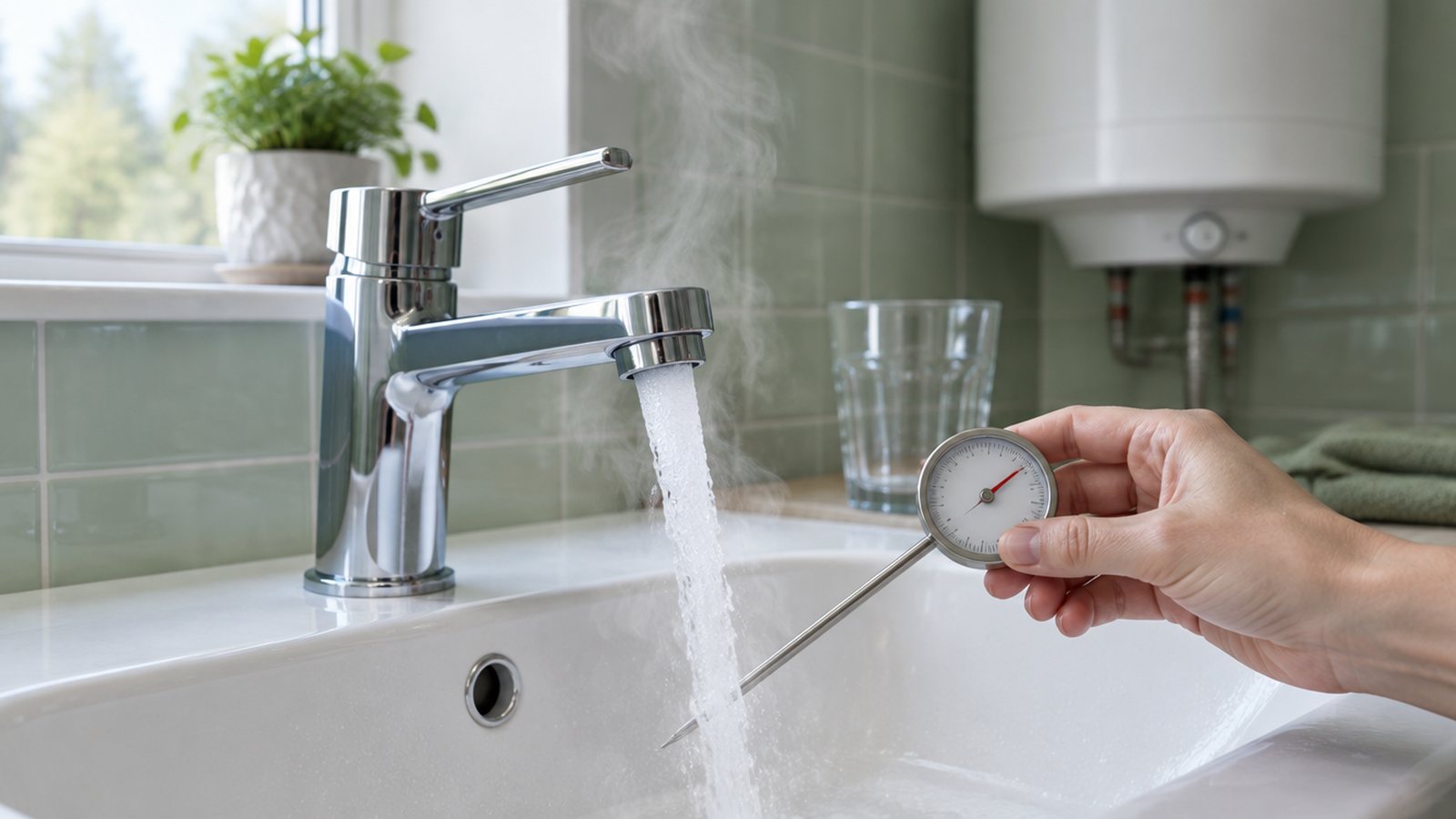
If the knob shows no degrees or you are not sure how hot the water is, run hot water at the tap closest to the heater for a minute or two and measure it with a kitchen thermometer. If the water is much hotter than 60 °C, turn the thermostat down.
Is it worth switching the water heater off?
Losses last as long as the water in the tank is hot. So:
- When you go away for a few days, switch the heater off. Croatian energy-saving advice recommends switching it off when you do not need it.
- If you have a two-rate meter, let the heater heat at night on the low tariff. The same kWh then costs almost half as much.
- If you use hot water all day, constant switching on and off does not save much. It matters more that the heater heats on the low tariff and is not set too high.
Is it worth moving to the White model? Only if you can shift a big part of your consumption to the low tariff. During the day, a kWh on the White model costs more than on the Blue one. Changing tariff model is charged under the HEP ODS price list, so do the maths first. HEP has a calculator on its website for comparing models.
If you want the heater to switch on and off at set times, an electrician can fit a time switch. Do not touch the heater's wiring yourself, because water and electricity meet there.
How to cut your water heater's electricity use
- Set it to 55–60 °C, not the maximum.
- Heat on the low tariff, if you have a two-rate meter.
- Take shorter showers and fit a water-saving shower head.
- Remove limescale. Scale on the element makes it harder to pass heat into the water, so it uses more electricity. When and how much descaling costs is in the guide water heater descaling cost.
- Insulate hot water pipes, especially if the heater is far from the shower.
- Do not buy an oversized heater. More hot water in storage also means bigger standby losses.
- Switch the heater off when you travel.
If the heater is old, heats slowly or leaks often, check whether a new one is worth it. Rough prices for a new heater with installation are in the guide water heater replacement cost. Of the two current 80 l models we compared, one loses about 40% more heat than the other. So when buying, look up heat loss in the spec sheet.
When to call a tradesperson
Has consumption suddenly jumped while your habits are the same? Something may be wrong with the heater. Call a tradesperson if:
- the element runs constantly and the light rarely goes off,
- the water is too hot even though the thermostat is set low, because the thermostat may be faulty,
- the heater leaks or the safety valve drips more than usual (read the guide water heater safety valve dripping),
- the fuse trips when the heater starts heating.
With a faulty element, thermostat or electrical connection, switch the heater off at the fuse box. If the heater trips the RCD or a breaker, how to find the cause is in the guide RCD keeps tripping. You can find tradespeople in the water heaters category, and for bigger cities on the pages water heaters in Zagreb and water heaters in Rijeka. For electrical faults there is electrical repairs, and for pipes plumbing. How to write a clear request is in the guide how to write a request to a tradesperson.
Find a tradesperson on Gigron
On Gigron you post a job for free and tradespeople send you offers. Compare what is included in the price and choose. Download the app:
FAQ
How much electricity does an 80 litre water heater use?
One full heat-up from 15 to 60 °C uses about 4.2 kWh. On top of that come about 0.9–1.4 kWh a day of standby losses. On the energy label, 80 l models show about 1,170–1,420 kWh a year for standard use.
How much electricity does a 50 litre water heater use?
One full heat-up uses about 2.6 kWh. The annual consumption on the label of similar 50 l models is about 1,230–1,400 kWh, because they are tested with the same amount of hot water as 80 l models.
How much does a water heater use per month?
It depends on the number of people and habits. In our example, a family of three uses about 150 kWh a month, which is about €26 on the single-rate tariff or €15 on the low tariff. One person in our example uses about 70 kWh, or €7–12.
What temperature should a water heater be set to?
55–60 °C. If you keep it on eco at about 55 °C, heat it above 60 °C once a week because of legionella.
Is it cheaper to leave the water heater on all the time?
Not when nobody is home for a few days. Then switch it off. On normal days you save most if the heater heats at night on the low tariff and is not set too high.
Summary
You can work out how much electricity a water heater uses yourself: litres × temperature rise × 1.163 ÷ 1,000. An 80 l heater uses about 4.2 kWh per full heat-up, plus about 1 kWh a day in losses. A family of three in our example uses about 150 kWh a month, or €15–26. You save most with the low tariff, a setting of 55–60 °C and shorter showers.
Need someone for a job?
Describe what you need, where and by when.
The AI assistant writes the post; you post it in the Gigron app.