Tile grouting cost per m2: regrouting a bathroom or kitchen
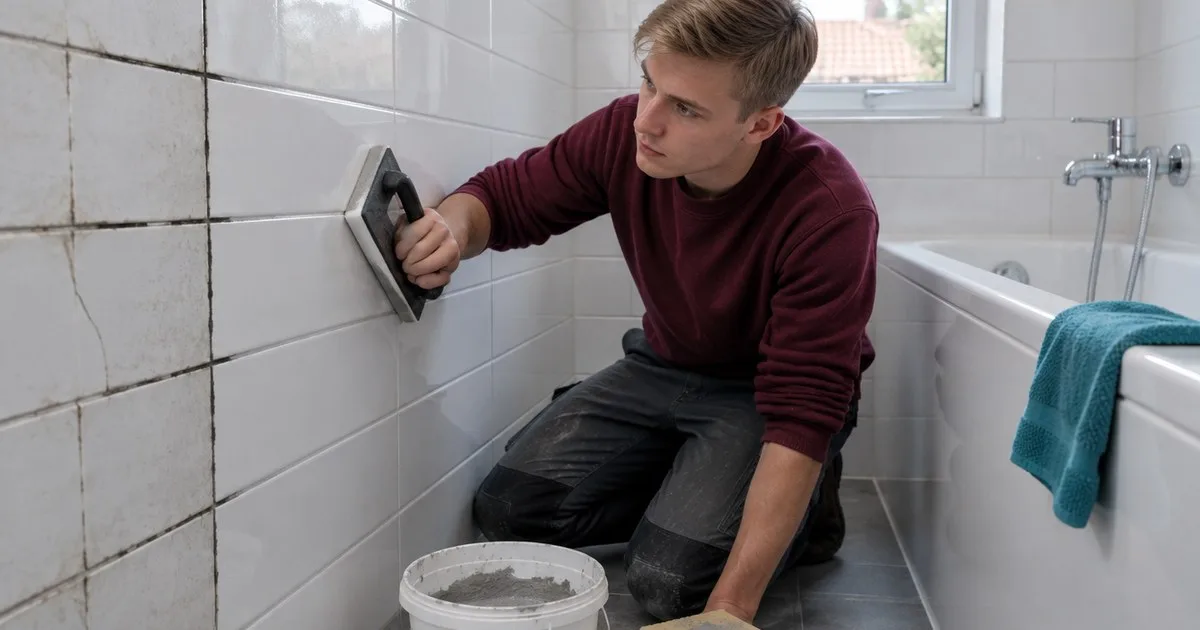
The grout in your bathroom has turned dark, is crumbling or soaks up water, but the tiles are still fine. You don't have to rip them out. Removing the old grout and putting in new is enough. Tile grouting cost per m2 for this kind of regrouting in Croatia is roughly €8–15 per m² with cement grout and €18–28 with epoxy grout. When tiles are laid from scratch, grouting is usually already included in the laying price.
This guide covers prices per m² for grouting and regrouting, what the price includes, how much grout you need, two worked examples and tips before you call a tiler.
Tile grouting cost per m2: the short answer
The figures below are approximate ranges from public price lists of Croatian tilers and price portals, checked in November 2026. They are not a Gigron quote or a fixed price. They cover labour only, without materials, unless stated otherwise.
| Job | Approx. |
|---|---|
| Grouting new tiles, when charged separately | ~€3–6/m² |
| Removing old grout (by hand or with a tool) | ~€5–15/m² |
| Regrouting with cement grout (removal + new grout) | ~€8–15/m² |
| Regrouting with epoxy grout | ~€18–28/m² |
| Epoxy instead of cement grout on new tiles (surcharge) | ~€10–15/m² |
| Silicone sealing of joints | ~€2–4 per metre |
| Silicone sealing of a whole bathroom | ~€80–150 |
Removing old grout often costs more than applying new grout. You pay for the time spent in every joint, not for the material.
Need someone for this job? Describe it and get quotes →
New tiles or regrouting: two different prices
When you ask about grouting prices, first be clear which job you mean.
- New tiles. Grouting is almost always included in the laying price per m². Some price lists show it separately, roughly €3–6/m². For the full laying cost, see tiling cost per m2.
- Regrouting old joints. The tiles stay, the tiler removes the old grout and fills the joints with new grout. This is a separate job charged per m², roughly €8–15 with cement grout.
The tiles stay on the wall, there is no rubble or chiselling, and the bathroom looks much fresher.
What a regrouting price includes
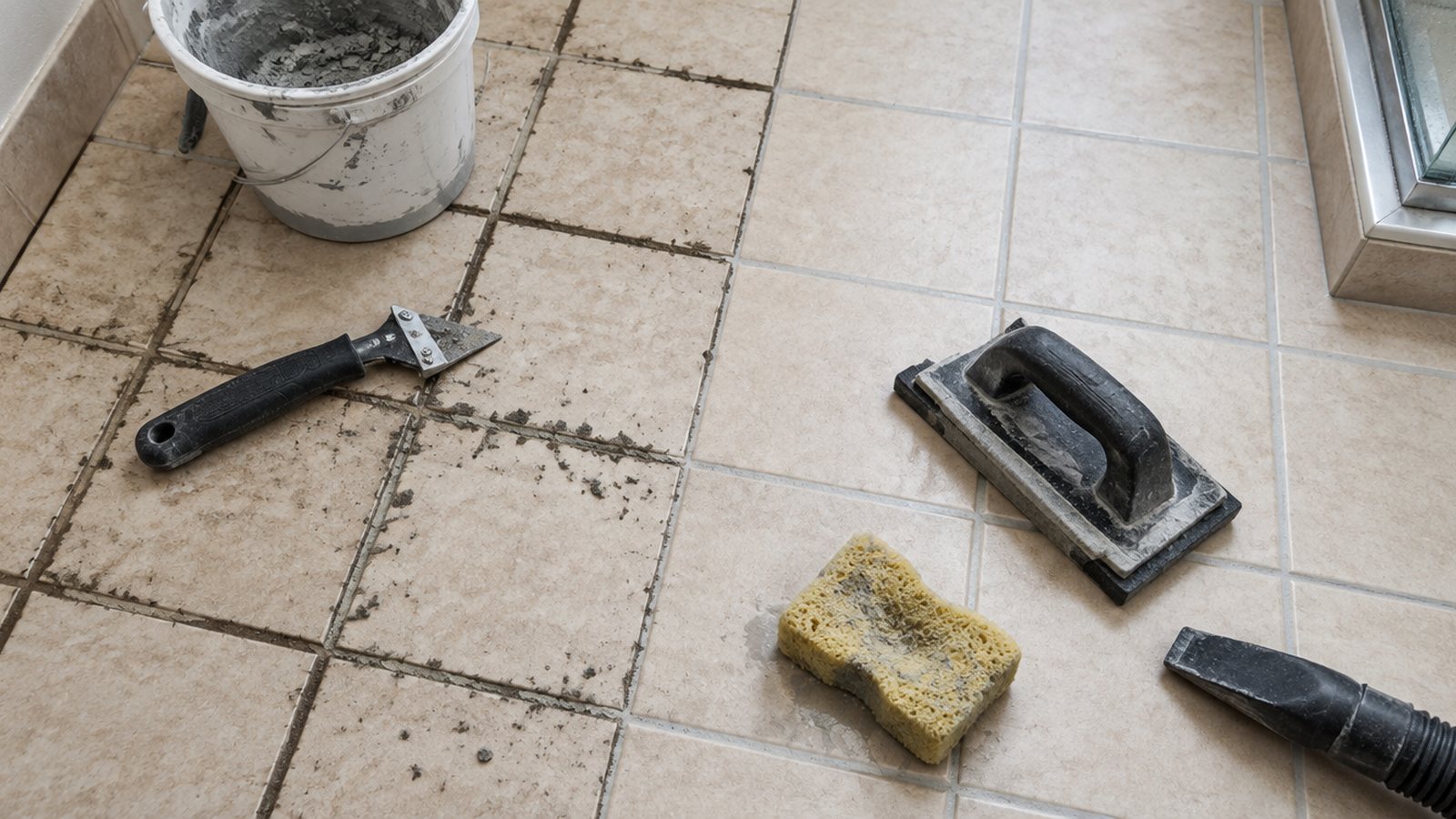
Good regrouting has several steps, and each one is part of the price:
- Removing the old grout. The old grout is removed to at least two thirds of the joint depth. If the joint stays shallow, the new grout has nothing to grip and falls out in pieces, often within a year.
- Cleaning the joints. Dust is vacuumed out of every joint. Leftover dust separates the old and the new grout.
- New grout. Grout is pressed in with a rubber float, diagonally across the joints, working 1–2 m² at a time.
- Cleaning the tiles. The excess is removed straight away, and after 15–30 minutes the tiles are wiped with a damp sponge.
- Silicone. Corners, wall-to-floor joints and joints around the bath, shower and basin are not grouted. They get silicone, which is usually charged separately.
Removing grout by hand is slower but safer for tile edges. An angle grinder with a diamond blade is faster but can easily chip the glaze, especially with narrow joints. Ask the tiler how they work and who is responsible if a tile gets damaged.
Cement or epoxy grout
| Cement grout | Epoxy grout | |
|---|---|---|
| Labour price for regrouting | ~€8–15/m² | ~€18–28/m² |
| Material | cheap | more expensive |
| Absorbs water | yes, needs sealing | no |
| Stains and colour | darkens over time | stain-resistant, keeps its colour |
| Work | easier | harder, sets quickly |
| Where it makes sense | walls and floors in a flat | shower area, wall behind the sink, worktop |
Cement grout is fine for most walls and floors in a flat. Epoxy grout makes sense where it is always wet or greasy. It costs more but is much easier to keep clean.
Joint width
Joint width depends on the tiles:
- tiles up to 30×30 cm: about 2–3 mm,
- tiles up to 60×60 cm: about 3–4 mm,
- large formats and natural stone: 5–10 mm or more.
Joints that are too narrow on large tiles can lead to cracking or tiles lifting, especially over underfloor heating.
How much grout you need
Grout manufacturers give a simple formula for consumption in kg per m²:
(tile length + tile width) ÷ (length × width) × tile thickness × joint width × 1.6
All measurements are in millimetres, and 1.6 is the average grout density in kg/dm³. Add about 10% spare.
These are examples, the calculation is ours:
| Tiles (thickness, joint) | Consumption (approx.) |
|---|---|
| 20×20 cm (7 mm, 3 mm joint) | ~0.34 kg/m² |
| 30×60 cm (9 mm, 3 mm joint) | ~0.22 kg/m² |
| 60×60 cm (10 mm, 3 mm joint) | ~0.16 kg/m² |
| Mosaic 5×5 cm (4 mm, 2 mm joint) | ~0.51 kg/m² |
The smaller the tiles, the more joints per m². That is why mosaic uses the most grout and takes longest to grout.
When regrouting, joints are only filled to the depth the old grout was removed, so a little less grout is needed. Still buy the full amount, because some is left in the bucket and on the sponge.
What materials cost
Approximate prices in Croatian shops and webshops (checked in November 2026):
| Material | Pack | Price (approx.) |
|---|---|---|
| Cement grout | 2 kg | ~€7–9 |
| Epoxy grout | 3 kg | ~€41–63 |
| Sanitary silicone | 280 ml | ~€11–12 |
| Grout sealer | 1 l | ~€10–25 |
With cement grout, material is a small part of the bill. A bathroom usually needs just a few tubs. With epoxy grout, material for one bathroom can cost as much as a good part of the labour.
Worked examples: what regrouting costs
Example 1: bathroom, 16 m² of tiles
This is an example, the calculation is ours:
- Regrouting the walls around the bath and shower (12 m²) and the floor (4 m²): 16 m², 20×20 cm tiles.
- Labour with cement grout: 16 m² × €8–15 = about €130–240.
- New silicone throughout the bathroom: about €80–150.
- Grout: 16 m² × 0.34 kg + 10% = about 6 kg, so 3 tubs of 2 kg, about €21–26.
Total about €230–420. With epoxy grout, labour alone comes to 16 m² × €18–28 = about €290–450, plus silicone and more expensive material.
Example 2: kitchen splashback, 3 m²
This is an example, the calculation is ours:
- By the price list: 3 m² × €8–15 = about €24–45 with cement grout.
- In practice small jobs have a minimum charge because of travel and set-up. One real request from Zagreb (2024) for regrouting 2 m² and new silicone around a bath was estimated at €45–75.
For the wall behind the sink, consider epoxy grout. It is always damp and greasy there, and cement grout darkens fastest in that spot.
How long regrouting takes
Grouting or regrouting a standard bathroom usually takes 1–2 days, and a kitchen about one day. After that:
- cement grout needs about 7 days before wet cleaning and sealing,
- epoxy grout can be washed after about 24 hours. One manufacturer gives 4 days until full use, and 10 days for basins and pools.
How long adhesive, grout and silicone take to dry, and when you can shower, is in the guide how long does silicone take to dry.
Cement grout is applied at about +5 to +25 °C, and epoxy at about +12 to +30 °C. In winter, keep the bathroom heated.
When regrouting won't help
- Tiles sound hollow or move. The problem is under the tiles, in the adhesive or the substrate. New grout won't fix it.
- Water leaks under the shower tray or through the floor. Grout is not waterproofing. See waterproofing cost per m2.
- Mould keeps coming back. The cause is usually damp and poor ventilation. More in damp and mould on walls.
Grout paint is a cheap shortcut, but only when the old grout is solid, intact and free of mould. On cracked or mouldy grout, paint just hides the problem for a few months.
Tips before you call a tiler
When you ask for a quote, check:
- whether the price is per m² or for the whole job,
- whether the old grout is removed deep enough, and with which tool,
- whether silicone is included or charged per metre,
- who buys the grout, and in which colour,
- cement or epoxy grout, and where each one goes,
- whether VAT is included,
- how long the job takes and when you can use the shower again.
In your request, give the m² of tiles, the tile size, the room and a close-up photo of the grout. That gets you a more accurate quote. More tips in how to write a request to a tradesperson.
You can find tilers in the tiling category, and for larger cities: Zagreb, Rijeka, Zadar and Osijek. For repairs to existing tiles there is also tile repair, and for the shower area bathroom waterproofing in Zagreb.
Find a tiler through Gigron
On Gigron you post a job for free and tradespeople get back to you with offers. Compare the offers and ask whether silicone is included and which grout they use. Download the app:
FAQ
How much does tile grouting cost per m2?
For new tiles, grouting is usually included in the laying price, and separately it costs roughly €3–6/m². Regrouting with removal of the old grout is roughly €8–15/m² with cement grout and €18–28/m² with epoxy grout.
Can new grout go over old grout?
No. The old grout has to be removed to at least two thirds of its depth. A thin layer of new grout over old grout doesn't hold and soon falls out.
How much does regrouting a bathroom cost?
For a bathroom with 16 m² of tiles, with cement grout and new silicone, budget about €230–420. That is our example. Small jobs of 2–3 m² often cost at least €45–75 because of minimum charges.
How many kg of grout per m2?
It depends on the tiles. For 20×20 cm tiles and a 3 mm joint you need about 0.34 kg/m², for 60×60 cm about 0.16 kg/m², and for mosaic over 0.5 kg/m². Add 10% spare.
Summary
Tile grouting cost per m2 depends on the job. For new tiles, grout is usually included in the laying price, and separately it costs about €3–6/m². Regrouting old joints is roughly €8–15 per m² with cement grout and €18–28 with epoxy, plus silicone. The old grout must be removed deep enough, or the new grout soon falls out. If tiles move or water gets under them, regrouting won't help.
Need someone for a job?
Describe what you need, where and by when.
The AI assistant writes the post; you post it in the Gigron app.