Yard paving cost per m² in Croatia (2026)
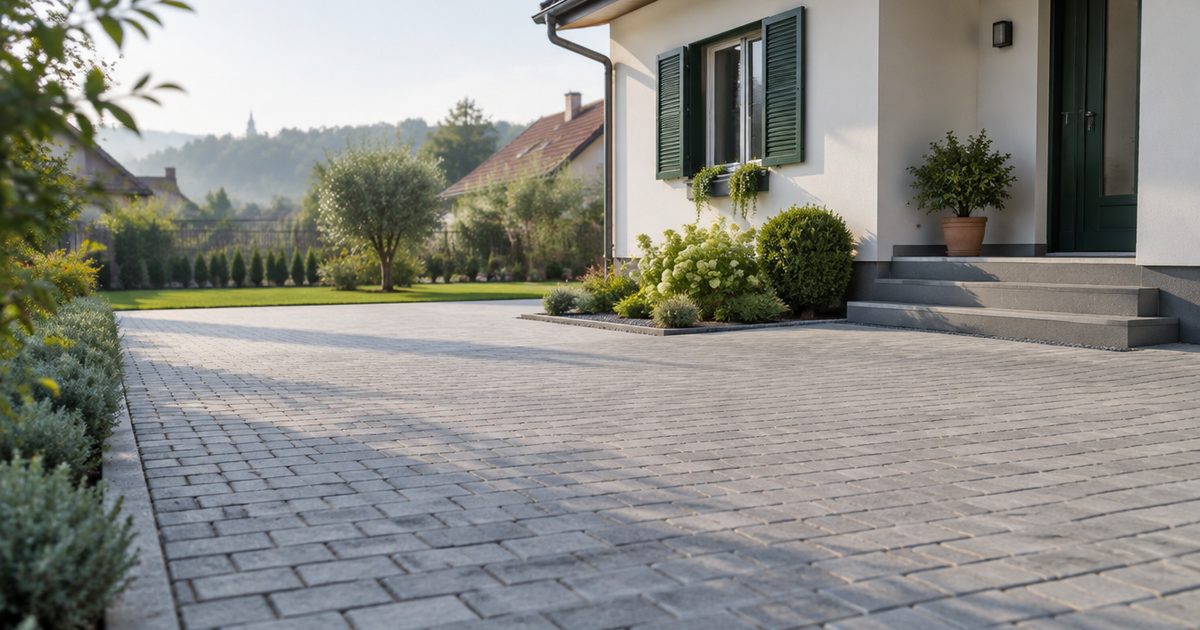
Planning yard paving and wondering about the price per m²? Online figures vary because some quotes cover labour only, others include materials, and some add excavation. Compare what’s included, not just the number.
This guide gives approximate 2026 Croatia market ranges per square metre, the differences between concrete pavers (behaton), slabs, stone cubes and granite, and what to ask before you sign.
What drives paving price the most
Yard paving is rarely a single line item. It depends on:
- material (behaton, concrete slabs, stone cubes, granite),
- ground condition (flat or sloping, old asphalt, clay, roots),
- base depth and type (excavation, sub-base, compaction),
- shape of the area (a rectangle costs less than narrow paths and curves),
- kerbs, drainage and access (can a truck reach the yard),
- what’s included (materials, labour, spoil removal).
When you compare two quotes, match the square metres and the work list. A “lower” price per m² often skips the base or the kerbs. Ask for a line-by-line breakdown, then look at the total.
Approximate prices per m² (HR, 2026)
These are indicative market ranges, not a firm offer. Local prices can sit lower or higher depending on city, access and season.
| Item | Approx. (€/m² or €/m) |
|---|---|
| Labour only (laying) | 15–35 €/m² |
| Labour for stone / granite cubes | often 20–50 €/m² |
| Base prep (excavation + sub-base + compaction) | 15–30 €/m² |
| Behaton / concrete pavers & slabs (materials + labour, simpler packages) | sometimes ~28–55 €/m² |
| Stone cubes (all-in style) | ~45–60 €/m² |
| Granite (all-in style) | ~50–70 €/m² |
| Typical total (materials + labour + basic base) | ~55–110 €/m² |
| Kerbs (separate) | ~23–50 €/m |
Some simpler behaton packages list ~28–34 €/m² “all-in”, but ask what that covers. Often there’s no deeper excavation, drainage or a proper sub-base. That’s why the per-square-metre range is wide — and why the “cheapest m²” isn’t always the best job.
Orientation example: a 40 m² driveway with behaton and a solid base often lands mid-to-upper range if you need excavation, kerbs and spoil removal. A small path without heavy kit can sit lower, but labour hours still drive the budget.
Materials: behaton, concrete, stone, granite
Behaton and concrete pavers / slabs
The most common choice for yards and driveways. They handle cars well, individual units are easy to replace, and they usually sit at the cheaper end of the price list. Paver cost depends on thickness (e.g. 6 cm vs 8 cm) and colour. Use thicker formats for parking; thinner can work for footpaths.
If you want a practical surface for parking and access, behaton or concrete slabs often give the best price-to-durability ratio. Large slabs go down fast on straight areas, but curves and narrow paths need more cutting.
Stone cubes
Stone cubes look more natural and suit older or “rustic” yards. Material and labour cost more. Edges and curves take longer, so the price per m² rises. If you want stone only at the entrance and behaton elsewhere, say so in the enquiry — that keeps the budget under control.
Granite
Granite is among the more expensive options: hard, durable and good-looking. It makes sense for driveways and showcase areas. For a large yard where price per square metre matters most, combining often works better — granite at the entrance, behaton on the rest.
Why the base is critical
A weak base ruins even expensive materials. Without proper excavation, sub-base and compaction, pavers sink, puddles form and edges open after the first winter.
A solid prep typically includes:
- removing the old layer and vegetation,
- excavating to the required depth,
- geotextile where the ground needs it,
- sub-base (gravel / crushed stone) in layers,
- compaction with a plate compactor,
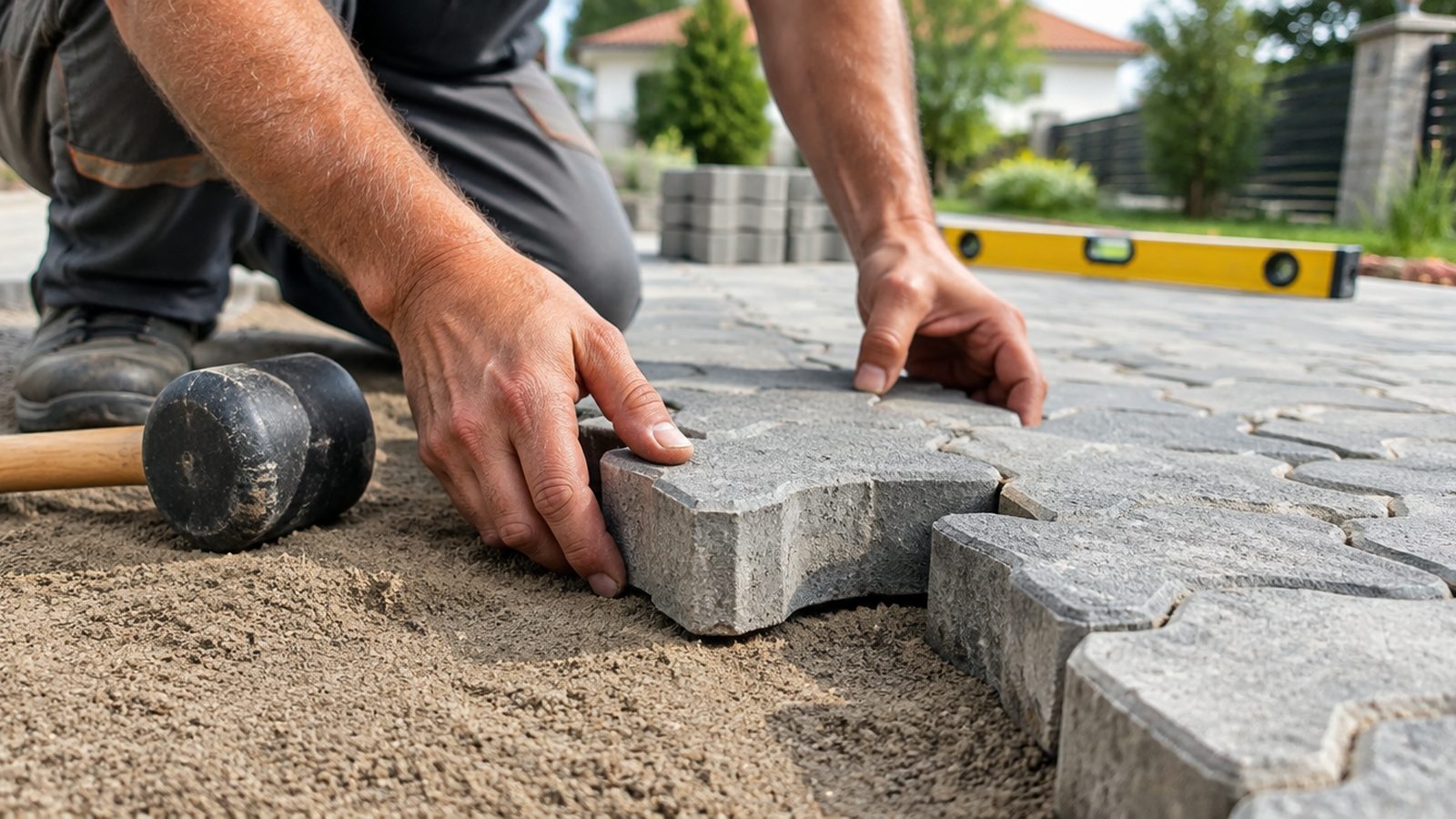
- a bedding layer of sand or fine aggregate before laying.
If a tradesperson offers to “lay on the existing ground”, ask about the warranty. Saving on the base later costs more than the 15–30 €/m² you “saved”. The same goes for drainage: without a slight fall toward an outlet, water sits on the surface and speeds up damage.
Autumn: finish before frost
Autumn is a good season for yard paving — the ground is still workable, and you want it done before winter. Don’t work on frozen soil or in heavy rain. Compacting and levelling on wet or frozen ground gives a crooked base.
If you’re planning October or November work:
- book while tradespeople still have slots,
- sort drainage (fall toward a channel or ditch),
- order materials early (some colours and thicknesses take longer),
- leave budget headroom for surprise excavation (old pipes, roots, clay).
Better to finish the season with a clean driveway than patch puddles in February.
How to write an enquiry so quotes are comparable
In your enquiry include:
- area (m² of driveway, paths and yard separately),
- whether you want behaton, concrete slabs or stone cubes,
- whether you need excavation and a new base or only a top-layer swap,
- kerbs, steps, drainage,
- whether a truck can reach the yard,
- whether you need spoil removal.
Then ask every tradesperson for the same structure: materials, labour, base, kerbs (€/m), removal. Only then can you compare price per square metre fairly. Also ask for the timeline and who buys the materials — that changes both price and who’s responsible for delays.
If you need someone for yard paving, also check broader yard landscaping or local yard landscaping in Zagreb.
Find a tradesperson on Gigron
On Gigron you post an enquiry and local tradespeople reply with quotes. No paid ads, no scrolling through groups. State the m², material and whether you need a base — you’ll get clearer answers.
Download the app:
In short: yard paving price per m² depends on material and base. Look at the total, ask what’s included, and compare at least two or three clear quotes per square metre.